
Episode 28:
Tongzhe Li
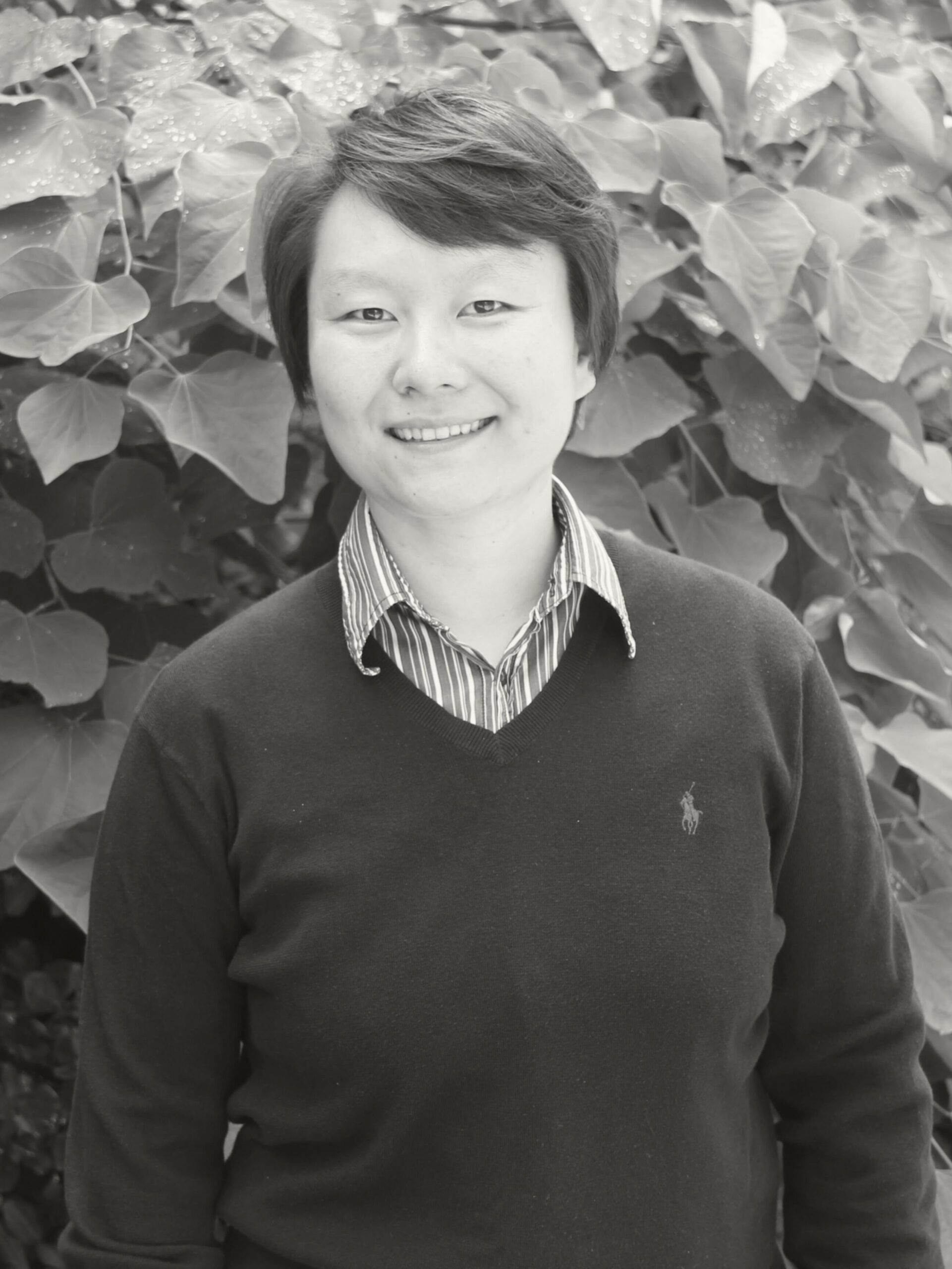
On this week’s episode of The Extensionists, Jay Whetter and Toban Dyck sit down with Tongzhe Li, a professor and Arrell Family Chair in Behavioural and Experimental Economics at the University of Guelph. Her research on farmer behaviour proves a vital point: it’s not just what you say to a farmer, but how you say it that truly shifts their decision-making.
Listen here:
Transcript
Toban Dyck 00:00
Hi, this is the extensionist conversations with great thinkers in agriculture. I’m Toban Dyck and I’m Jay Wen.
00:20
Hey, Toban. AJ,
Jay Whetter 00:23
I just got back from a trip of a lifetime to Africa.
Toban Dyck 00:28
Always wanted to go there.
Speaker 1 00:30
How come you didn’t come with me? You didn’t
Toban Dyck 00:33
invite me. Oh, this is getting awkward. Like, right off the bat, I was waiting for the invite. You kept talking about it beforehand, and I’m like, oh, it’d be sure. It would be nice dropping these hints. I’ve always wanted to go. That’s been a bucket list for me. I’ve been saving up
00:55
just the right person to go with. Yeah,
Jay Whetter 00:59
it was the International Federation of agriculture journalists, which you and I are both part of. We are, and I went to their conference.
Toban Dyck 01:06
What was it last two years ago, two years ago, in olds, Alberta, which was great, and I vowed to go again after that. So yeah,
Jay Whetter 01:14
and I’d never been, I’ve been a farm journalist for 27 years. And when you’re a member of Manitoba farm writers, which we both are, you are automatically a member of Canadian farm writers and International Federation of agriculture journalists. So yeah. So I’ve been part of this organization for for my whole career, and I’ve been to one of their conferences, and it happened to be in in Africa, which a place I’ve never been to. And you went with you. Went with your son and my older son, Liam, who’s 23 he I said, Liam, go on to come to Africa with me. Yeah, there’s no hesitation at all. Who’s also a podcaster, I should say, yeah, yeah, yeah, yeah. He does a podcast on fishing.
Toban Dyck 01:55
So so for the audience, Jay wants me to say this. I don’t really care if he does. Just kidding, but his son, if you listen to his podcast, sounds a lot like Jay. Oh yeah, yeah, my wife, Jamie, we heard it right away. As we listen to it together, I’m like, whoa, whoa. That’s that is. That’s Little Jay. Anyway, I loved it.
Jay Whetter 02:20
Anyway. We had a we had a blast in Kenya. So it was kind of a whirlwind two weeks from the moment we left To the moment we got back. So there’s two full travel days in there. And then we saw what we did, a little tour about round Nairobi with a we hired a driver to take us around. And then the next day, we went to Amboseli National Park, which was just kind of in the shadow of Mount Kilimanjaro, saw a bunch of animals down there and drove around in Toyota Land Cruisers with the they have these tops that lift and so you can stand up and hold on to these bars and bounce around the countryside looking at elephants and giraffes and baboons and things like that. We didn’t see any cats in Amboseli. But then the last day, we went to Nairobi National Park, which is excellent, and it’s rate attached to the city of Nairobi. And we saw some lions while we were there, and they we also saw hippos and rhinos, some more giraffes and like, by the end of it, you’re like, oh giraffe, oh zebras. Well, look at all those zebras. You’ve seen a million zebras already, so it’s a, it’s amazing the tonnage of wildlife in some of these parks.
Toban Dyck 03:28
Yeah, I could, yeah, I’ve seen, I’ve seen some of your pictures, and they’re, they’re gorgeous, and it’s just, yeah, it’s also fascinating. It’s also fascinating that you could just, I mean, it makes sense, but that you could become, you could get used to seeing zebras, right? Like something that I’ve never seen before, apart from a zoo, you know, to see
Jay Whetter 03:48
well, and then not only, I should have added they’re in the wild, right? So we’re driving from Nairobi to the park, and there’s giraffes out feeding on acacia trees, or there’s an elephant, or there’s zebras or baboons and monkeys. And then we took the Liam and I took the train from Nairobi to Mombasa, and Mombasa is a port city in Kenya, and we went and spent a couple days on the beach and then seeing that city, which is quite different from Nairobi anyway, just looking at the train window, there’s, oh, there’s a bunch of elephants out there, like it’s the wildlife. Oh, interestingly, we sort of on that note, we didn’t see any road kill, which was kind of amazing for all that wildlife, for sure. I don’t know whether they there’s some maintenance on the road to keep them from crossing. I’m not sure, but you’d think for sure. Anyway, yeah, it was wonderful, and the whole point of it was to hang out with 180 farm journalists from around the world, not just journalists were, let’s just say, communicators, because I’d say most of them are not journalists. They work for companies or farm organizations or or government, and we all gather. There, and we we get to create a broader network for me, which was really fun. So my LinkedIn connections list jumped by maybe 100 people while I was there. Are you serious? I don’t know Sure. Yeah, sure, because most of these people were new to me. There was 18 other 18 Canadians in total, and so I’d known most of the Canadians, but all the other people were were new. So you just keep jotting down names and adding them to your LinkedIn list. It was really, really fun, and that’s so if you’re involved in agriculture communications or extension at all, Join your local farm writers or farm communicators guild, if you haven’t already, and then think about going to the next ifaj. It’s in Croatia in 2026 Yeah, but another place I’ve never been, yeah, let’s go, yeah. I feel like the extensionists should go, yeah.
Speaker 1 05:51
Would you like to go to ifaj with next year? Toban? You’d never ask.
Toban Dyck 05:57
So I know we’re out of time. We got to wrap this intro app right away is, but I want to so one of the, one of the interesting photos that Jay took on this, on this journey, and we’re going to try to, you know, this is not a visual, because, you know, you guys can’t see this, but he you can walk me through it too, but like, you took a picture of a lion, or Liam did, yeah, and, and so you just See this lion, and you see kind of almost like a quintessential Africa Safari shot, right? And so you think, Oh, that’s great, fascinating, great picture of a lion, majestic, all this stuff. Well, Jay took a picture. So that’s looking forward. Jay also took a picture of what was behind him. And what was behind him was, if memory serves, probably like a dozen Land Cruisers all kind of converging on one point. And just like, which is the, you know, the manifestation of just multiple tour groups that are traveling kind of together and converging at these points. And it’s just kind of like a frenzy. What you know, you see this serene photo of a lion and its natural habitat, but behind it is just, it’s just madness. And so the concept, or the interesting part of it, is like, you know, how do you, how do you process that as a person, in that in that perspective? Does it take away from the kind of the majesty of the moment? Or it’s a great kind of juxtaposition.
Jay Whetter 07:22
Yeah, yeah. I was a real eye opener for me. Because, of course, you’ve all seen those amazing photos of African animals, and we don’t realize that 99% of the time you’re one the photographer is one of dozens of people congregating in that space. I mean, what a world these animals live in. But they seem to be used to it,
Toban Dyck 07:45
like immediate media scrum or something. Yeah, yeah, yeah. They seem to be like the animals seem to be used to it, yeah.
Jay Whetter 07:53
I mean, in these parks, they were, for sure. I mean, they didn’t run away or anything. So say, oh my here they are again. You know, just like yesterday and the day before,
Toban Dyck 08:02
animals converging on animals. Yeah. Anyways, let’s get to the let’s get to
Jay Whetter 08:07
our guest. Yes. Let’s get to Tong Z Yeah, really excited to talk about some of the behavioral science that goes on in delivering messages to farmers and anybody you
Jay Whetter 08:25
Hey there, listeners. If you’re enjoying the conversations here on the extensionist, you will probably love to get our newsletter.
Toban Dyck 08:32
Yeah, it’s the best way to stay connected with us, with Jay and myself. Yours truly, I’m excited about the newsletter to be honest with you, because I think, well, so many of our guests have sorry. Why are you excited about say that differently? Jay, so many of our guests are they say so many things of interest, right? And I feel like the newsletter will be a great, will be a great way to share that with our listeners,
Speaker 1 08:58
like quick take homes, yeah? Summaries, yeah. Absolutely, one liner, absolutely, absolutely,
Toban Dyck 09:03
I think about each each guest, we could probably write a whole bunch of articles from each of our guests, right? So to give our our newsletter subscribers, like summaries of, you know, the key takeaways of these things, plus, plus information on upcoming guests. All they got to do, all listeners have to do is go to the extensions.com and follow the prompts to sign up for the newsletter. I think it’ll be I think it’ll be great.
Jay Whetter 09:39
All right, our guest today is tongzi. Lee tongzi is a professor and eral family chair in behavioral and experimental economics at the University of Guelph. Tongzi, hi, hi, did I? Did I nail that big, long title?
Tongzhe Li 09:57
Yes, you did. Thank you. Good.
Toban Dyck 10:00
Yeah, I was actually, when I was reading that, I’m like, Oh, I’m glad Jay is saying this, because I think I would fumble, you know, all over it. So, yeah, well done. Well done. Thanks.
Jay Whetter 10:08
Okay, my job is done. Now you take over, that’s right, and
Toban Dyck 10:12
that’s it for and that’s it for Jay, everyone. Yeah, awesome. Well, welcome, welcome to the podcast. Tongzi. I’m looking forward to hearing all about this when I when I read these, these pre notes like that Ashley prepared for us. Yeah, it’s pretty exciting. There’s lots of there’s lots of really interesting things to talk about, to talk about here, including, including badminton, because,
Tongzhe Li 10:41
as you are, see that coming.
10:46
What do you do? You play badminton?
Toban Dyck 10:49
Well, I Not, not currently, but I love badminton. I get you. Did you play bad?
Jay Whetter 10:54
Yeah, just in high school. It was fun. Though. It’s a
Toban Dyck 10:57
terrible it’s very, very fun. Do you still play?
Tongzhe Li 11:01
Yeah, I do. So I think about a year and half ago, before I went on my research leave, yeah, I was actually assistant coach on our varsity team at the years of Guelph. So I am still playing. I’m still actively training myself as well. So I got to my coach every week if I, if I’m in Guelph, not traveling, so that’s, that’s the frequency of of my training. But anyways, yeah, so long story short, I still play, I still compete from time to time. But as you can see, as an academic, that’s, that’s a challenge.
Toban Dyck 11:36
Yeah, yeah, oh, that’s awesome. That’s, that’s very fun. Yeah, it’s very enjoyable.
Jay Whetter 11:42
Well, the thing is, the only thing I remember about Badminton is the you can really smash that shuttle cock and it again, it goes fast for a little while, and then it just dies, and then it drops, hopefully, drops nicely, right into the in to get a point. But, yeah, I like, I really, like, really being able to smash things.
Tongzhe Li 12:03
So next time. So,
12:07
so we’re gonna take my teeth out.
Toban Dyck 12:11
Jay and I have this thing where we probably talked about this before in a podcast. I’m not sure, but it’s this thing where it’s this game at arcades where you have this hanging kind of punching bag and you have to punch it, and you see how, like, you know, you get a higher number, you know, how hard you punch this thing. Jay punches harder than I do. Apparently it’s because he has longer arms. And this goes back to him, like, liking to smash things. So he got like, a 900 and some, and I can only get, you know, within probably 100 points of that. So I have been like, I’ve been training and exercising just so that the next time we we come across one of these things, I’m going to be able to smash harder than Jay. So that is my goal, everybody. I’m making it very public that I want to smash harder than Jay. I doubt it’s gonna happen, because apparently he has longer than average arms.
Jay Whetter 13:05
That’s right, you can’t grow your arms, not how much training you do. I guess maybe you could just do
Tongzhe Li 13:10
a flex arm, hang, work hard towards badminton. It doesn’t, yes, fire longer arms to play badminton.
Toban Dyck 13:16
I like it. That was a good I like how you brought that back. That’s that’s really good, so I can’t beat him at that. Anyways, welcome here, tongzi, for sure. Thank you.
Jay Whetter 13:27
Thank you, tongzi. You also said you like international travel or travel, and Toban and I also like going various places. What is your favorite country or favorite place you’ve ever been?
Tongzhe Li 13:41
Yeah, that’s, well, a lot of places have their own beauties, right? I mean, I loved UK, so we actually went to London for conference, and I traveled to Oxford and Cambridge. I loved learning how their university system works, and I love seeing how they make, you know, like Newton, a hero, as well as this really weird, random Chinese guy who wrote a poem. And they recently established this kind of like stone with his one sentence on it. Reason being, they want to attract a lot of tourists to King’s College and charge them a really high entrance fee. So, you know, that was really inspiring to me, like as an academic myself, I always thought, you know, if you go to Cambridge, you go to see like Newton, you know, Turing, so and so forth. But the most famous stone belongs to a Chinese like I I don’t know that was really mind blowing. I love that trip for education purposes. I also love Barcelona for you know their architecture. I. I love Taiwan for their food so and I can speak their language, which is a really nice, you know, addition to a nice travel so, but at the same time, you know, if you ask me about my experience traveling internationally, it also matters who you go to, see which conference you present at, who you got to meet, what kind of experience you have in the academic world. So, yeah. I mean, I loved most of my travels. I mean, I don’t love all of them, to be completely honest, yeah, but, like, maybe 80% of them, I It’s either inspiring or cozy or, you know, you meet new people, or you meet old friends. Yeah, all of those are enjoyable.
Toban Dyck 15:46
I like, I like that assessment because it is so true. It does depend on kind of who you go with. And there’s so many, there’s a multitude of other factors that come into play when you think of when you assess a holiday and and kind of extract value from it. When you when you talk about the, you know, enjoying or appreciating the differences in universities or in education structures. So in the UK, what were some of those notable differences? Like, I mean, you mentioned the poet, but you talked about different structures. What were those so?
Tongzhe Li 16:24
So, for example, when I went to Cambridge, I had a friend who is a professor there, who gave me a tour. So basically, I was amazed by how many, like different colleges they have within the university and their history, so on, so forth. You know, it seems to me, you know, that trip, if it all boils down to one takeaway message from for myself, it will actually be, you know, how diverse everything is. It’s like you’re looking at this really world famous university, but in the end of the day, what really matters, right? It’s the history, it’s the reputation, is the experience, but at the same time, you know, is it necessary, how well you teach your students from your own point of view, or is it more about, you know, who you get to interact with and, you know, like so it also struck me when my friend who gave me a tour actually told me, these days, the most important things to Cambridge would potentially be like the land and stadiums and all of those properties they own in London, because those are actually the revenue generating type of stuff for the university. I, I mean, it’s just like everything spoke me as being a little bit different, but in the end of the day being the same. It’s, you know, yeah, it’s all about what matters and different things that matter. And, you know, how do you, how do you actually comprehend all of those?
Toban Dyck 18:01
Yeah, yeah,
Jay Whetter 18:02
but the diversity was a key part of what makes Cambridge special is that they they’re not necessarily focused on on one one thing, but the diversity of the campuses, and that’s the students experience. Would you remember the that one line from the poem from the Chinese poet. You remember what it was?
Tongzhe Li 18:26
Yes, I don’t, well, I don’t remember exactly how to say it in Chinese, let alone translate it. But it’s a love poem, right? It’s, it’s saying something like, you know, I come to Cambridge and I leave Cambridge. So all of this is just like, in a very, you know, enjoyable and like way, and I don’t even leave a trace or whatever. So, yeah, it belongs to this, this this person who who actually studied with Ken, or king, whatever people call him, the famous British economist. And he Well, he wanted to study with him, and then he went to Cambridge. Didn’t really officially get admitted. So he lived there for a summer, and then, and then left pembridge and had had back to to China. So that was a story I heard. I mean, I, you know, I don’t, I don’t really know the history that much, but, yeah, that’s Kane.
Jay Whetter 19:38
Is it Keynes? K, e, y, N, E, S, is that the economy? Yes, yeah. Well, do you want to move into some of Tong Z’s work, or you want to ask some something else?
Toban Dyck 19:53
I had a, I had a, so you were talking about the different university the university structures, and you had mentioned something about. Word, like the, what I took from that comment was a learning environment where, you know, you were wondering, what’s more important? Is it the, is it the instructor talking to the students or the students kind of learning among themselves? Correct me if I’m wrong, but when I when I heard that, I’m like, oh, is the? Is the, you know the value of that university system, the diversity of even like your your colleagues and your peers and such that like that that fosters a very unique learning environment. Or is it the fact that you know you have it’s still that kind of top down professor talking to the students approach, or is it a blend of the two, and so just to piggyback off of that, I’m kind of when I when I read this pre notes, and kind of your your studies and consumer attitudes and behaviors and learning environments, I get the sense that you kind of look at these things from a very holistic kind of point of view, and you kind of take a step back and you think Like, what is this learning environment, and how, how are people kind of in in it, and how are they is, am I? Am I correct? Am I? Am I? Does that make sense? Yeah, yeah. So I think that’s an interesting tie in to to kind of what you, what you do in in Ag, and some of your, some of your research. And I think that’s something we really are excited to get into so well.
Jay Whetter 21:25
I think, I think the first thing we need to do, tongzi is we get into some of your survey work, and how you design surveys, and then how you kind of force people to, you know, put their money where their mouth is, which I love. We chatted a bit about that when, when we saw each other in Guelph the other day. But the first thing we need to touch on is, is how, or why you bought a farm and what and how you use that experience now to influence your your day to day work. So, so you, you bought a farm in the Guelph area, what in the world motivated you to do that
Tongzhe Li 22:06
for the farm in the Gulf, Gulf area. So it’s actually more on the west side towards the London area. Yeah. So well, it’s, it’s really interesting. Now I think back myself. The reason being, you know, like Guelph is my, so this is the, essentially my dream job, right? Because it’s, it’s in Canada. I mean, I was born and raised in China, but I’m a Canadian citizen, and I become Canadian quite a while back. So I really, and I did all of my postgraduate studies in the US, and I really wanted to come back to Canada. So, so when I made that move, you know, my first job in Canada was at the initial Windsor in their economics department. And, you know, so, of course, I wanted to move a little closer to Toronto due to family reasons, so on, so forth. And Guelph was this dream position for me, because, you know, it’s, it’s, it’s one of the best agriculture universities in the world. And I love the city I love. It just works best for my family situation. So, but when I joined the department, I explored two avenues. So I’m a behavioral economist. That’s sad, right? I run experiments that I can talk about, the slight difference between an experiment and survey a little bit later. But so I’m a behavior and experiment economist, and that said, but at the very beginning, I was trying to explore two avenues. One is on the consumer side, and the other is on the producer side. So this is, this is how luck and chance in life actually can play like a huge role to set your direction. So I applied for two grants. The first year I arrived in Guelph, as a matter of fact, the first month I arrived in Guelph, I applied, I started work on two different grants. One is to take a look at how producers, adoption behavior towards the for our fertilizer management would work under different kinds of nudges and messages, messaging, you know, schemes, as well as, like, you know, subsidies under different types of social network, so, so and so forth. And the other grant I applied for was on the consumer side, which I had this funky idea about studying how consumers, you know, view local beer in Ontario. You know, that’s so I was like, that’s, that’s riding my wheelhouse, right? I’ve done. Consumer experiments on wine. I’ve done so much previously. When I was a postdoc, local food preferences, so on, so forth. So I thought, okay, Ontario Beer. Actually, I love them, especially the there’s this one brewery in Windsor. My former dean likes to take like new faculty members to there, and I love their beer, so I had this kind of, like intrinsic, you know, interest to study how consumers in Ontario love or hate local beer, and how tourists coming from other parts of the country, as well as internationally, are going to have similar or different preferences for local beer in Ontario, and I thought that’s going to help, you know, grow the economy as well as the diversified, proper rotations and so forth. But at the end of the day, long story short, I got huge support on that producer side of of my application, but the grant application on the consumer side, somehow was turned down because they’re saying, well, beer is not a product that, you know, we want to fund, or something like that. So then I started to really dig into understanding agricultural producers behavior, but as you can like, I don’t know how to how best to frame this, but at the same time, wouldn’t it be a little bit interesting to think about a person like me who grew up in the metropolitan city, which is Wuhan China. Now, you know, due to covid, that’s kind of famous, like, you know, with a 80 million population, yeah, and I’ve never seen any soil when I grew up. So, like, how, all of a sudden I can study agriculture producers behavior. So one thing led to another. There’s so much support, however, so I got, I think it warms my heart how various organizations in Canada, when they heard the behavioral side and experimental side of my work, they got super excited. They really support me. So my research projects actually kept growing because of the support from various farmer organizations and associations, and then every time, when I, when I, when I go out and work with people, talk with people, and design experiments to understand their behavior, I’m very confident on the literature side and the behavioral side. But then what is for art actually going to do, right? So when you grow cover crops, what? What does that like? What is the real cost? What is the real benefit? And why are some farmers hesitant? All of those, I couldn’t answer that’s, it’s a long answer, but that
27:54
that’s why you bought a farm, exactly.
Tongzhe Li 27:58
And the first season when I bought a farm, I went there, I grew a cover crop, and then I realized, Oh, this is hard, right? Does it winter kill? Does it not winter kill and like, how do you manage it and the weeds where you like? So I grew oats the first season, and it grew so fast, and I was I freaked out. So all of those experiences, I think, really helped me gain perspectives in terms of how actual decisions are made on the farm. I walk on my farm, and I think about everything, and I talk with my neighbors. I talked with the previous owner of the farm. We maintain really good relationships. So I learned, so that’s, that’s really the answer. The short answer is, I just wanted to learn how farmers are actually making decisions, because I really, I respect all of those and I admittedly didn’t have any experience. I only had experience on the behavioral side. But like, how do you do that if you haven’t experienced the behavior and decision making yourself? So yeah,
Toban Dyck 29:07
I look incredible. It really is incredible because so many people like, Well, I mean, I’m a farmer, and I kind of around a lot of the a lot of the kind of discourse, a lot of the arguments about or be like, Well, yeah, that research is great, but what, what do they know about farming, right? And so, or things like that, these, these, these things that are easily dismissed because that person or that study doesn’t take into account the realities of farming. Well, you’ve, you have now you can say, Well, excuse me, I actually do farm. I have a farm. And I know I know what this is all about, and I think that’s, I think that’s a really neat and commendable approach, right? Like, for sure, like identifying, yeah, like identifying a gap in in your, in your in your research, or in your kind of. Of the full picture, and then, and then choosing to go ahead and fill it, I think, I think that’s that’s very respectable.
Jay Whetter 30:08
And what attracted me to have a conversation with you tongzi, was, was exactly that behavioral science work that you do, which is, as you said, was attractive to all kinds of farm organizations, because we talk about the practices and the adoption of best management practices, but we don’t really have a good handle on the decision making and the behavior and how to get into the that part of the brain to actually, you know, get farmers or anyone really to adopt a new idea. I mean, it’s not an easy step. So what you bring is, is that that psychology or that behavioral science that is really helpful. So this is what we want to get into. So how do you like? You know, you do the surveys and you’re going to get to this experiment versus survey? Yeah, for sure. But what is the what is your learning in terms of how, how farmers make decisions, and how best management practices can be delivered in ways that farmers will adopt them. So, so what? What can, what can we jump off with based on what you’re discovering?
Tongzhe Li 31:31
Yeah, so first of all, the one thing that I that I’ve learned over the years was farmers are really the smartest people, right? So if you, if you measure farmers behavior, the one thing that I like consistently find is they really know what they’re doing. They really know how to manage their farm. They’re the steward of their their land, right? So I think we need to really understand that to begin with, it’s not really about they’re making the wrong decision, or uninformed decision, or whatever decision, and scientists are trying to, like, educate them and fix that behavior. I think it’s more about they really know what they’re doing and let alone a distant scientist. I think even you know, if you don’t work on that specific land, you don’t really know what our thought process is, right? We talk about the rate of fertilizer, but, well, that’s, you know, cover crops and this and that. But at the same time, how many times are we actually thinking about, you know, you need to purchase the fertilizer ahead of time, and you don’t know the weather conditions. You don’t know the price fluctuation going forward, necessarily. So basically, how do we factor all of those? So from my point of view, it’s important to just really, really understand that farmers are making really informed and smart decisions themselves. We are all in there to give a final maybe that’s a nudge. Maybe that’s something that we need to understand in terms of communication from our own side, right? Um, so the takeaway here is, how you communicate your information really, really matters. A lot of the times, people are willing to learn and they are already very knowledgeable, but just don’t, you know, don’t focus on the wrong things when you communicate, and don’t make wrong, wrong assumptions, such as, you know you just don’t know what you’re doing. And why are you not adopting something that can potentially increase your profitability and help the environment? You should really think about it as you know what is actually happening when people are making informed and and smart decisions. Is there any misalignment of incentives. It could be or, you know, maybe there, there are a lot of other things that we need to study as scientists, as social scientists, and then, well, if we were going to be able to do something, how best can we do it? I think that’s, that’s what my studies are focusing on. And well, you’re not asking me for like, a specific advice or a specific result. So that’s why I was just like bossing back the the overall Yeah.
Toban Dyck 34:29
So let’s ask for a specific result. Have you? Have you? Do you have? Do you have a bit of a case study of, like, of a communication that actually, that actually led to adoption, or was was a successful approach? Could you? Could you walk, walk us through something that that worked?
Tongzhe Li 34:49
Yeah, so I think you know, when Jay, when you first reached out to me, you you’ve heard of one specific study of mine. Which is looking at the messengers behind a message, right? So we run this experiment at Candace Aldo Farm Show, and got you know 100 and 1000s of farmers participating with us. So what we found was, so if you think about a practice or technology or product that can be beneficial, such as cover crops, so on and so forth, a higher what it is pay means that farmers are more supportive of the practice. So I’m just going to talk about in that language a little bit. What I found was when you deliver exactly same message, which is a nudge, telling, you know, your participants, okay, adopting a cover crop can potentially help you, you know, improve your soil in the long run. So, and then we had people sign off on that specific message, which is identical. So we got the sign off from scientists, because that’s where the message originated from. We had sign up from NGOs like yourself, fellow farmers, also like yourself, and at government agencies and a for profit company, essentially the company who are who was risk, who was sponsoring us by providing us the cover crops see if we auctioned off. So what we found was, when exactly same message was delivered by scientists, farmers lowered their bed, so meaning that they had, they showed us a lower willingness to pay for the cover crop seeds, and it was a surprise to a lot of people, and if you So, the one thing about Behavior Economics is you need to have some sense of humor to enjoy it. Otherwise, you know, if you take it personally, I think a lot of scientists are like, oh, what does this mean? Farmers don’t like scientists, I was like, don’t take it personally, right? That might be true. I don’t know, but, but at the same time, I think the one thing that so Ontario soil network, which was the NGO who collaborated with us on this project, really found the humor out of it. And their CEO were actually telling me, you know, a lot of farmers actually came to her after that experience, because we paid farmers to participate. And so really, you know, short and fun game to run from point of view, they told her, you know, I really don’t know what this person is trying to get out of this study, right? Because a typical survey, you ask people to rank your preference for different practices. In this case, if you ask farmers to rank the messengers, they could potentially let you know what they emotionally feel like you know what they want you to think of. But in in a case of an experiment that, like the one that I run, each farmer only saw one messenger, so they did not rank anybody. Instead, collectively, they showed us a trend, right? Whoever got to see scientists as a messenger lower their bed so so that that was the one example that I wanted to give, because that’s that’s fun, and I think it’s easier to understand that some of my other studies. But of course, there are also a lot of other, you know, experiments that run at various places that that can be fun to talk about, if we have time.
Jay Whetter 38:39
But tongzio, so I’m going to paint this this scene again. So you’re at the outdoor Farm Show in Woodstock, Ontario, you’re talking to hundreds or 1000s of farmers. You’ve got people who are saying that they’re scientists, or they’re saying that they’re NGOs, or they’re saying that they’re farmers, or they’re saying that they’re representing the company that is selling this cover crop seed. And so it’s like you said, the people don’t know what this survey is all about, because it doesn’t seem like the typical survey, but what you’re getting at is is some so the actions that come out of an in this interaction. So you want people to hear a message about cover crop seed, and at the end of the message, you want the farmers you’re interviewing to actually bid on the seed, which I think is really interesting, because a lot of surveys, they don’t include that that actual action. At the end, we’re asking people to talk about their behaviors, and they say, Oh, yeah. And, you know, I always want to buy I’m really into cover crops, yeah, for sure. I mean, who isn’t? And then, but at the end of it, they actually don’t do they won’t do anything about cover crops. I’m just but, but, so the end of your survey actually is okay, now that you’ve told me that you like. Cover crops. How much are you going to pay for this bag of cover crop seed? So this is the scenario, and so we’ll dig into more about who delivers the message, because this is a key part of your research, is that it matters who says it. But I want Toban to jump in here. What were you thinking?
Toban Dyck 40:21
I lost my train of thought, actually, but, but I mean, so I’m curious. I think where Jay’s leading is, of course, yeah, that scene is very interesting. So I think baked into this correct me, if I’m wrong, is that whole experiment versus survey thing? What would you say? What you ran, is an experiment, not a survey? Is that? Is that right? And so what are the what are the key differences between an experiment and a survey?
Tongzhe Li 40:46
So from my point of view, a an experiment, as an economist, right? An experiment would be a study that measures people’s actual behavior, and randomization is key, because if you think about any experiment, right, if you don’t have a control, then you can’t really identify what is the treatment effect. So it is the difference between different kinds of scenarios or strategies or mechanisms that interest me, as well as the measuring the real behavior part is very important. So basically, if you survey people, and of course, survey they have advantages, such as they’re more versatile, you know, you can reach potentially a larger sample size, and you can do it online, so and so forth, that over the phone, as opposed to when you actually run an experiment, there are a lot of restrictions. But the beauty here is you are actually measuring people’s actual behavior. So back to painting the scene. Essentially, what we did was, towards the end, farmers actually bet on cover crop seeds, and they actually got to pay and get most cover crop seeds. It’s an experiment, so it’s only one acre of seeds in that study, but the farmers were winning actually got this subsidy, you know, because we so without getting lost in the weeds. So basically, we typically, in this type of experiments, we want to hear from farmers very genuinely, and we give them subsidies on different practices and technologies. So in this specific experiment, farmers actually got to buy those cover crops, is as subsidies, and then how much subsidy they wanted was the real thing that we measured right if you, if you need higher subsidy for a commodity or a product that is available on the market, that essentially means that you are less likely to adopt it in real life. And if you have, if you request a smaller subsidy, it means that you’re more likely going to adopt the set practice. So that behavior, that actual bidding and purchasing behavior, is, or was, what we measured in this experiment.
Toban Dyck 43:11
So, yeah, well, it’s very, very fascinating. So let’s get unless Jay is in opposition to this. But I want to get to the results of this, yeah, this, of this experiment. And so who, who were the most trusted, who was the most trusted voice in this experiment?
Tongzhe Li 43:31
So in this specific experiment, we actually quite, we’re actually quite confident that NGO would be the most trusted? I mean, I think the reason why I hesitate a little bit to say the word Trust is because, you know, farmers willing to pay more or bidding higher for a product doesn’t necessarily mean that they trust this messenger more, right? So, yeah, I think there are. So we can talk about that mechanism a little bit more, but at the same time, from my takeaway is, well, I take it as in this experiment, farmers lowered their bed their full willingness to pay for exactly the same product when they saw the same message from scientists And they they increase their awareness pay or bed when they saw the same message from NGOs. So is it trust? Is it some other type of aversion? I don’t know. I mean, so yeah, I think, I think an intuitive way is to attribute that to trust. But as as a behavioral scientist myself, I think there could be other factors as well.
Jay Whetter 44:42
So in this case, the NGO was the Ontario soil network, right? Like it wasn’t just, Hi, I’m with an NGO. It was a specific one.
Tongzhe Li 44:52
It’s it’s the latter, because reason being well. So there are different ways to. Design and experiment if you have a specific voice behind it, such as, you know, an Ontario solar network, or I am ecological farmer Association, I am DFO. So all of those can further influence farmers decisions, and you don’t, you wouldn’t know which part of it, right? Maybe it’s just like at the farm show, people like farmers are more likely to love this one certain organization or the other way around. So we don’t know. That’s why you know. So there it is, a trade off and scientists, right? I think, is it a university scientist? Is it a government scientist? Is it an independent scientist? Is it a student? Is it a professor? Is it like, I mean, if you, if you really attribute that message to a specific group or a specific individual, you never know whether or not it’s, it’s that specific identity or something. So that’s why it is the latter.
Jay Whetter 46:01
So, yeah, I’m just thinking like NGOs, like ducks, unlimited versus nature, United versus Keystone. Agricultural producers in Manitoba, you could consider them all to be NGOs, but they might each have different connections with farmers, yeah, but it does matter who says it. I mean, that’s the key result. Is that when you’re delivering a message, the medium, and I guess another medium, the person or the organization, does matter a lot, yeah, when it comes to trust, yeah, I want to go to the price, does it? So, just to clarify, that is, so you’ve got a bag of cover crop seed for one acre. And when we were so we were talking at, when you and I chatted face to face, it was at the Okay, I’m jumping ahead of myself. We’ll get to that in a sec. But in you said, in some cases, farmers would actually pay for the seed, and in other cases, they want a subsidy, and they’ll say, I’ll buy I’ll buy it. If you give me $10 off, I’ll buy it. If you give me $20 off, I’ll buy it, if you give me $50 off. So it’s a wide range, so the people who are actually willing to pay real money for this bag of cover crop seed are the people who are more likely to actually be interested in cover crops, and the bigger the subsidy, the less interest there is. Is that? Is that how we’re interpreting that result?
Tongzhe Li 47:32
So yes and no, I think this is, this is great. You’re taking away some message from me,
Jay Whetter 47:40
just not the right one. That’s not
Tongzhe Li 47:43
the same project. So you’re describing another year’s experiment.
Jay Whetter 47:50
Okay, you see, because you’ve done these outdoor Farm Show surveys a number of times, so I’m getting into a different one. Okay, well, that’s should we? Should we go down that path? Do you want to describe what I’ve just, okay,
Tongzhe Li 48:03
yeah, just to clarify, like, like on this messenger type so for cover props is because it’s a very clear, you know, product, therefore I only ask people how much they’re willing to pay. So higher willingness to pay higher fed means they like it better, or, you know that case, so in another year’s project, which is very interesting. So when it comes to like soil tests, right? That’s less tangible, because it’s a task that you need to collect your soil and ship it to to labs and so forth. That’s why so so I said Guelph actually had been giving out soil tests for free for the past few years, and the participation rate was kind of low. They wanted to figure out why, so I collaborated with them and went to this Fung, you know, case and attracted farmers like 1000 of them. And I I asked some of them, how much are you willing to pay for a soil test? And I asked some of them, how much do we need to pay you conduct the soil test? And if you just like, simplify all of this, right? Let’s say 1000 farmers, 500 in one treatment group, 500 in another one. So you would expect that whoever said I’m willing to pay zero would be the percentage of people in the other group who said, I need you to pay me or I’m going to do it as is, for free. So but what we’ve actually found was when we ask farmers, how much are they willing to pay to do a soil test on average, not a lot of people said zero. And on average, farmers said we are willing to pay $25 when we asked them, How much do we have to compensate you to conduct this soil test? Do. Not a lot of them set zero. On average, they said, You need to pay me $23.20 $23.23 Yeah, something like that. Okay. And so we actually, well, this is me being being fun as well as trying to be rigorous as an experiment economist, of course, we had other treatments where we asked farmers, you know, are you willing to pay or do you need us to pay you? In that case, many people said, I’m going to do it, as long as it’s for free. It’s so interesting. And at the same time, some some farmers said, I’m willing to pay. Some farmers that I’m you need to compensate me. So when we aggregate all the all of the data from that treatment group, farmers actually said, you know, on average, yeah, we need you to pay me something, but like just $8 instead of 23
50:55
I’m just thinking tongzi. So in a lot of cases,
Jay Whetter 50:59
company, or like these, farm organizations will have a program for their farmer members to say you can get this testing for free. Well, if you want to test your kosher seed for herbicide resistance, send it off to this lab and and we’ll pay for it. And I think maybe what they do is okay. We have this program where you can get your kosher seeds tested to see if they’re resistant to herbicides. How much would you pay for this? And then if they say zero, you could say, Okay, how much do we have to pay you to to actually do this test? It might be an interesting kind of mini experiment with with some of these programs, because when it’s free, the actual uptake is quite low, which maybe you might have discovered like so if you’re offering farmers this free membership perk, very few of them actually take the organizations up on it. And so you know why that would be?
51:57
Well, I think
Toban Dyck 51:59
what’s Yeah, what’s interesting is this whole concept of value, right? Like, like, and I think my take is people want to attribute value to things, right? So to say nothing, if it’s free, is just to say it’s not valuable, right? So they, if you, if you’re asking them, what they, what you should, you know, pay them. They don’t want to say nothing, because they’re attributing value to what you’re talking about. So they they give you a low amount, or, you know, whatever it is, if they pay you, or you pay them, it’s this, this value attribution, which is an interesting concept. And then, and then it and then with the question of, should I pay you, or should you pay me? It’s like this. It’s almost something different is happening. Like they like, almost like a they don’t want to be an inconvenience. Or, you know, it’s something I don’t know. It’s very interesting kind of behavioral things going on here. And I know this is your world, tongzi, this is just, but this is just me entering it for a brief story. Brief spell, and it’s, it’s fascinating, because it’s large, right? There’s like, there’s so many, there’s so many facets to how we make decisions and the kinds of behaviors at play. Anyways, I’ve lost myself in my own comment here, but I think, I think it’s very interesting. This is the
Speaker 1 53:19
problem when we jump into an area that is so we’re so excited to talk about what we organize, we don’t even know what, what to ask. But anyway, so, yeah, so you take over tongzi Even, and comment if you can, or lead us down a path of something useful.
Tongzhe Li 53:35
Yeah. I think, I think everything you said is, like, really interesting, right? I You’re not, you’re not summarizing them in in, in the academic term, which I can help out a little bit there. So basically, we’re seeing people responding to some kind of reference points. And so anchoring reference points are, you know, are the concepts that you can you can actually think about, it’s, it’s, is it? Because when you ask people about their wins to pay, they got anchored, and they form this reference point, which is, okay, yeah, sure, this is going to be valuable. And if you do it in the other way around, they got anchored to that, you know, Oh, it must mean that you want something from me, right? And it means that it’s valuable to you. Therefore, of course, I’m gonna, like, you know, it’s not like people are trying to strategically exploit anything. It’s more about you put an anchor in my mind, and the valuation of the same product would be anchored subjectively to that reference point. So I think you know. But is there something more to. This. I just, I just wanted to very quickly circle back to the first project that we talked about, so farmers actually bit lower when scientists delivered the same message. And the second year, we actually went back to that event and tested whether or not delivering actually the scientific message. Without saying this is from a scientist, decreased farmers willingness to pay and their bit. And what we have found was it didn’t so farmers didn’t really have any aversion when you told them this is going to increase something by this much percent and decrease something by that much percent. And we also cited a paper from Nature Climate Change farmers did not have any aversion towards that scientific message. So the combination of the two years studies in terms of messenger and message made me really think, you know, you can’t explain that combination by saying, oh, there’s reference point, there’s anchoring, there’s trust necessary, right? That’s why, when we talk about trust, I was, I was being, you know, I made a, maybe similar, redundant comment. So, so that’s why, I think, from my point of view, there are two things that are really important going forward. One is to replicate, you know, what happened in Ontario does not necessarily mean that it’s going to happen everywhere in the world. And the other is really, keep on experiment, like experimenting, right? So is it really anchoring at reference point, or is it really the format of something matters so much because people have inattention, right? So basically, they just want to go in the middle. So whatever choice that you give to a person, that person might have the incentives that, okay, I don’t want to really think too much about it, so let me just, like, be modest, and just just tell you something in the middle. I think this is acceptable, so we don’t know that. That’s why I wanted to trace back a little bit and just just, you know, really, really say, I think it’s important to replicate, and I think it’s important to continue experimenting, to really understand what is going on, because this is what your question was essentially about. And I can give you some answers from my understanding of the literature, but it all you know. In the end, it’s really about, how do you learn one thing at a time and then keep an open mind and try to replicate, try to keep on experimenting.
Toban Dyck 57:42
So yeah, let Jay jump in right away. He’s here too. But what do we? I’m going to take this away here, from from from this into a real, practical kind of what do we? What do we do with this information? So you This is very interesting, very interesting survey, very interesting experiments. You know, in the extension world, like Jay and I this podcast, kind of lots that we do is very anchored on, how do we better extend information to farmers or the intended audiences? And this kind of stuff, the kind of research you are doing is very, very interesting, and I think key to doing that better, what are your how do we, how do we take this out into the world? What your research?
Tongzhe Li 58:35
So be mindful, the messenger matters. And perhaps, you know, well again, my one cent is to keep on experimenting and to understand what people actually say. Well. So the other takeaway would be, you know, farmers are really making decisions that are smart, and be mindful of, you know, we when you do extension or when we do outreach, respect that and really try to see whether or not they’re small things you can help change. Maybe there is information gap, and what is that gap, again, is, is potentially case to case, you know, and really, keep on listening, keep on experimenting. And another quick thing is, Do not be wishful, right? A lot of the times, what I found was when you so there’s a term called information overload. But again, what does that even mean? So from my experience and my experimentation, what we found was when you tell farmers, in a wishful thinking way that this practice or technology is not only good for your farm and your soil, but also. Very good for the environment. It’s not necessarily going to result in a favorable response. First of all, maybe they’re going to think, Okay, why do you have to politicize this? Or, you know, are you trying to persuade me to do something for the environment, and then maybe you lose your credibility in terms of how beneficial this actually is on your own farm. I don’t know. Again, I did not examine those mechanisms yet with my existing experiment. But my existing experiments actually, you know, I have relatively high confidence that if you think more is better when you do extension outreach, that is wishful thinking, because a lot of the times, you know, focusing on one message and really gain trust on that message. Now we are talking about trust, gaining trust and credibility and attention towards that one message that really matters is from my experiment, again, likely going to result in a much more favorable response compared to trying to persuade people of not only but also,
Toban Dyck 1:01:15
yeah, I like that. I like that wishful thinking language. That’s good. I’ve never thought of it that way. But that’s
Jay Whetter 1:01:23
not, not doing wish, not be wishful. Well, no, that’s right.
Toban Dyck 1:01:27
So like that, that in relation to that kind of, you know, cognitive overload, you know, concept and I like that,
Jay Whetter 1:01:36
Tong, say, you and I met speaking of wishful thinking through this Canadian n 2o network. And it’s, it’s, it’s a program to reduce nitrous oxide emissions from from fertilizer use primarily, and they’ve got a whole bunch of money from N Cirque to run this program and and you’re, you are part of this. So getting at that behavior like and how do you frame a message to farmers that results in nitrous oxide emissions reduction, which has a greater public good, but maybe farmers don’t quite understand why this is, why this is important, and kind of running the numbers so. So, so, going back to this wishful thinking, like the wish is that farmers will take on practices that reduce nitrous oxide emissions, but all and also, and we’re hoping to frame it as a, you know, maybe this, this, in this particular benefit, doesn’t mean much to the farm economically, but there’s perhaps spin off benefits in that if you’re reducing nitrous oxide emissions, you’re also reducing all of your nitrogen losses from fertilizer, and it should improve the economics of your your nitrogen. I mean, there’s a lot of wishful thinking baked into that. So, so and so, and I really appreciate that this network brought you in to the fold to help you know, just make sense of how to how to reach farmers with with this message. So can you, can you just quickly summarize why you’re involved in can and to ONET and what you bring to the table in terms of messaging to farmers?
Tongzhe Li 1:03:18
Yes, thanks for your summary. Right? I think, I think I should borrow you said, so it is, it is warning people against wishful thinking, in a sense. And I was brought in to this large and collaborative research project for my behavioral science background. And so the lead, pi Claudia, is interested in studying how to make a real change in people’s behavior and decision making. So she sees the value of running behavioral experiments, so on, so forth. And the other thing that I so when I first met Claudia, I was giving her a pitch, because I was this brand new assistant professor coming to the years of Guelph. And with her help, I got my first grant to study the the adoption of far and the first time when I met her, of course, she was this senior, famous scientist. You know, I was a little bit nervous, but then I tried to calm myself down, and I delivered one message. And I think that one message got me into most of the projects Claudia is running, as the social scientist examining real behavior. So I was basically pitching for, you know, if you have a range of behavioral changes on the table and you’re trying to do one thing at a time, you really have to rank those behavioral changes in terms of, you know, the. Does this behavioral change benefit the decision maker themselves? If you check that box, it is actually a low hanging fruit. And then you don’t really have to say too much about look, you know, this is the human nature, you know, coupling, and then this is why things are happening. Keep it simple. But then when it comes to, like, a more complicated case where you have to think about, oh, this is not essentially going to help you as an individual per se, but it is going to have a public, you know, good aspect, then that’s where the behavioral mechanism really, really matters. So how do you do that? Do you collectively subsidize? If so, how do you subsidize under different social networks? If you subsidize like so, so. So the one thing is, if you subsidize one group of people, what would be the criteria, right? Are you going to actually resulting aversion in the long term, if you always subsidize the people who are lacked in their decision making, would the early adopters get offended in the long run, so and so forth. So I was like pitching to her, all of those would need experimentation. You can’t really just, like, make an assumption there. So, so, yeah, I think that’s that’s why I got involved in this project to study what is the low hanging fruit and how best to design your mechanisms. Let it be communication, let it be subsidies, let it be other economic and behavioral mechanisms. So how do you actually design those mechanisms to help achieve something that is a real behavior change?
Toban Dyck 1:06:47
Yeah, I like, I like the idea of ranking like. I like the idea of like, taking a look at these slate of behavioral changes that you want to achieve, whether you’re an organization, or whatever, you know, research outfit, and then ranking them. And I think that’s a really great approach to it, and really good way of for anybody to keep the message, keep it simple, not keep it too complicated. You rank it, you choose, and you and you, and you go for it, and the and the, the question you ask of the ranking system of, you know, is it, is it going to help the person or, you know, and if it does, then that’s, like you said, low hanging fruit. Then that’s that. That’s a That’s great. You can, you can dive after that and with, with confidence. But some of the more public good behavioral changes require a bit more thought or a bit more strategy. And I think that’s a, that’s a takeaway for me, for sure, that’s, that’s a really good one, yeah.
Jay Whetter 1:07:55
Well, I’m just thinking about this, this wishful thinking again. So I try to create these Win Win scenarios. Yes, farmers, if you do this, will will reduce nitrous oxide emissions, but you’ll, you’ll also get reduced more or greater nitrogen use efficiency, say, for your dollars invested in fertilizer. But I’m thinking maybe the the win win. Let’s just be let’s just be frank. Okay, we’re doing this because there’s a there’s a greater good, there’s a greater need to reduce our emissions. This is why we’re doing this. These are the practices that will achieve this. Would you pay for any of those on your own? How much would you pay? And then, if you wouldn’t pay for them, how much do we need to pay you to adopt them? And I think, and there’s no one size fits all, but yet, programs are designed as though farmers all think the same way, or are motivated the same way. But it’s almost like we need if so, if that’s the objective reduce emissions. Some farmers we might have to pay. Some farmers might end up paying for these practices. And I just think, is it possible? I think what you’re showing is that it’s desirable to create programs specific to individual farmers. But then again, is it practical or possible to go that route.
Tongzhe Li 1:09:22
So I would be very cautious saying that because farmers have heterogeneous willingness to pay and preferences and intrinsic values, we want to design our subsidy system or any system to just reflect that, because there’s also this equity issue, right? So for example, if a certain group of farmers are always willing to contribute to the common public good, and they should. Show you that. Okay, I’m willing to pay for this product that can help reduce emission. Then if the takeaway is okay, now we understand that. So let’s, let’s go to another group, right, and see whether or not they need more or less subsidy. So I don’t think we can run our system like this, because, again, there’s equity issue, right? We can’t just, like rely on the farmers who are who are already having an intrinsic valuation towards the environment to just do things for free or give them less subsidy. I think you know the the real purpose of running this type of experiments and understanding decision making is to understand the nature of the heterogeneity and see whether or not, first of all, with minimum intervention, we can really understand and see whether or not there’s just the information gap to to bridge that and if farmers do have very heterogeneous desire and need to make something happen, then that’s a different story. But then, you know, again, without any really firm results, you can’t really reach that conclusion. So So, so the takeaway here, from my point of view, is I never designed my experiment trying to understand the differences among farmers side design things differently for them. It’s really about figuring out what they what they what is their evaluation under? What kind of scenarios are people going to be more different or less different? And then we study things in a way, you know, how do we design our programs in an equitable way to really, if people really, really need it, how do we design it to help this group? But at the same time, we need to really be mindful of people who are already intrinsically interested in helping or, you know, here and there. So I hope that that, yeah, I think this comment is very, very important.
Jay Whetter 1:12:06
I like that. I like that better, and that the equity versus, you know, you know, different subsidies or different prices for different people. I prefer the equity angle. So I’m glad you set that straight, and then I we have, we’re kind of at the end of our time tongzi, and I really appreciate that. But just to go back to one of the things Toban asked you is, you know, when you agreed to join us for this podcast, what were you hoping to get across or share? Was there, was there a real key point that that you think our listeners would appreciate?
Tongzhe Li 1:12:46
So that’s a good question. I don’t even know who would be your listeners in general, right? Would be farmers, NGOs, people who are interested in extension, researchers, there you go.
Toban Dyck 1:12:58
Yeah, I’d say, Dale, you got it? I Yeah, friends, friends and family too. They also listen so.
Tongzhe Li 1:13:13
So first of all, a huge thank you for inviting me and Well, I think the the one thing, the one message I I really want to deliver, is we really need to open our minds and understand that people are different. But it doesn’t mean that we need to treat people different. We need to understand the differences, and we need to understand the reality for us to better, you know, understand how we can help, right, in general. So the one key point is, again, as an experimental economist, I’m always calling for more experimentation to understand the reality and to see, you know, even if we can only scratch the surface at a time, how do we, you know, experiment and listen to people and really understand them, to, like, try not to scratch the surface in the wrong way, at least. So, yeah,
Toban Dyck 1:14:18
so what, what what is, is there an experiment that’s kind of sitting in your brain that you that you want to, that you want to do, but you haven’t done yet, that you could talk about here?
Tongzhe Li 1:14:30
Yeah, I’m always curious about whether or not large scale farms are going to respond to different mechanisms and treatments in similar different ways compared to small farms. And I think that is very important, right? So well inside all of that skim, I’m interested in you know, how big farms are going to respond to different. Messages as well, as you know. So if you think about a social network, when small farms see their neighbors getting subsidy from my previous work, they actually there, there would be some aversion like, why did that person get subsidy? And I did. So should I not care about this? Would that happen when we move from a environment such as Ontario to the prairies? Will that still be the case when you know the social network is potentially you know, because farmer farms are much larger, there would that social network effect be similar or different in the prairies with larger scale farms would be something that I’m interested in studying as well. So, and again, I love to be fun. So basically, you know, anything, anything, any good idea that you think would be fun, you can always feel free to reach out to me, no good, and talking to you and the audience as well. Always feel free to reach out to me, and I will see if there is any way to get things examined within necessary resource and everything. But yeah, so I hope that
Toban Dyck 1:16:19
answers question for sure, for sure. Keep surveys fun. Yeah, yeah. I mean, I could ask a million more questions, but our producer is telling us, we’re, we’re out of time, so we gotta, we have to wrap up sadly.
Jay Whetter 1:16:31
Well, tongzi, it was a real pleasure. Thank you so much. Do
Jay Whetter 1:16:39
you like what you’re hearing and want to support the extensionists? If you are an agriculture company or association looking for a powerful way to get your message in front of Canadian farmers, then partner with us. Our listeners are farmers from coast
Toban Dyck 1:16:51
to coast. When you advertise with us, your brand isn’t just another commercial break, it becomes part of our story. Ads on the extensionists are personal and trusted. Our listeners value what they hear on the podcast.
Jay Whetter 1:17:04
Whether you’re looking for a 62nd ad somewhere throughout the podcast, or even an exclusive episode sponsorship, we have options that will work for you.
Toban Dyck 1:17:13
So if you’re ready to get your message out there and connect with farmers across Canada, let’s talk visit the extensionists.com for more information.
Jay Whetter 1:17:28
Well, Toban, I don’t know I’ve my brain has a bit scrambled after that, because tongzi introduced so many new concepts, how is your brain?
Toban Dyck 1:17:37
Yeah, not scrambled at all. No. So clear, so clear and just, like, just razor sharp, no, like, the whole, that whole world of, like, behavioral, like, what, yeah, all that stuff. Like, I don’t know where your your head goes with it. I mean, you just said, but, like, there’s so many factors, right? So when you start to think about why, what goes into somebody making a decision, versus, you know, you know, the messenger, my head goes through, well, it depends on, like, how the question was asked, like, who’s like, who’s asking it? And she, she would agree with, with all these things. And like, the inviting, the environment, the, you know, is it a stressful environment? You know, all these things come into play. So as soon as you open that door to to kind of that kind of thinking, like, where does it stop? And so a couple things. One is just, it’s a fascinating large world, and it’s a fun one to explore. Two, it’s, it’s always, it’s always very inspiring. And it’s amazing to me that somebody like tongzi can actually focus on one element and just ride that one kind of, that one experiment, through to a conclusion like, I think I would get, I would make my I would make it too big, right aways,
Jay Whetter 1:18:59
yeah, you know, I’m just thinking of surveys. We do some grower survey and agronomist surveys with the canola Council. And mean, it makes me wonder if we’re asking way too many questions. Yeah, maybe we just focus on a few things that we want to tap into each
1:19:19
time well, and how
Toban Dyck 1:19:20
many like we’ve had so many guests that say this too, right? Like that, like simplicity is better, like cognitive overload, right? Cognitive Load Theory and just singular message be repetitive. How many times how many guests have said that to us, right? And it’s such a, you know, it’s still a very difficult one to do, and I agree with you. Like, choose your singular message and just and go for it, right? I would
Jay Whetter 1:19:55
just say like, like, when, when these organizations that you and I are both in? Involved in have farmer meetings, say, and they just Okay. We’ve got these 50 farmers in a room. We have to bombard them with like, 50 messages, because we don’t know when we’re going to see them again. So just like the the agenda is full, and it’s like, point after point after point presentation, and it’s like, wow, did we achieve anything at the end of the day.
Toban Dyck 1:20:20
But so I get wrapped up in it still, even after hearing from so many of our guests, that that’s just not how you do it. That is not how behaviors are changed, I get wrapped up in this idea that, yeah, you have this you have this audience. You got to just like, take advantage by drilling them with everything you want to say, like a year’s worth of activities at your AGM, or whatever you just got you got them there, don’t let them leave until they’ve heard it all. Well, make sure they don’t have any fun at all. That’s right, AX, that from the agenda. Keep the message, go, go, go, go. But you know, how difficult is it? I mean, I’m saying this rhetorically. The answer is, for me, very difficult to actually do that, to actually, you know, splay out your list of messages, rank them, and then choose one, yeah. Like, I would, I would have, I would have sleepless nights over, like, Well, what about all those other things? They’re really important too. We can’t NOT say them. We got it, or we’ll say them, but maybe we’ll just be, we’ll just tag them on at the end, and they won’t be, like, less priorities, but like, less of a priority. But that’s not the right approach.
Jay Whetter 1:21:43
No, yeah. So do your ranking? Pick your one or maybe three, yeah, yeah. And when you have your your target audience together, talk about those three and left, leave everything else for another time.
Toban Dyck 1:21:56
Yeah, but to put that into practice, and that was, that was, you know, what were some of her other key key takeaways? Well, one of the other
Jay Whetter 1:22:03
ones that I jotted down was yes, in the one experiment she was running at the outdoor Farm Show, if the message came from a scientist, they were less likely the farmer they were interviewing was less likely to pay or wanted to pay less for the cover crops. That was that specific, but she said that it’s not that, it’s that the farmers are averse to a scientific message. I think at least this is what I gleaned, is that the message can be sound and farmers actually will like it, but the person delivering the message matters on the uptake, and in some cases, maybe you don’t even have to say who you are. I think maybe, for sure, don’t say you’re a scientist. But if you’re representing, say, the Ontario soil network, I mean that tended to have more weight. I think if I went around and said I was with the canola Council, I’m hoping it might have slightly more, maybe not. Or or just me, but don’t answer that question anyway.
1:23:14
Did you have one more takeaway? I Yeah?
Toban Dyck 1:23:22
Like, but, but more so just just, I find, I find her and what she does, and that whole discipline, incredibly interesting, like that. There’s this, this, this whole world out there thinking about extension in that way, right? That is like, you know, there’s so much time spent thinking about, how do we, how do we communicate with, with growers, essentially, and it’s just, it would be fast. I think, I think growers would be, I don’t know, I don’t know if they’d be fascinated or just really kind of put off by it, but, but how much time and energy is being spent in the research community figuring out how to change their practices, right? Or maybe that’s a crude way of putting it, but, but in studying their behavior is, maybe, is a better way to put it, it is it, is it, is it is fascinating, because you have a, you have a like, like, any like, any field. You have a spectrum of people, right? You have some pretty simple, you know, simple, not simple people. That is 100% not what I’m trying to say. But you know, people who are less likely to kind of get lost in the world of ideas, and you have the other side of it, who are people who are just meandering, meandering souls like you have anywhere in any discipline in the world who are just willing to explore different things. And you know, so you have that spectrum, and you think like, yeah, these, there’s a whole body of work, researchers studying your your behaviors. And you know,
Jay Whetter 1:24:55
you know, this is why we do the podcast is good. So hopefully you. Mean these complicated conversations with people like tongzi And speaking of meandering souls, I think we meandered around it. Oh yeah, quite a fact.
Toban Dyck 1:25:07
I’m just calling my calling myself, but
Jay Whetter 1:25:11
like, yeah, yeah. We really wandered through that whole field without any sort of fame or purpose, I feel like sometimes, but I think there were a few snippets that came out of that that would be really useful for people who are in extension.
Toban Dyck 1:25:26
I think, though, like I read, a real practical sense, like, there is a strong need, and this is, this is a bit, you know, this is getting to be a little bit navel gazing, but like this, you have so many institutions studying this, and they’re just, there’s that there seems to be, like, the need to kind of get that out there, right? Like, get it out of the institutions, into the into the into the world, a bit a bit more
Jay Whetter 1:25:53
and well, one of the things that tongzi said to Ashley, when Ashley was talking to her beforehand, which we didn’t get to know, I know, but to your point is, it is, it’s important to find effective partners to help you get your point across. Hmm, maybe we can talk about that next time.
Toban Dyck 1:26:09
Yeah, well, and her defense, I mean, like the fact that she, that she bought a farm, is just, is incredibly, is fascinating, right? Like to actually, yeah, recognizing that gap in her research, that’s dedication. That is, that is dedication. And I, I like that a lot. I think that’s, I think that’s really interesting.
Jay Whetter 1:26:34
We should wrap up. We should. We should. This has been the extensionists Podcast. I’m Jay wetter
Toban Dyck 1:26:42
and I’m Toban Dyck. Till next time,
Jay Whetter 1:26:50
this has been a burr forest group production,
Toban Dyck 1:26:52
we also want to thank the people working behind the scenes to make this podcast happen. Abby wall is our producer and editor. Ashley Robinson is our coordinator and Michelle Holden is our designer. You.