
Episode 26:
Senator Robert Black
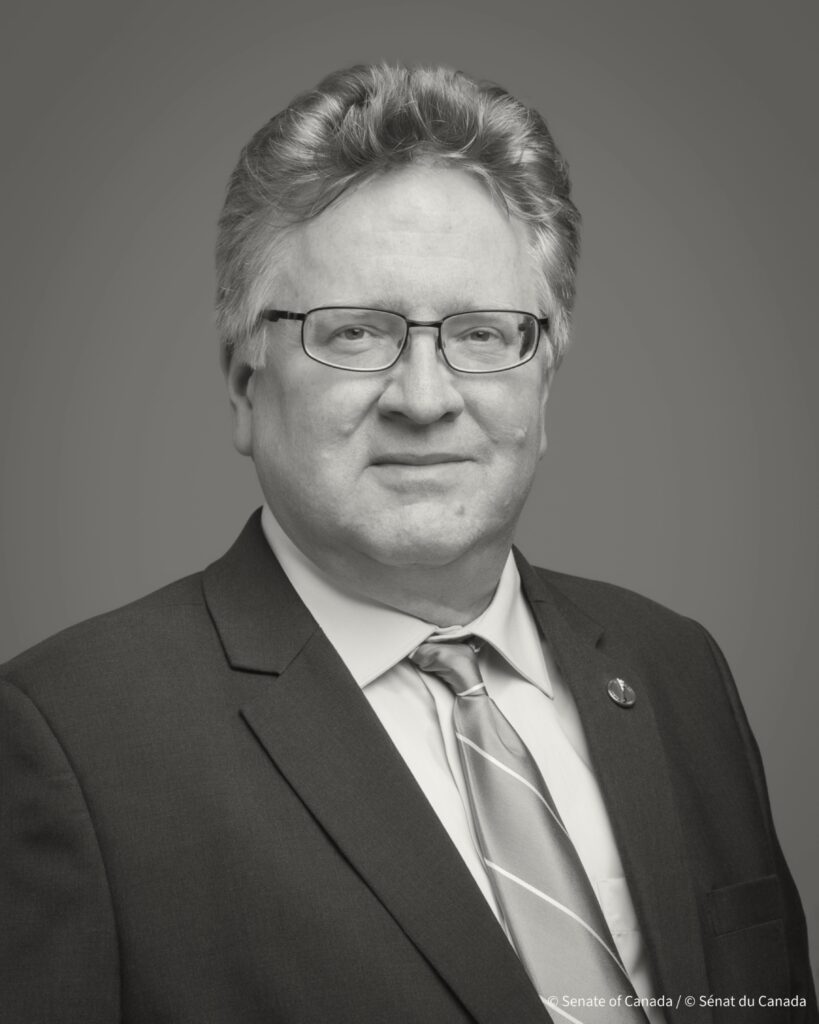
On this week’s episode, Jay Whetter and Toban Dyck sit down for a conversation with the Honourable Robert Black, Senator for Ontario and Chair of the Standing Senate Committee on Agriculture and Forestry. The three dive deep into Senator Black’s passion for soil health and how it came to be.
Listen here:
Transcript
Toban Dyck 00:00
Hi. This is the extensionist conversations with great thinkers in agriculture. I’m Toban Dyck and I’m Jay Wen
Jay Whetter 00:24
Hey Toban, Hey, Jay, we are talking to Senator Rob black today. Pretty exciting. I just saw him. Well, we, we, you. We’ve seen him a number of times because he, he’s the senator who gets out and about. Yes, we saw him in Winnipeg at this big soils conference in July, yes, and then he was at this extension conference at the University of Guelph the end of October, the
Toban Dyck 00:49
Canadian agri food rural advisory extension and education acronym Carey conference, extension, 4.0 there we go. That is, that is movable. That is what it was that you and I attended and where we saw Senator black. Yeah, I didn’t speak to him there, did you?
Jay Whetter 01:09
I talked to him briefly afterwards. I said, I’ll chat with you next week. He okay. He took part of an in a panel at the end of the the event, and and I note later that he was wearing Jack lantern socks, which was pretty awesome.
Toban Dyck 01:23
So, so this is a conference dedicated to extension. So we, Jay and I were there, presenting about this podcast, yeah, and our extension training program. So we had a, we had a kind of a workshop there, are like a 45 minute time slot and yeah, just some just some navel gazing, again would be like our The room was packed. It was like people standing. It was,
Jay Whetter 01:52
and I don’t think they were there for the long previous the presentation before us about the new Ministry of Rural Affairs.
Toban Dyck 02:00
They were not no. They were not no, because lots people came in after that was that was done, not to knock it. We’re not about that. But it was a largely academic conference. So we had most of the presentations were, were about papers, like they were presenting, you know, grad students or whatever, presenting their papers or studies and stuff. So Jay and I chatted beforehand. We’re like, let’s make our presentation fun. Let’s make sure we we get some laughs and just have a have a good time up there. So we really leaned on that emphasized so much so that I think after it, someone came up to Jay and asked if our banter was was scripted.
Jay Whetter 02:42
Are you guys just naturally like that? Yeah, actually, we are. Could you
Toban Dyck 02:47
imagine it being scripted, and we had to memorize that script and be like, Okay, at this point, you got to interrupt him,
Jay Whetter 02:53
pretend that we need Abby, yeah?
Toban Dyck 03:01
But no good. Good conference, and it was, it was fun to see Senator black.
Jay Whetter 03:06
There it was, yeah. So mean, we’re going to talk about 4h we’re going to talk about the legislative process. We’re going to talk about soil health, all things that Senator black is really passionate about. Perhaps we should just get right into it.
Toban Dyck 03:23
Let’s do it. We should.
03:25
We blazed it up,
Toban Dyck 03:27
damn it. We didn’t use that phrase blazing trails. Oh, wow. I was just waiting there for us. But we didn’t. We did not take the bait. You
Jay Whetter 03:44
in the face of increasing risk from extreme weather, rising costs and market instability, agronomist support is even more vital for sustainable production.
Toban Dyck 03:53
The free farm Learning Hub helps agronomists identify and implement high resilience practices that can help their clients improve soil health and boost profitability. And with the end of the year approaching, now is a great time for CCAs to sign up and earn CEU credits.
Jay Whetter 04:08
The Farm learning hub offers free self paced online courses, free webinars on nitrogen management, rotational grazing and cover crops, access to events, including on farm field days, workshops and conferences that connect farmers, ranchers and agronomists
Toban Dyck 04:24
interested. Check out the farm Learning Hub today.
Jay Whetter 04:27
Visit farmlearninghub.ca. Hey,
Jay Whetter 04:40
there listeners, if you’re enjoying the conversations here on the extensionist, you will probably love to get our newsletter.
Toban Dyck 04:46
Yeah, it’s the best way to stay connected with us, with Jay and myself. Yours truly, I’m excited about the newsletter to be honest with you, because I think, well, so many of our guests have sorry. Why are you excited about say. That differently. Jay, so many of our guests are they say so many things of interest, right? And I feel like the newsletter will be a great will be a great way to share that with our listeners,
Jay Whetter 05:12
like quick take homes, yeah, summaries, yeah. Absolutely, one liner, absolutely, absolutely,
Toban Dyck 05:17
I think about each each. Guests, we could probably write a whole bunch of articles from each of our guests, right? So to give our our newsletter subscribers, like summaries of, you know, the key takeaways of these things, plus plus information on upcoming guests. All they got to do, all listeners have to do is go to the extensions.com and follow the prompts to sign up for the newsletter. I think it’ll be I think it’ll be
Jay Whetter 05:48
great our guest today, we’re, we’re very honored to have Rob black. Honorable Rob Black is Senator from Ontario, also chair of the standing Senate Committee on Agriculture and Forestry. Senator. Welcome to the podcast. It’s great to have you.
Senator Robert Black 06:04
Thanks very much. It’s a pleasure to be here.
Jay Whetter 06:08
Yeah, yeah, and that’s a pleasure to have you on the podcast. Obviously, I see you have the 4h flag in the background, which we’ll get to in a sec. I like it. Are you in? Are you in Fergus right now? Or, oh, wow, where are you?
Senator Robert Black 06:22
I’m in Ottawa. I’m in my office in Ottawa. We’re sitting this week. So, so I’m here,
Jay Whetter 06:29
yeah, right, of course, it’s, it’s actually budget week this week. So yes, you’re all hands on deck. Well, okay, so Ottawa, what I, what I wanted to go back to is, I asked you about Fergus, which is your hometown? I don’t know whether you still go back to Fergus or what you consider your hometown these days.
Senator Robert Black 06:48
My home is, and always will be, Fergus, north of Guelph. That’s where I grew up. I go home every weekend. I come down on Mondays, Sunday, Mondays, and leave Thursday night, Friday, depending on on what’s act what the activities are here in Ottawa. But that is my home. In fact, the black family has been there since 1834 so 191 years. Oh, wow.
Jay Whetter 07:14
That’s amazing. Yeah, that’s exciting. Well, my, my wet, wetter relatives came from Cornwall, England to Ontario, right around that exact same time. Senator, so, Yep, yeah, we don’t necessarily share a locale, but they were, they were in Ontario and arrived right around the same time. So that’s kind of exciting. So Fergus, like I said, the 4h tie, the 4h flag, and a big part of your life, before you became a Senator, was related to 4h Why is the 4h so important
Senator Robert Black 07:46
to you? Well, I grew up in the 4h program. I started 4h when I was 12. I only took six clubs. You know, today, 4h members take 5075, 100 clubs. I took six, but they were impactful in my my life when I, as I mentioned last week, at an ag extension conference that I was at, when I when that, when the Ag office staff member came to the to our farm to look at my calf, one of my first things out of my mouth was, I want to have your job someday I want to be like you, Jerry. And so it was, it was, it was impactful. And I participated in a number of programs through my time. And then after, after graduation from the University of Guelph, I started working as a as an ag extension person, as a rural Ontario, a rural organization specialist, and we worked with a 4h program. So again, there I left the provincial government to take on the role of CEO, Executive Director of 4h Ontario in 2000 when it became an independent organization and and then I was chair of the Canadian 4h council for a couple of years, for a term, and I took on the role of CEO of 4h Canada for a short time when there was some some need for that. So you know, I’ve gained so much from the 4h program, traveled, met folks, and when the Prime Minister phoned me to ask me to become a senator. His words were, I’d like you to bring your agriculture, rural community development and 4h skills to the Senate. Amazing. So I think that’s pretty special. Very special.
Jay Whetter 09:30
What do you think he had in mind when he said 4h skills? Obviously, public anyone who’s done 4h which I did for a lot of years, public speaking is part of it. But what are the 4h skills?
Senator Robert Black 09:39
I think it’s the people skills as well, meeting management, understanding governance right and and we’ll we might talk about the process of bills and things like that, but it’s just understanding that piece of of how we have to deal with people in the chamber and outside.
Jay Whetter 09:58
Essentially, you should say that because I. That just reminded me that the first time I’d ever heard of Robert’s Rules of Order was when I was a 12 year old going to these 4h meetings. Yeah. So it did actually teach you the structure of a meeting and how to effectively they do Roberts Rules in 4h Well, they certainly did way back when I was involved Senator
Senator Robert Black 10:17
Roberts Rules is, worry, know, is, is the Canadian version of Robert’s Rules. Okay, it’s harder to say. It’s harder to say, right? Yeah, whether we call it Robert’s Rules or not, we do learn about motions and seconding motions and where you need to do that. So that’s, that’s a piece of of what folks, young people, learn in 4h
Speaker 1 10:39
what was the Canadian name again? Or the Roberts the Canadian boring, oh boring, oh boring. No, I didn’t
Toban Dyck 10:46
know that. Okay, yeah, that’s interesting. Google it, yeah, definitely, it definitely will, and hopefully our listeners do too. My wife and I were judges for the for our local 4h and from Winkler, Manitoba, Southern Manitoba area, and that was my first exposure to 4h I grew up, of course, on a family farm. I’m on my farm right now. I’m still farming, and I was just amazed at what those kids had to do and what they learned at a young age, like public speaking. So we were, we were judging a public speaking thing, and I was just, I was, we were both just wide eyed after that, like the young kids are learning how to, how to a write speeches, how to, how to, you know, orate them in front of an audience, and they’re learning all sorts of skills, like eye contact and presence, and these kinds of things that I had no idea Were a part of something that’s so associated with, like, you know, cattle and, like, there was a very kind of, I think there is still actually a huge kind of extension gap, even with within 4h to kind of get that. I don’t think a lot of people know how robust and comprehensive that program actually is.
Senator Robert Black 11:57
It is tremendous. It really is. And, you know, numbers are when I was in 4h it was the only thing going in my community, right? We didn’t, my parents didn’t drive me to basketball and skating and those types of things elsewhere. But today, we drive our kids and grandkids all over the all over the area, right and beyond. But at that time, that was all there was for me. And I’m glad that I participated.
Toban Dyck 12:26
Yeah, yeah, just as even, like a confidence booster for for for kids. I think it’s, it’s amazing. I, you know, I’m, I’m a little bit mad at my parents for not, for not putting me through Well, you know, I could have been so much more successful. No, I’m just kidding, you would
Jay Whetter 12:44
have been good at public speaking. Yeah, that’s
Toban Dyck 12:46
right. Finally,
Jay Whetter 12:50
so Senator, one of our previous guests, fellow named dilji Brar. He’s actually an MLA in Manitoba, but he took masters in extension at University of India. And we got on a whole talk about 4h and he talked about how it could be valuable for city kids to learn 4h and adults. So Toban, there’s still hope for you. But what do you what do you think about that? Like it like for a the 4h expanding into into the heart of Guelph, even to into Toronto or Ottawa? Like, would
Senator Robert Black 13:20
that work? So when I was CEO of 4h in Ontario, there were pushes to get it into, I won’t say downtown Toronto, but you know, the edges of Kingston, the edges of Guelph. It really all depends on the on the volunteers, because 4h is, is a volunteer based organization, right? And so if you’ve got volunteers in Guelph, in Toronto, in Kingston, wherever London, who want to share their 4h background and knowledge, there’s no nothing saying they can’t and so you know, it just takes those volunteers to put up their hand and say, I’d like to do this, and I can gather together six or 10 kids, and we’ll do it. So I think it’s tremendous. And the 4h the adults, piece of it, I’m not so sure about but, but I think getting it into into urban areas, it is there in places. I did want to mention, though, about about the online presence of 4h now. And you know, there’s so many poor things that we regret about covid, but covid told taught 4h clubs to go online and and so I just use my own kids as an example. One of my kids is a 4h leader and and was in the Wellington Waterloo Cooking Club, which they went over to the KW market once a week. And, you know, there’s a kitchen there, and they had a club there, and that involved 20 kids or 25 kids. When covid hit, they moved that online, and I will say 20 to 25 kids. In Waterloo Wellington that just was were from that area. Moving it online. Today, they have 110 kids in that club from across the province. And so the benefit there is, when those kids get to Guelph or to a university or another opportunity in 4h they will already, in many cases, have been able to say, oh, yeah, we took that club, you know, cooking, or chocolate making or cooking on a dime, is a club that’s on, that’s happening now. And, and they know those folks, it’s not sort of a first time meet. So, you know, covid had its there was some benefits. And this was one of them, 110 clubs. Her kids in that club that is, like, it’s fascinating to watch.
Toban Dyck 15:47
Yeah, yeah,
15:49
across the province, yeah.
Jay Whetter 15:51
I’m sure we’ll come back to 4h at some point, but sure you mentioned putting up your hand and volunteering for something, and that’s kind of what you did with the Senate. I mean, you, in this day and age, you can apply to be a senator in the in the past, you were weighed around until someone appointed you, but you actually put up your hand in a in a Senate sense, and said, Hey, I’d be interested in being a senator. Can you? Can you tell us about, sure, how you got to become a senator?
Senator Robert Black 16:18
So again, it’s one of our kids that came to the kitchen table, dinner table in July of 16 and said, the Prime Minister’s changed the way senators are appointed. No longer does he hand he or she hand pick. And you know, you have politician or whatever you apply now. And so Taylor said, I’ve always wanted to be a senator. And as a parent, you’re bound to say, well, go for it. Check it out. Try it. And Taylor went away and came back the next night and said, I’m not 30 years old. I can’t be a senator. I can’t apply. I don’t own land. I can’t apply. I don’t have $4,000 in the bank, so I can’t apply. There’s four criteria those three and being a Canadian citizen. So He then turned to me and said, Dad, you should apply and, and, and that’s how it happened, to be very honest. And I filled out a form, an online application, three reference letters and sent it in, and then really forgot about it and and it was a number of months later that I got a note back saying it’s a little weak in it. Will likely not look at it, but you can fix it if you want. I fixed it and sent it back, and then again, forgot about it. And it was almost a year later that I got an email saying, well, we now need to know about your your your family members, what they do, your your in laws and outlaws. You know they were, you knew they were checking into a security check so and then and again. It was a couple months later, and literally, it was a phone call as I that I took coming up the 416 here to Ottawa for Canada’s, AG, day in 2018 and the call came in on the car. I pulled over and it was Mr. Black, please hold for the Prime Minister. Wow, that’s amazing. That’s That’s it. So like, so I did, I did put up my hand and I had, I was a municipal counselor prior to becoming a senator, my first four year term as a municipal counselor. But public service has always been in my in my blood, but had run for council and got on. And if I hadn’t become a senator, this would likely, I’d likely still be there because I enjoyed that opportunity.
18:48
Well, my
Jay Whetter 18:50
I don’t know a lot of senators. I hardly ever meet senators, but I’ve met you so many times, and I’m not this is that’s wonderful. I’m just thinking,
Toban Dyck 18:58
Are you bragging, Jay, well, but how many times you’ve met Senator black?
Jay Whetter 19:03
Our paths just happened across. And that’s not the My point is that, like you, I don’t know whether it’s the 4h ethic, it’s the small town ethic, but you are, you took, you grab this job by the horns, and you’re, you’re, I don’t know whether you’re the most active senator, but boy, oh boy. I mean, it’s, it seems like you’re just loving this thoroughly.
Senator Robert Black 19:29
Yeah, you’re milking thoroughly. I’m enjoying it thoroughly, enjoying it. I it was the second day in sitting my my second day as a senator, sitting in the chamber, and one of my colleagues called me over. We had a vote for bells, and there was 30 minutes that we had to wait for the vote. And he called me over and said, Senator black, you can just be here three days a week, like we really sit Tuesday, Wednesday and Thursday, and. And we all get paid the same amount. If you’ve got extra as a chair, you get a little bit bigger stipend and things like that, but, but this senator said, Senator black, we all get paid the same you only have to be here three days a week. I can see that you’re going to get bored if you don’t, and that was two days in. If you don’t find, find your passion and run with it. And obviously, AG is my background rural community development and and I have run with it, and I like to be busy. I’m proud of the work that happens that I’ve been able to undergo here in the Senate of Canada.
Toban Dyck 20:41
Hmm, yeah, I use, you know, we’ve engaged you, and I have engaged, I think, mostly not, not so much in person, but a little bit over, over social, over the years, when I had to call them for the National Post, I know you would, you would often engage with that on, then Twitter and repost my stuff. And that was, that was always of course, heartwarming, but yeah, your name’s become synonymous with with just being a champion for agriculture. And that’s kind of remained that way you know, throughout your tenure as a senator. And I think it’s applaudable that that’s it’s just been a consistent when you hear of Senator black, you think of a champion of agriculture, and I’ve always, yeah, that is, it’s very respectable.
Senator Robert Black 21:28
Thank you very much. And there are other senators as you well know, we’ve had two new senators from the Ag space appointed in the last couple of years, Senator Mary Robinson from Prince Edward Island, and Senator Todd Lewis from Saskatchewan, but I think it’s a great team of three and our other colleagues that are starting to raise the issues. I tell folks that in that first three months, my first three months as being a senator, agriculture was mentioned once in the Senate chamber. That’s the day I did my initial speech, my maiden speech, inaugural speech. That’s why it was raised last fall. In the three months last fall, there was only about five days that agriculture was not mentioned in the Senate chamber. And that’s that’s not because of me or Mary or Todd, we play a role in that, but it’s because of folks like you as well, and the and the your listeners that are raising the issues of agriculture for my colleagues to start talking about. And obviously, you know, there were bills that were on the docket last year, that last fall that were important to agriculture so but that’s just the way it’s changed, and and I’m excited about that.
Jay Whetter 22:42
I just feel like we need more prairie representation on the Senate, ag committee. But that’s, that’s fair,
Toban Dyck 22:48
that’s your bias.
Senator Robert Black 22:51
Well, you’ve got a there’s Senator mugley from Saskatchewan, and she is a dynamo on our ag committee.
Jay Whetter 22:58
Okay, good, awesome. Yeah. So we may not have the numbers, but we’ve got the dynamo. Hey, so tell me about the soil health and how you became a champion of soil health.
Senator Robert Black 23:10
Right, right. Thanks. Between the day I was appointed, I had that call from the Prime Minister, and the day I was sworn in was it was a two week time period. I was at a conference at Stone Road in Guelph in that middle week. And I came, I arrived, and there was an empty chair beside two individuals who who were champions of soil health. And I’ll name those, if that’s okay, that’s Don Lobb and Lillian Morris and and and there was this vacant chair and, and Don said, Senator black, sit here and, and, and he pulled out from under his under his chair. He pulled out the old soil report. This is the Senate soil report from 1984 and he said, Senator black, this is the one that I got from Senator Sparrow. It’s signed here, he pointed out. He said, I’ve signed it over to you. It’s now your responsibility to take that project on. And so that’s it. Both, both Don and Lillian are, are champions of soil health, and they’ve been behind me all the way. And so it took some time I raised the issue in the Senate, in the ag committee, and and we put a moved it down a little ways. And then when I had the opportunity to raise it in the in the ag committee, to do get an order of reference to conduct a health soil health study. Undertake a soil health study, and we got that, and it took 1818, months to complete this report, and we heard from 153 witnesses, 74 briefs, 70. 50 some odd committee meeting. 37 committee meetings, 50 hours of testimony. We traveled across Canada. We traveled to Rome to a soil plenary session there. So, you know, we did a lot. It was a significant study. So I’m very pleased that on June the fourth, 2024 we we tabled it, and to be honest, it has had traction ever since. And and I’m pleased with that. That was on a Thursday. I went out to a soil science conference in Vancouver the following Monday, the day three or four days after it was tabled, and I was hearing from academics out there that they were already using the results to conduct or to put forward proposals that they’re that they were wishing to undertake. So again, those early wins are exciting. The Federal Government provided $6.9 million to Dalhousie and a team of Dalhousie and other universities to undertake some some database collection and analysis that will be done in May of 2028 that was another somewhat of a recommendation. There are 25 recommendations to the federal government. But as I look at it, the earlier report, Senator sparrows report was really directed to the federal government. This one has been written in my mind, and I think the issue has been raised across Canada. So it’s actually of value to federal, provincial, territorial governments, municipal governments as well, and so I’ve made here in Ontario, I’ve made municipal governments aware of it, and Canadians, writ large, individual Canadians, I think it’s important. Very quickly, I sent a letter to all the rural municipalities here in Ontario last spring, making them aware of the report and saying that there was value in them knowing about the report and the recommendations. And to this day, we’ve received 17 resolutions from municipal councils across this this province, supporting that the recommendations. And so those resolutions go all the way up the chain. And so you know, every every week or two, the Minister of Agriculture is getting another resolution saying Wellington North supports the 25 recommendations. Get on it. So that’s exciting. So I’m still excited about this report. I yeah, I’m excited
Jay Whetter 27:37
about the report now the you know, as this evolves. We’ve got a bill now, and it’s a Senate Bill, and part of it is, does Canada need a soil health advocate? There you go. So, so, I mean, we want to talk about the legislative process we do. So, so let’s, let’s use this as a as an example of the process and and so describe for me your bill and where it’s at and what are the next steps.
Senator Robert Black 28:07
So during the prorogation process, I worked with legal lawyers here, parliamentary lawyers here, to develop Bill s2 30. And it’s a very short bill, but it’s an Act Respecting the development of a national strategy for soil, health, protection, conservation and enhancement. Many of the pieces of it come right out of the report. And so, you know, if they undertook this, if the government undertook this, they would be moving forward on the report, and that’s exciting for me. But so it was tabled in June of this of 2025, and at first reading in the Senate. It’s been numbered as 230 and so now it wends its way through the through the Senate. Currently it’s at second reading. I have spoken to it, and a few of my colleagues have spoken to it. I have a colleague speaking to it today, at some point in the near future, give or take weeks or a month or two, whatever, but at some point near in the near future, it will be voted on at second reading, as all bills are and then referred to a committee. And at the committee level, bills are studied further witnesses are brought in to talk about the bill. It may be amended at that point, and then then it’s voted upon at committee and then sent back to the Senate chamber for third reading and a vote at third reading. So I would expect this would go to the agriculture and forestry committee. But when it comes back to the Senate, it’ll be, it’ll be debated at third reading and then voted upon. If it passes at third reading, either in its current form or amended because of the committee work, then it would go, if it. Passes at third reading, it then goes to the House of Commons. We call it the other place. We never refer to it as the House of Commons. In the chamber, we’ve heard refer to it as the other place. It’ll go to the other place. I like that. Yeah, where they will put it through the same process, first reading, debate, a debate at second reading, refer to a committee back to the house for third reading and passage. If they amend it, it has to come back to the Senate to concur with the amendments. So it gets ping pong back to us. We’ll look at it again in the in the chamber. It may we may say, don’t agree with those amendments, we’ll make changes, put it back, send it back and say no, or we might say, yep, that’s that’s good. And so once both chambers have concurred with the absolute wording of the of the bill, then it’s and voted on, then it is sent to the Governor General for royal assent. That’s the process, whether it’s whether it’s this bill or or any Senate Bill. Similarly, if it’s, if it’s comes from the House of Commons, same deal, first and second reading committee. Third Reading sent on to the Senate for review and sober second thought, and back and forth if necessary, and then to the Governor General for royal assent. That’s That’s it. It’s not a, it’s not a, it’s not a hard process, but it can take months and years. Yeah, and
Jay Whetter 31:33
then if there’s a change of government, I mean, maybe not so much an issue with the Senate, but I mean, when you got the House of Commons involved, or the other place involved. There’s all kinds of potential delays in that regard. That’s right, yeah, that’s
Senator Robert Black 31:45
right, that’s right. I’ve had one bill already go through that I proposed in the Senate, and that was a food day in Canada Act, right? Which was, which was proclaimed in in May of 2023, it started in the Senate. It was, it was a non contentious bill just recognizing food from the farm to the consumer’s plate and a specific day. And non contentious. It passed fairly quickly in the in the Senate. Passed fairly quickly in the house, and was proclaimed, as I said, in May of 2023
Toban Dyck 32:22
Senator black, how are, how are, just for our listeners, how are, how are they supposed to kind of understand like this, this bill in relation to like there’s lots of activity around soil health going on nationally right now, lots of you know, calls for kind of a national approach to to soil Health. And there’s various groups who have attempted to kind of put something together that unites, unites Canada under kind of one, you know, kind of, whether it’s guidelines or whatever. How does this bill sit in that, in that landscape?
Senator Robert Black 32:57
So, so this, this bill is, hopefully will unite the work of us to develop a strategy around soil health, and it requires the federal government, through the Minister of Agriculture and agri food and other ministers as deemed necessary, to work with federal or provincial territorial governments, municipalities, indigenous communities, academia to develop a strategy that will help to push the idea of soil health, put it into action. And so it’s, it’s, you know, it’s relatively brief, but it does talk about the development of a strategy that identifies policy and legislative measures to recognize soil as a strategic national asset, something that I think is important. The other piece of this bill is that it it requires the government to look into identifying a national soils health advocate. So Australia had two soil health advocates in the previous government, both of whom reported to the Prime Minister. They did not report to a minister of agriculture. They reported to the prime minister, and for 10 years, those individuals traveled the country, advocating and the world, advocating for soil health. I got to know Penny Wensley, who was the second advocate, and an amazing woman who, who, you know she, she had the political savvy to bring people together. So as part of this, this bill, we would think there would be a need to have a national soils advocate as well. Will we get there? I don’t know, but this requires government to work with collaboratively, collaboratively with with other organizations, individuals, provinces, territories, governments and. Them, and that’s the important piece. No point in developing a sort of a top down strategy. They have to work together. You know, the Canadian Soil Conservation Council of Canada is working on one now, and this was never meant to compete with that. This was meant to and they know this. For me, this was meant to help them along and like, let’s get some traction to what the work they’re doing we could be half done. You know, when this bill, when this bill passes? I’m not saying if, when this bill passes and and that’s from the work of other organizations.
Toban Dyck 35:37
Yeah, I’m glad that Australian model is being taken into account. I think Senator Block, I think you and I were at the same conference. Jay was there too soils conference in Winnipeg, and was that? Was that? Was that Penny Wen? Was she there? That was this,
Senator Robert Black 35:51
yeah, she was there. She was a guest speaker, yeah, she was she, and I’ve met her elsewhere, but, but she is. She’s not in that role anymore, but she still is, is well regarded.
Jay Whetter 36:04
So what? What amazing senator. Yeah, I mean, we like to talk about communications and extension. What was her skill set like? What was it about her that made her an effective leader or proponent of soil health.
Senator Robert Black 36:21
She was knowledgeable. She knew the political processes, like she had been a governor before that, or, you know, some of the other but she she knew the political processes. But in my mind, she was just a down to earth individual. She could be sitting here with you, the three of us, and just chatting, and you wouldn’t, she didn’t talk above us. She she just, she just made it feel right. And I think that’s important. I tell folks, I’m not a soil scientist, I’m not an expert, but what I’m hopefully doing is raising the issue, right? And that’s what she
Jay Whetter 36:56
did, a human more of a human connection, you know? Yeah, she wasn’t just bombarding you with facts and science, yeah, yeah.
Senator Robert Black 37:04
But she, she did drive that. She did drive the Australia soil, soil health strategy, which was tabled in 2021 I believe. So, I mean, there are, there are examples out there of strategies that we need to look at,
Toban Dyck 37:21
yeah, yeah. And I’m glad those examples are being taken seriously. I remember after that, after that talk that she put on at that soils conference, I was chatting with Jay, because I think you missed it, right, yeah. And I was just, I went on and on about it, because it was so great, like, she’s charismatic, and you just, you could tell she had fun. She had a sense of humor. Like you said, she’s very down to earth, very believable. Just just everything about it was, was fantastic. And even her presentation, even like the slide deck that she had, was just exactly, yeah, all the pieces just kind of came together. There was one slide, and I keep, I kept talking to Jay about it where there was just, I don’t think there was any words on this slide. It was just this picture of this, like, post apocalyptic scene tree, like, it was like, I was like, what is it? But it was interesting, right? And it was just, it all led,
Senator Robert Black 38:08
what she drew out of that was what she drew out of that was, was
Toban Dyck 38:13
imperative, right? Absolutely no, I think that was, and I talked to her after very, very relatable, very relatable person. No, I that was, that was amazing. I mean,
Jay Whetter 38:25
Senator, you’re a small town person, sort Toban and me, and I don’t know whether we just know how to talk to people, or maybe that’s just our biases coming through, but I feel like you, you mean, yes, you, of course, you’re a senator. We address you as Senator black, but at the end of the day, you’re, you’re a small town 4h guy, and I think that helps, though. Don’t you think when, like, even going to Ottawa and communicating that it’s an I
Senator Robert Black 38:51
do, first and foremost, I’m Rob, like, that’s, that’s the way I I like to be referred to. Yes, I’m a Senator, and yes, it’s honorable, and that, and and, and we have to respect those protocols. But first and foremost, I live in just north of Fergus, a small town for small town, community, rural community, growing up there, and that’s where I’ll I’ll be, yeah, that’s where I feel most comfortable.
Jay Whetter 39:17
So what like in, in this your new world. I shouldn’t say New. It’s 2018 but in life and politics, what? What are the key communication skills to get things done? Are there some tips you’ve picked up in these eight years that are seven, eight years that would be useful for our audience?
Senator Robert Black 39:41
So I have learned very quickly that nothing happens fast, and we can laugh about that, but it’s it. There is a reason why we take we go through first second, referral to committee, third reading, etc, debate, etc, because otherwise things can get. Snowballed through and and may not be as good as they should. I’ve learned that it’s important to get your message across and chat with folks offline too, whether it be folks that are contributing to the soil report or my colleagues before we get into the chamber, whether they, you know, do they do they understand the, in this case, maybe the soil health report, and is there questions they might want? If I can get a question ahead of time, I’ll be better able to answer that. So those types of things, so communications takes time, would be the other piece. And, and I guess, I guess the last piece of it, there is a value in the Senate of Canada. And, and I don’t know about you, but when I came into this, I didn’t have a whole I had looked into it. But, like, we don’t learn a lot about the Senate of Canada in in school. I I delight in talking to students, either over over zoom or teams or in person, and I get a real kick out of that, and do that as often as I can. There are 85 teachers from across Canada here in Ottawa this week for the teachers, parliamentary teachers Institute had a chance to chat with them a couple of days ago and and, you know, they’re the they’re the ones that really find it. Are keen about teaching civics in schools, and we need more of that. I know we learn about municipal government a bit in high school and maybe provincial but I didn’t learn a lot about the Senate of Canada. I didn’t learn nothing about the Senate of Canada, so it’s important. So that’s that’s another piece that getting, getting it, letting folks know what we do. And that’s where I was headed, if I can the value in the Senate, the value in the Senate, I think about the cannabis bill that passed in June of 18, and if, if there had been no Senate of Canada, and it passed one house, one chamber, that bill stated, I’m paraphrasing, but it stated that anything involved in the production and processing of cannabis would need to be sold behind lock and Key, like we do cigarettes or alcohol in a separate store. Well, in it came to us, and in Ag Committee, I started asking questions about what’s involved in the production of cannabis, and if you think about it, greenhouses, flower pots, fertilizer hoses, fans, shovels, tractors for outdoor use. We can, we can have a list a mile long. All that could have been, had to been sold under lock and key, if it had, if it had passed as it was originally. And you can just imagine going into the Home Hardware and saying, I’d like to try that shovel. Could you unlock the cabinet?
Jay Whetter 43:04
Right, right? Yeah, no, because you might actually use that to produce cannabis.
Senator Robert Black 43:08
So, so it came here. It was amended. That piece of it was amended in the Ag Committee. It was accepted. It at in the in the Senate, that amendment went back, among others, went back to the House of Commons, and they accepted that amendment. So it now says, again, paraphrasing anything involved in the processing of cannabis, processing and sale of cannabis needs to be behind lock and key, which, which is what we have today, right? But I can just imagine how your listeners, our stakeholders, would have, would have reacted if, if they couldn’t buy a hose or fertilizer or amendments without having to go through what we do to buy smokes or other things. Yeah, right, value of the Senate.
Toban Dyck 43:56
Yeah, no. That’s, that’s really interesting. I was gonna stop you. I’m gonna go first. I I often wonder if there’s a bit of, like, a policy extension gap in agriculture. I think, like, I’m both Jay and I are involved in a lot of, like, producer commissions, provincially, nationally, and lots of talks around the board. Those board tables are around, how do we get involved in policy? How do we get involved in policy? We need to get involved in policy. And I feel like there’s a sense of, we do need to get involved in policy as an industry, or as a, you know, producer led organizations. But there’s kind of a bit of a gap there in terms of how to do it and even what that, what that means. Or, like, I feel like farmers, lots of people like the word policy, they talk about it, but what is it, you know? And how do I, what does that learning curve like? And how do you, how do you kind of jump into it? Say, um, yeah, so I would leave that to you. Like, how does someone kind of you. Who doesn’t know but wants to get involved. Where do they go? How do they? How do they, how do they become knowledgeable?
Senator Robert Black 45:05
So I would say, volunteer, get involved in your local organization. You know, whether that’s a grain growers or cattle, cattle associations, etc, etc, whatever commodity locally, and work your way up. You know, there’s there’s annual meetings, there’s resolutions that can take place from the local level up to up to provincial. Organizations get involved, participate in those annual meetings, in those policy advisory committee meetings, if there’s such a thing, and, and, and, and just, just learn from that. You know, I get regular, regularly. I get, you know, three or four meetings a week when I’m in Ottawa with national organizations or provincial organizations that come to Ottawa, to to to lobby, to talk to their parliamentarians and and it’s not just national organizations. We do meet with provincial organizations. As I do, I will always, as long as I can make it work, I will always meet with ag and rural groups here in Ottawa and and learn from their issues. I tell folks when I’m out talking that if I don’t know your issue, I can’t stand up in the chamber and ask questions, debate the issue, raise a bill over the issue, so you got to tell me it’s not a I can’t I can’t know what I don’t know. But that being said, I encourage folks that come into my office to don’t come to wine like I don’t just want to hear the problems. I want to hear the solutions too, because the solutions are out there, like it, and and and Senators. We don’t have programs. We don’t have budgets. There’s no budget in the Senate for AG, like for AG, programs or stuff. But what I can do is raise the issue and in the Senate, whether it be through a senator statement, whether it be through a question of the government leader in the Senate, whether it be raising rising on a on an issue that’s being debated, and bringing in the the Ag focus, or and I often do, after I’ve met with a group here in the office, I will send a letter to the relevant ministers and say, I just met with and and here’s the issues that they raised with me. I might go on to say, I know you’ve met with them, I’d encourage you to meet with them again. Or I I would encourage you to consider these, these concerns and their issues as you’re moving forward. And I’ll send that to any minister that needs to hear that. And that’s my commitment to the organizations that I meet with. It’s a little piece, right? But at least it raises that issue one more time, from a from a senator to a minister.
Jay Whetter 48:05
I love that’s amazing. I love that the conversation has gone here. Because this is something that I really get excited about. Is, is how to, how to accurately use your 15 minute meeting with a politician and they give 30 I give. Yeah. So I’d love to so you gave us one good tip, don’t just come to wine. Come with solutions. But what would be your advice to a farm organization or an individual farmer, or anyone who had a 15 or 30 minute meeting with a politician? How do you make the most effective use of that time,
Senator Robert Black 48:41
distill it that distill the issues down to three or four points, leave a leave behind, a leave behind. You know, a one pager that outlines those, those issues. And if it can be what I call an infographic, you know, with a picture and numbers and sort of key, key points. Those are even better, because I can pick that infographic up and and look at it very quickly, and then we can talk as as opposed to reading a full page of of document, full page document. So, so it’s, it’s that brevity with still getting the idea across and the leave behind is so important, so important. We, Toban
Jay Whetter 49:26
and I were just talking about this in another podcast, but about how this this so you go, Oh, I’ve got, I’ve got a meeting with the senator. I’ve got a I’ve got to, kind of have talk about all of these things. I’ve got 50 things to talk about. I’m not going to meet him again for a couple years, or maybe ever, we really have to anyway, that is absolutely the wrong.
Senator Robert Black 49:45
That’s right, that’s right, because it just goes over right. Because, you know what? Tuesday, I met with four different groups Tuesday morning, and I had a breakfast reset breakfast as well with the i. With an organization, so we don’t have a lot of time, right? But I guess, from my perspective, I do commit to following up as necessary with ministers or other organizations. The other piece I like to do is to connect people. And that’s another piece of that’s another piece of what I think folks can do, folks in my position can do well is, I might not know the answer, but let’s find out by going over here. You know, you should talk to these folks and and so we do a lot of that as well.
Jay Whetter 50:33
Of course, you know the John F Kennedy quote asked not what you can what your country can do for you, but what you can do for your country. And I mean, politicians are sort of like us in some way. I mean, we don’t have all the answers. So what? Like, what do you do? You actually kind of adhere to that quote, like, do we all have a responsibility as Canadians to make the country better? And how can we do that?
Senator Robert Black 50:57
I believe we do. I believe we do. And it can be in, you know, a small way or a big way. And there are people out there that have done it in big ways, right? But if I could leave this place a little better with the AG, perspective, I will have done my job and and I have 12 more years left, so we will talk again. I’m sure
Jay Whetter 51:22
we’ve already got you on the schedule for next month. They do not know about
Senator Robert Black 51:27
I should have another 12 years if I stick around and and you know, I may. Will I be on ag committee forever? Will I chair Ag Committee forever? Probably not, because I also think that is important to for me to grow in other areas, but and others to grow in in that position of ag chair, but I will hope to be on the Ag Committee and, and I’m not telling you anything that you know, but anyways, just that we have the opportunity. There’s 18 standing committees in the Senate of Canada and and I probably should learn a little bit more about some of the other areas, right? The other piece of it is, is that there’s a lot of overlap, right? You know, there’s a transportation committee, but, but there, there’s transportation issues in ag, Foreign Affairs and Trade today. This morning was talking about customer and ag, I’m not I wasn’t there, but my colleagues let me know that this morning they were having folks in to talk about Kuzma and agriculture trade and tariffs. So that’s great, because there’s other people looking out for ag as well.
Toban Dyck 52:43
So I want to you think of all the people that you meet on a regular basis, Senator black and like all these 50, all these 30 minute meetings, rather, is there a is there a space for novelty and kind of creative approaches to these meetings. Like, yeah, you know, what the Jay and I often joke about with, with regards to extension, is, you know, things like different novel approaches, like, you know, even like putting on a skit, or, like a singer songwriter, you know, kind of thing when you think of all your meetings and the most memorable ones, you don’t need to give specifics or names. But is there space for that? Is there space for creative approaches to these, to these things?
Senator Robert Black 53:27
Not here, okay, and not here. But that’s not to say that from a meeting here, I might say, well, can can we get together? Can I go out and see your your project, or your your farm, or your your industry, your part of the sector, and we do a lot of that as well. My colleagues and I do, we get out about and and take that opportunity. So I think one spins off the other, you know, so that’s where the creative piece might take place, you know, I get to spend an hour or two on a grain farm or or, you know, in a milling operation.
Toban Dyck 54:05
And I’m glad you brought that up. Actually,
Jay Whetter 54:07
I You looked seriously worried at the thought of Toban and I showing up and doing a little interpretive
Senator Robert Black 54:14
Well, yeah, you know, dancing around a candle. Let’s not do that.
Toban Dyck 54:18
Yeah, I guess we’ll cancel that visit. What so what
Jay Whetter 54:27
are you most proud of in your Senate job so far?
Senator Robert Black 54:32
Yeah, I’m, I’m proud to have been appointed, first and foremost. It’s an honor and a privilege. It still raises the hair on the back of my head when I walk up the hill and realize that that I think I was 972 the 900 and 72nd Senator appointed. And there I do have that number. It’s close to that since Confederation, you know. So. This isn’t a big club. There are 105 senators in the Senate at any one time. So it’s an honor and it’s a privilege, and I don’t take that lightly. I’m proud of the food day in Canada Act. Anita Stewart. You probably know the name Anita Stewart started the longest barbecue in 2003 with BSE crisis in a Laura. Anita passed away in 2022 Anita sat in my office in in 2019 and said, Rob, there needs to be a food day in Canada, like she always had it as though, as the Saturday of the Ontario August long weekend, but it wasn’t a cross Canada thing. And she said, Rob, there needs to be that. And and I agreed, and we she passed before it happened, but I know she’s looking down from above. And so just on that note, it is that it is the Saturday of our Ontario August long weekend. But other provinces don’t necessarily have that holiday, so it the bill actually states, and I doing this from memory, but the bill states it’s the first Saturday in August, after the last Saturday after the last Monday in July, because that then sets a sets a date. It might be the it might be our August long weekend, because that’s what it is. But in Manitoba, or or elsewhere, it happens to be the first Saturday after the last July Monday. So that’s how it’s but it’s those types of things I was ready to just put in the bill. It’s the August long weekend, very quickly realized that they might not be there. So, so I’m pretty proud of that. I am absolutely over the moon on the soil health report and, and it’s not my report, it’s, it’s the Ag committees report, and but it has had so much traction, and I am delighted that folks are are taking it to heart.
Jay Whetter 57:09
And it’s the most downloaded study, and it is. It’s the
Senator Robert Black 57:12
most downloaded study ever, and the the earlier report, soil, soil at risk. Canada’s eroding future was the most requested Senate soil soils Senate study ever in the history of the Senate, when it went through its process. And so now the soil health study is the most most downloaded soil study or Senate study.
Jay Whetter 57:38
Well, it’s been an absolute pleasure. Yeah, absolutely. So we took an hour of your time, which means two other groups didn’t get to meet you today, but our apologies, yeah, but hopefully we can make up for that by sharing this with with lots and lots of Canadians and people beyond Canada, we really appreciate it. Yeah, thanks
Toban Dyck 57:58
for taking the time. It’s
Senator Robert Black 58:00
been my pleasure, and you’ve made it easy. So thanks very much. Pleasure is all ours. Do you like what
Jay Whetter 58:11
you’re hearing and want to support the extensionists? If you are an agriculture company or association looking for a powerful way to get your message in front of Canadian farmers, then partner with us. Our listeners are farmers from coast to coast.
Toban Dyck 58:24
When you advertise with us, your brand isn’t just another commercial break, it becomes part of our story. Ads on the extensionists are personal and trusted. Our listeners value what they hear on the podcast.
Jay Whetter 58:36
Whether you’re looking for a 62nd ad somewhere throughout the podcast or even an exclusive episode sponsorship, we have options that will work for you.
Toban Dyck 58:45
So if you’re ready to get your message out there and connect with farmers across Canada, let’s talk visit the extensionists.com for more information.
Jay Whetter 59:00
Well, that was our first senator on the podcast. I you know
Toban Dyck 59:03
what I wanted to talk about at the end. There’s a few questions that kind of left got left in the in the ether, wind wings. I’m not sure. One was, why soil? Like, what was it? Was it? Was it just because of the passion of the people that he met after the phone call from Prime Minister Justin Trudeau, or was it because it triggered something of genuine interest in him? So that’s a question I would have I would have asked, had we had more time. And then the other part was really getting into the moment he got that call. Like, could you imagine? Could you imagine, right? Like, you know, whoever the sitting Prime Minister is, but, like, you take a phone call from the Prime Minister of Canada and, like, what, you know, yeah, did you drive into the ditch, or did you fall over? You get weak at the knees? Or, like. What do you
Jay Whetter 1:00:00
Well, that would have been a great question. Yeah, for me, that for me, the takeaways from what he did manage to tell us, which was a lot, but just, I really like this, and it kind of just hits home again, this, this cognitive load thing. But when you, when you’re meeting with a politician, come in with three or five things a short list, and you don’t bring the whole laundry list of requests and not don’t just come into wine, but come in with solutions, yeah, yeah. So do a bit of homework and come in with some some really grounded ideas. And then the infographic. You must have loved that, because you’re an info
Toban Dyck 1:00:39
I got pretty excited. So what I got, it’s interesting because it’s, it was, like, I remember this from years ago, like, you know, learning about, you know, how important that takeaway is, but it’s interesting to hear it now again, like, so, you know, I often think, Okay, how many of my positions on things are dated? Right? Like that. It’s no longer as valuable as it used to be, but he’s still like, today, he’s still saying how important that is to have key takeaways and an infographic. So I would have, you’re right. I did get excited about it. I was like, yes, noted. But I also thought about, I would love to have gotten into it a bit in terms of, okay, so you have infographics, you know, you at what? There’s a spectrum, right? So you have, like, super slick ones versus kind of crude ones. And I’m sure the answer, if I was a betting person, would have been somewhere in the middle, like, too slick of an infographic. You’re probably a bit dismissive about it, right? What’s the, what’s the motive here? Yeah, so, like there is, like, what is that sweet spot of an effective of an effective infographic, but it is, wasn’t very valuable to hear that that is still something appreciated at his office, something notice, something makes the information more noticeable and easier to digest. I mean, that would be the objectives of an infographic, I assume, yeah, but what a great interview, though, like, you know, but just being Pat here, but like, a very easy conversation, yeah, I found Yeah, yeah.
Jay Whetter 1:02:12
I enjoyed it a lot. I mean, we didn’t ask any hard questions, but I guess we can leave that to the but the daily news reporters, or maybe she did ask harder questions, but in ways that was more like, I but conversational, I
Toban Dyck 1:02:26
agree, but I didn’t feel like, like, Oh, this is a burning question that I really wanted to get at, get at, but I’m but I’m like, editing myself. I didn’t feel bad, really,
Jay Whetter 1:02:38
and I feel much more at ease having a conversation like that. Let’s just get at, let’s get at a point and we don’t need to hammer home or be controversial. Let’s just, let’s think about solutions.
Toban Dyck 1:02:52
Yeah, like you said, there are like, there are vehicles, there are mediums for that, right? Like, and it’s an important part of you know, the landscape to have people who will ask those
Jay Whetter 1:03:04
challenging, hard questions. But, and we’re not political people, we’re communications people. We might say communication,
Toban Dyck 1:03:11
well, he delivered a bunch of them. Yeah, he did, yeah. I mean, I think, I think the whole like learning about the process is incredibly interesting. Yeah, the value of 4h value 4h the value of the of the of this, of the Senate, and, and, yeah, I think it was very, I mean, and him talking about how this bill fits in with that soil, landscapes. And it’s an interesting one, right? Because it’s it in some ways, it feels like a busy a busy landscape for AG, to navigate right now, yeah
Jay Whetter 1:03:49
and yeah and not easy to nail down a soil strategy, no, because there’s so many moving parts. But So to find the three to five key points about a soil strategy, I mean, that will be a challenge in itself,
Toban Dyck 1:04:02
for sure, for sure, but no great, great conversation, and that kind of an honor to have it a day like, you know, for him to for him to take the time.
Jay Whetter 1:04:11
And yeah, he was on a panel at this Carrie, this extension conference that you and I attended in Guelph, and I noticed that he was wearing pumpkin socks. And it was on the, I don’t know whether it was Halloween or the day before. It was the day before Halloween. Yes, there’s, there’s a guy I can support.
Toban Dyck 1:04:36
He takes his socks seriously. Anyway.
Jay Whetter 1:04:42
This has been the extensionists Podcast. I’m Jay wetter
Toban Dyck 1:04:46
and I’m Toban Dyck. Till next time,
Jay Whetter 1:04:53
this has been a burr forest group production.
Toban Dyck 1:04:55
We also want to thank the people working behind the scenes to make this podcast happen.
Jay Whetter 1:05:00
Abby wall is our producer and editor. Ashley Robinson is our coordinator, and Michelle Holden is our designer. Abby.