
Episode 30:
Franck Carisey
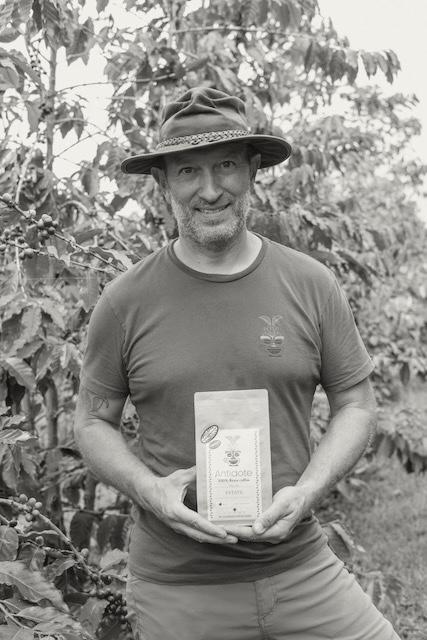
In this week’s episode of The Extensionists, Jay Whetter and Toban Dyck sit down for a conversation with Franck Carisey, owner of Uluwehi Coffee Farm in Hawaii, to learn more about how he became a coffee farmer and the important role extension services played.
Listen here:
Transcript
Toban Dyck 00:03
This is the extensionist conversations with great thinkers in agriculture. I’m Toban Dyck and I’m Jay wedding.
Toban Dyck 00:14
Hey, Toban, Hey Jay. We’re gonna be talking about coffee today. So what of it? Are you an expert in coffee? No, you actually are kind of No, no. Well, you know, you drink coffee, I drink coffee. I drink a lot of drink a lot of coffee, and you have, you call an expert in coffee. I mean, like, you know you’re
Jay Whetter 00:35
not, let’s just say you’re smarter than me and coffee, you coffee
Toban Dyck 00:43
this goes back to the imposter syndrome, back to all sorts of things, very narrow range,
00:48
all right. Tell me about your coffee maker.
Toban Dyck 00:51
Which one did you what?
Toban Dyck 00:53
So those that need, right? So that’s by nomadic the other one.
Toban Dyck 00:57
That’s why we have a bun. We have a bun coffee maker, which is, which is great, right? There’s lots that’s great about this, because it has a, you know, reserve of hot water, yeah. So when you pour in your cold water, it displaces the hot water, so you get immediate hot water and it’s ready to go. So you get quick, quick, good coffee, right? We have that. We have a Bodum, like a French press, great coffee. We have a siphon, which is a very interesting process. Have you ever, have we ever done that for you? The siphon?
Jay Whetter 01:29
No, just the drip thing, okay, the pour over. The automatic pour over.
Toban Dyck 01:34
Okay, so we have, we have siphon, which is, which is a bit like a lab experiment chemistry class. You have, like, a burner and a little globe, and you heat this ball and it, yeah, so it’s wild, actually, meth lab. It is a little bit meth laby, yeah, a little bit breaking, breaking bad coffee. Coffee edition. We have Chem X. If the chem X coffee,
Toban Dyck 01:55
that sounds terrible. Yeah, it’s Chem X. It’s very you have never heard of Chemex coffee. No, are you serious that I’m saying here? I’m not a coffee aficionado. Okay, so, C, H, E, M,
Toban Dyck 02:05
E, X, correct, chem X, coffee. It’s pour over. It’s a pour over coffee.
Toban Dyck 02:09
That way you made mine. And is it this morning? No. So then we have the Come on. We have a list goes on. We have,
Toban Dyck 02:17
yeah, you know, all in one kind of Americano espresso maker, and then we have the Mocha master, yeah, coffee maker. So I think I’m probably missing one or two. We always have the arrow press, which is like the travel version of a French press, yeah? Which is great for motor camping and hiking and stuff like that. So coffee on the on
Jay Whetter 02:41
the when I look at your kitchen shelf, I don’t see 10 coffee makers.
Toban Dyck 02:45
Well, we Yeah, some of them are hiding in plain sight. So you actually
Jay Whetter 02:48
use all of these depending on the mood you’re in, yeah, yeah. And it goes through. You go through phases. Would you like to hear about my coffee maker? Of course, they were. So my brother bought me a coffee maker for my birthday. My brother, yeah, so I get I feel bad about missing your birthday, but anyway, that’s fine. No, no, that’s fine, don’t worry. But until that moment, I was drinking nest Cafe instant espresso
Toban Dyck 03:12
to our producer here. I mean, you’re gonna have to cut that out entirely, because we don’t want our audience to know that Jay drinks
Toban Dyck 03:21
really, yeah, it’s really good. And I put some milk in the mic. I don’t believe you at all. No, that’s I’m serious, and it’s okay. It’s delicious. Oh, you use the microwave too. That’s great. That’s great. My coffee maker is the kettle and the microwave. How about yours? No, I don’t need to hear about yours. Well, the kettle,
Toban Dyck 03:41
for sure, we are perk but like, like, not the microwave. Why are we talking about coffee? We’re talking about coffee because we’re interviewing somebody about starting a coffee farm in Hawaii, yeah, yeah, that is why we’re talking about coffee, yeah, but you and I are gonna have to have a discussion offline.
Toban Dyck 04:04
So I don’t know anything about tech, and I clearly don’t know anything about making coffee, and I don’t bring much to these. We should
Toban Dyck 04:10
do, like a blind test. Abby will be the will be the victim here. She’s not gonna test one of your like, microwaved instant coffee cups. And this is something that I produced.
04:24
Say, which one is
Jay Whetter 04:25
I got a 10 $20 kettle from Canadian Tire, versus your arsenal of 10s of 1000s of dollars of coffee? Yeah, yeah. Let’s see. Let’s see what the blind test, taste test yields. It’s kind of a theme between you and me, yeah, yeah. But what is it you you and your gadgets? I like gadgets. Yeah, too much, probably. But that’s another that’s another podcast makes it fun for us to talk about low hanging fruit. Speaking of fruit, yes, is it? Oh, cherries? Is it a coffee cherries? I don’t know. I probably guess, probably, delicious. Yes, if you ever see a red coffee chair when you’re walking around, just make sure it’s coffee and not some poisonous berry.
Toban Dyck 05:05
So you you encountered some coffee beans in Africa. Yeah.
Jay Whetter 05:10
So when we were on that International Federation of agriculture journalists conference, one of our stops, tour stops is at a coffee research facility near Nairobi, and I got to eat a red coffee cherry for the first time ever. And they look like they’re about the size of cherries, brighter red, not a dark red, like a lot of cherries. And then they the coffee beans are like a pear inside, so the pit is like two Beans.
Toban Dyck 05:35
So is there, like, there is something to the cherry? Yeah, yeah. Like, it’s got a
Jay Whetter 05:40
pulp, yeah, and it’s delicious,
Toban Dyck 05:42
very sweet. Oh, yes,
05:44
interesting. Let’s get on, Frank. Let’s do it right on.
Toban Dyck 05:50
But before we start today’s interview, we want to thank our episode sponsor Sask oilseeds. Attention canola farmers. SAS oilseeds encourages you to participate in the 2026 disease testing program.
Jay Whetter 06:03
This program offers valuable insights to aid in variety selection and disease management decisions. The tests available include club root, black leg and verticillium stripe.
Toban Dyck 06:12
Verticillium stripe can often be mistaken for other canola diseases such as blackleg and sclerotinia
Jay Whetter 06:19
by submitting samples to the saskoil seeds disease testing program, you can reduce uncertainty in disease identification.
Toban Dyck 06:26
Additionally, identifying the specific black leg races present in your fields will enable you to confidently choose the best suitable hybrid canola variety.
Jay Whetter 06:37
You can also submit a soil sample to the program to detect the presence of club root on your farm, assess its invasiveness and determine control methods.
Toban Dyck 06:47
Remember, you can only manage what you measure.
Jay Whetter 06:50
Make the most of this opportunity to enhance your crop management.
Toban Dyck 06:54
Join the Sask oil seeds disease testing program in 2026 you uh,
Jay Whetter 07:03
Welcome Frank. Our guest today is Frank Cara say who works for our owner, owner of ulavee coffee in Hawaii, Frank. Welcome. Thank you.
Speaker 1 07:15
Can we, can we, can we get the coffee here in Canada?
Speaker 2 07:21
I do ship to Canada is a bit tricky, because you guys have additional taxes, so it’s i Yeah, so normally people reach out and we do that offline and but you cannot reorder from the website. But I do ship to Canada for sure. Yeah, okay, okay, that’s good to know. Yeah, yeah, yeah. I’ll definitely ship you some coffee.
Toban Dyck 07:43
We’d love some. I’m a I love coffee. I think, Jake, do you love coffee? I do love coffee,
Jay Whetter 07:48
but I’m not as an aficionado, aficionado like you. Oh, yeah, whatever we just Yeah.
Franck Carisey 07:55
The problem is, once you get a taste of the Kona coffee, you get addicted. It’s definitely much better.
Toban Dyck 08:00
So, Ooh, boy, I like I like that. I like that. The first one’s free, and then it’s like crack.
Jay Whetter 08:12
Not drinking coffee is not new for you, but being a coffee farmer is relatively new. So let’s go. Let’s go back to young Frank in France. Where did you where did you grow up? Frank, I grew up
Speaker 2 08:23
in the East of France, very close to the Swiss border, Switzerland, about an hour and a half, you know, from the Swiss border. Spend the first 20 something years of my life there, went to school and university in France business. Then that’s the name of the town. And joined the the Army in 9495 for a couple of years. And that’s the first time I left France, because I went overseas. And yeah, that’s, I was the first
Jay Whetter 09:01
French army. And did you
Speaker 2 09:02
Yeah, you know, French army back then was mandatory. So, yeah, yeah. So it’s not like, you know, I did volunteer because I wanted to, you know, go something specific, but it was still, you know, I still had to do it, so one way or the other. So you could just, you know, do a short time, and, you know, stay in France, you know, mostly Germany, for us, part of East of France, or you could just pick a better place. And I picked, you know, I went to Tahiti for a year and a half. So let’s look at, you know, little bit more.
09:35
How did you pull that one off? Like, did you
Toban Dyck 09:38
say, Yeah, you could have me, but this is my requirements.
Jay Whetter 09:41
So is a naval base in Tahiti
Speaker 2 09:44
there is, there was everything was there wasn’t a naval actually, in the Navy, it was in the the army. But they had, you know, base. They had everything, Air Force, Navy, Army, everything. It’s a French territory. So they had all the branches. Yeah.
Jay Whetter 09:59
So. How did you get was it that you made a decision? No, volunteered. Spiff it. Yeah. How did that happen?
Speaker 2 10:06
Yeah. You say you I want to join. And then they send you to, you know, place in our South of France. You do about two months of training and based on your grade, and then you can select. So if you the top of the list, you have all the options. If you the bottom of the list, you have the remaining country. So I had it on the top, so I was able to pick my, you know, my destination,
Speaker 3 10:28
yeah, okay, I’m gonna join the French army. I want to go live in Tahiti for two years.
Speaker 2 10:33
They canceled it. So they canceled it. Now they’re talking about restarting it again, so, but it’s not gonna be, yeah, it’s gonna be a little bit different. But, yeah, they canceled, I think, few years after I did it.
Toban Dyck 10:42
So, yeah, they were reviewing Frank’s file, and they were just like, this, doesn’t, we can’t, we can’t do this for everybody.
10:49
Cost them a lot of money. You know,
Speaker 4 10:53
love it. That’s interesting. So you end eventually, many, many years later, end up in Hawaii, which is also a Polynesian island tree, yeah,
Speaker 2 11:01
and, you know, actually my first so when I went to Tahiti, because I so I stay over a year, and we were actually going over different islands, and I had my first coffee experience over there, because we, we were actually staying on that small island for about a month and a half, And I saw some coffee trees over there and harvested some coffee. I had no idea. Actually, that was my first experience with the coffee. We harvested everything, dried everything, and, you know, at the back to the Tahiti, we tried to roast that, and it wasn’t really good, but I wasn’t. The first time I’ve actually experienced with coffee, and we had to figure out what to do with it, you know, how to dry it and how much to dry it. And it was kind of interesting. Well, I had a
Jay Whetter 11:47
coffee cherry for the first time in my life just a couple months ago, and they’re delicious. And so they get these red, very sweet cherry and they call it, and then the coffee beans are inside. But yeah, in fact, the guy who guided us Drew said to spit it out, spit out the pits.
Speaker 2 12:07
Yes, yes, but it’s very hot, so, yeah, you don’t want to, you know, chew it or, you know, it’s not really tasty, actually, until you dry and roast it. It doesn’t taste like coffee, but the fruit itself, it’s, yeah, it’s tasty.
12:19
Yeah, it is. Okay. We’re gonna get back to coffee.
Jay Whetter 12:22
Yeah, so back to back to France. And was this a farming community? Or did you grow up in a farm? Or what was, did you have anything?
Speaker 2 12:31
No, I wasn’t a farming I mean, it was a small village. Actually. I grew up in a village that was less than 500 you know, person. So it was very small place. My grandparents went in farmers, but my parents were not so they were working in just, you know, different field, but so none, not a lot of farming exposure, because my grandparents were already retired. So they lived in a farm. They had, you know, a couple of animals, but no cows, no crops, no mostly fruits and stuff like that. So, nothing, nothing, really, and you’re there was no early sign for me that, you know, I didn’t like it. I didn’t like it, but, you know, it wasn’t like, you know,
Jay Whetter 13:13
yeah, and you, so you took engineering. I don’t know whether that started in the army or whether that was after.
Speaker 2 13:18
No, actually, I was before. In France, we do everything in a little bit different order. So you go to school, and once you’re done with school, then you do the army. So yeah, I went to school. I went to the University in France, mostly mechanical engineering. Even though I’m an engineer, I was making mechanical engineering. And, yeah, that’s and then the army after. And then shortly after, when I came back from the army, I got my first job. I think I came back from tairi was like August and or July, and I started my first job in August. So it was, you know, very fast in between.
Jay Whetter 13:58
So most of your career was with a manufacturing company.
Speaker 2 14:03
It was with manufacturing, yeah, yeah. I was in manufacturing the entire, I mean, manufacturing, process engineering, mostly my background is quality, but it’s all around manufacturing. So that’s what I did for, you know, 20 something years, 25
Jay Whetter 14:18
years. Did you say quality? Like quality control,
Speaker 2 14:21
yep, yep, exactly, yeah. So, yeah, yeah. My, when we, when I went to school, quality was, you know, was starting. I mean, people were starting talking about quality, you know, in the industry, and my degree was actually really around quality. We learned a lot. A lot of the professor we had were actually professional from the automotive industry or aerospace industry, and they were all quality managers or quality directors or VP of quality. So we learned that was really the beginning. And so when I landed my first job, I was as a quality manager right
Jay Whetter 14:59
to. Is obviously important,
Toban Dyck 15:01
yeah, yeah. Do you find a lot of that translates now into your to your current work as a
Speaker 2 15:07
Absolutely, yeah. I mean, everything you know, even today, like, you know, I keep the way, I keep track of everything I do, from the evaluation and, yeah, definitely, was it was, it was good for me to have this background, absolutely, what?
Jay Whetter 15:19
So what would if you’re in any business. I mean, are there some, some basic rules for quality control, no matter what business you’re in?
Toban Dyck 15:29
Yeah, actually,
Speaker 2 15:30
yeah, there’s definitely, yeah. I mean, it’s not just, you know, actually, quality, yeah. That’s a good thing about quality, is it can, you know, can be in the medical industry. You can be in the pharmaceutical or the engineering or automotive industry, it’s all the same. You know, the guidelines are very similar. The tools that we are using are very, very similar. What are they? So, yeah, to give you an example, when I was doing a lot of the company that I will work for with was doing a lot of design, new design. So we do a lot of, how do we call that again, FME. I don’t know if you’ve heard of FMEA. It’s a tool that you use to anticipate all the design flow, or the pro, you know, the the flow of a process prior to launch it. So this is part of the qualities. It’s always driven by quality, because the engineers always think they have the best design. So you basically challenge them on saying, Okay, are you sure this is the right design? So there’s, there’s a lot of tools that we use and that this is all part of the quality organization.
Jay Whetter 16:36
Could you apply that to farming? Like if a farm did this, FMEA do its whole production process, would you
Speaker 2 16:44
Yeah, yeah, on the process, like, you know, on the process, you could definitely use that, you know, to look at the flows and what’s not working and what could fail, and how to anticipate and whether there’s a risk. Also, you always look at, you know, there’s little bit of, you know, this multi step that’s one of the complexity. It’s very, very useful. Yeah, you can, actually, I’ve used it in, you know, very different industries, and, you know, it works, you know, all the time, so that, and that’s one of the many, many tools that we use, yeah, but mostly in quality, you know, every time there’s an issue, you the team leading, you know, trying to find out the root cause of the issue. And you know, what are the corrective action, the containment action, and you know, it’s all you know, lead by the quality organization in most company. I mean, if not all companies.
Jay Whetter 17:31
But you’re trying to anticipate a problem rather than having you Well,
Speaker 2 17:35
you do either both you have, you know, before you anticipate, and then you also have, because they always happen, even though you anticipate most of them. Once you have them, you the team basically receiving the complaints from customers and working with engineering, manufacturing, supply chain, whoever in the organization is, you know, part of the problem to address this issue, and, you know, find some solutions for and eliminate publicity issue. Yeah, that’s very interesting. I mean, it’s really, it’s always different. So it was very interesting.
Toban Dyck 18:05
So you had this early exposure to coffee, and then you you’re thinking of retirement, and you’re thinking of like, kind of next stage in life, and this is what you thought, you know, what a coffee farm is, what we want to do.
Speaker 2 18:20
So not. So what already happened is, you know, my wife and I, we’ve been working. I don’t know, we don’t have kids, so we’ve been working since, you know, early 20s. Luckily, we’ve had some good jobs. And so we’ve been traveling a lot. We spend a lot of time overseas, you know, for work and, you know, and we’ve always been planning, okay, where, where are we going to retire? If we ever retire, you know, where are we going to do that? So we looked at places, you know, love the the idea of living on an island I’ve had that, you know, previous exposure. When I was in Tahiti, my wife also lived in Phuket in Thailand for a while. That’s a big island, but she loved it, and so we came here on vacation. And we kind of love the place, you know, the vibe and you know, it’s big, it’s quiet, it’s just so we thought, okay, why not here? And we do not agree on, you know, what will be the, you know, she wanted to have a condo. And was like, Okay, I’m not a condo guy. I’m not gonna stay in a condo when I’m 65 or older, and I won’t have, like, outdoor, you know, be able to do something. So we were looking, and it’s a common thing here on the Big Island to have a listing for coffee farms. You don’t have this thing for, you know, pineapple farms, but there’s a lot of coffee. There’s over 1000 coffee farms here. So there’s a lot of, you know, there’s over 1000 so, you know, people are always moving, and there’s things happening here. So there’s a listing of coffee farms for sale. So if you guys actually interested, there’s plenty. Yeah. Yeah, so we looked at some of them and like, Okay, this is good, you know, we, we went and visit one first. And I like, you know, kind of interesting process. It’s not dirty, it’s not, you know, very late. It’s labor intensive, but it’s not like, you know, you’re not gonna, you know, kill yourself. I mean, you could, but, you know, technically, it’s not like heavy lifting or anything like that. So I thought, you know, this is, this is pretty interesting, and I love coffee. And I was like, okay, and this is probably something I could do. So we made an offer on a coffee farm, and they didn’t like our offer. So we kind of, you know, went back to San Diego, and my wife was looking all the time on what was available. Could not see anything we like. It was very old. A lot of the farms have been like around for a long time, and they’re not in good shape. When people sell them, typically, they got a lot of work to do. And so we say, okay, let’s, let’s start from scratch. Let’s, you know, buy land. We’ll plan what we want, and we’ll, we’ll start our own farm. So that’s how we we started
Jay Whetter 21:02
it, because that sounds like a thing that he’d like to do for his retirement.
Toban Dyck 21:07
But yeah, it is, yeah,
Speaker 3 21:08
you’re right. You’re live on an island in the ocean and grow coffee.
Speaker 2 21:12
Yeah, yeah. So you pick your place, you pick whatever you want, and yeah, that’s right. It’s a good life.
Jay Whetter 21:19
Yeah, by the ocean. So Frankie said there are 1000 coffee farms, yeah, the Big Island, or maybe Hawaii in total. But you didn’t, yeah, go ahead. Sorry, no, my but you didn’t buy an existing farm. You started a farm from scratch.
Speaker 2 21:36
We didn’t buy an existing farm. So we bought a land because we also so the 1000 farm actually on the Kona coffee belt only. So there’s the Kona district, and so you have now multiple districts on the Big Island. So there’s another, about 55 maybe 70 farms in a different district in the south of the Big Island. So there’s definitely over 1000 on the Big Island only. There’s some in Pune as well. So there’s a lot of coffee farms. And, you know, coffee farms doesn’t mean 1000s of acres. I mean, we have 510, acres coffee farm. So there’s a lot of, you know, I met some last night at a party. People have 234, acres, their coffee farm, their coffee business. They, you know, always process. So doesn’t mean everybody is just like, you know, huge coffee, you know, in this huge business also,
Jay Whetter 22:24
yeah, how do you start a coffee farm? Yeah.
Speaker 2 22:28
So, you know, we want it to be, you know. So the thing about the Connect coffee, the location is pretty cool. So, you know, if you want to be able to label your coffee, connect coffee, you have to be in Kona. So you cannot be, you know, on the other side of the island in Hilo or so, you have to be around. So we picked a place that we liked, and not too far from town, not too far from the airport, and so within, you know, that, you know, perimeter, then we, we found a piece of land that was, you know, suitable for us, good for coffee. So we did a lot of research before, and I ended up buying, you know, just a piece of land, you know, I was just brushes on it, and we cleared everything and started playing coffee trees, yeah, so what?
Toban Dyck 23:17
What makes Kona coffee special?
Speaker 2 23:21
So this little bit of everything, the definitely the location. When I say the location, I mean, there’s a lot of, you know, argument about that, and a lot of discussion. People said the ground, my understanding is the ground is not as critical for coffee as it is for wine, you know, like the soil by itself, because you when you do mass, you know, like we have so many trees on our in our land, so you deplete everything. So the land, you know, the the land, at first, it’s good, there’s a lot of, you know, nutrients inside. But after a few years of farming, like everything, you start depleting a lot of it. So you have to, you know, replace that by fertilizing everything. But the location in Kona is very unique. As far as the weather that we have, we have very unique, you know, type of, you know, weather here, the most of the Highland went through a drought this year, like, like, you’ll drive like, you know, 10 miles away, and it was all dry and yellow and bad and, you know, fire hazard and everything. But in Kona we had rain. Pretty much. We had rain every day. It was really bad this year, every single day. It will rain every day. So it’s green. It’s thriving the temperature, you know, we don’t have, you know, extreme weather here. You know, it’s cold in the morning now, because we mid 50s, but that’s the coldest we see here. And when it gets warm, it’s the mid 80s. So it’s not like, you know, major, you know, temperature spread also. So very ideal condition for, you know, coffee growing.
Jay Whetter 24:54
So it’s like an absolutely,
Speaker 2 24:57
yeah, plus, we on, on volcanoes. Okay, so that kind. The coffee belt is on the slope of two different volcanoes. You have the Walla Lai or the Mauna Loa. So you have two volcanoes. So you on the west facing slope of those volcanoes. Great drainage. You know, the it’s pretty sloppy. You’ve got right elevation. We have about 2000 feet here. But, you know, some farms are lower, sometimes I’ve been higher, but we got great conditions for just growing coffee.
Toban Dyck 25:24
I think, like, what’s interesting? I think Jay was probably getting at it too, is starting something from scratch, like you, you know, I think of our audience, if you think of somebody even in, you know, in Canada, who wants to start a grain farm from nothing, and just decides to do it. There are so many, like, I come from a multi generational grain farm where you know where to take it over is, of course, there’s a learning curve, but nothing like starting from scratch. So can you kind of walk us through that process of, like, what you all had to learn and kind of what were some of the eureka moments, and kind of anything that stands out?
Speaker 2 26:01
Yeah, yeah, yeah, absolutely. So the good thing, I mean, the the if you want to start from scratch, you need to have some, you know, either people guiding you, or, in the case of coffee, the the University of Hawaii, they have published a book called How to grow coffee in Hawaii. And it’s definitely, it’s from, you know, basically, like for almost vegan ideas for beginners, I guess. But they go through all the steps, every single steps, from, you know, clearing the land, to how you plant, how you do everything. So, you know, that was my first step is, you know, looking at that and reading that, you know, that book multiple times. I still actually refer to it all the time because, you know, I don’t remember everything, but, you know, that was the first step is having some kind of a guidelines, you you know, because you don’t want to, you don’t want to reinvent everything, and they stuff that you don’t surely want to do. So, and then I was lucky to meet a coffee farmer here who’s been around for like, 30 something years, at least 35 years now, and planted a lot of forms, and he’s basically like a consultant. And so I met him, and we had a good connection, and he’s been, you know, like helping me a lot on, you know what to do, what not to do, and how you know to do everything. So, because the coffee is one thing, but all the infrastructure that you need to process your coffee also, you know, the building, the proper the drawing deck and all that. So there’s, there’s a lot, you know, there’s a lot to do.
Toban Dyck 27:35
And I imagine, like, I imagine it’s, or it’s a question too, how competitive is this landscape? I mean, you are one now, of you said 1000 Yeah. So, you know, I don’t think do you have to do it? You have to kind of do it better, or with with an edge that that kind of gives you some market. Yeah?
Speaker 2 27:57
So there’s couple of things about that. Is, you know, the Kona coffee, we are such a small producer for you know, if you look at the world production. So I think last statistic that I’ve seen with less than point 1% of the world production. So we only is, even though we have 1000 coffee farmers, when we are producing on the island, it’s such a small volume, so the demand is definitely much greater than what we can produce. So you have competition, obviously, because, you know, for easy customers, you know, everybody was trying to reach out to the local customers, local hosters, so they already have a lot of offers, but there’s plenty of demand worldwide for connect coffee. So it’s not really but the thing about the Connect coffee is, and I don’t know if you guys know about that, but originally, when the coffee started here in in Hawaii, in the pink 1700 that whoever came up with the idea of planting coffee introduced one specific type of coffee tree called typical. And there’s a lot of coffee farmers that are still growing that same plant, you know, after 250 years or 200 years, and it’s good coffee, but now people have access to other coffee. And I’m not growing this coffee. I grow different varieties, which makes it a bit easier for me, because there’s, you know, less supply of my coffee than the other, the typical so I’m have no issue saying my coffee, there’s a lot more demand that I have actually supply for for the coffee. So it’s so you have to be selective when you start. If you do, like, you know, like, I don’t know about, you know, I think in potato, I went to Peru one time, you know, in the US, we grow like two or three type of potato. Over there they have like 150 types of potato. So if you grow the one that, you know, everybody’s growing, it’s going to be a bit harder to sell it. But if you have the one that nobody has, it’s a lot easier to sell it. Yeah, frankly, assuming it’s good, assuming it’s good, and.
Jay Whetter 30:00
Good, yeah, that’s right, your farm is, did you say five to 10 acres, or what is yours?
Speaker 2 30:04
So I have my lot is five acres, and I’m leasing more land right now, so I have at least another five acres, and I’m losing and I’m looking at more. I mean, you know, there’s so much land here that people it’s a lot of work to take care of five acres. So a lot of people buy land, and they realize it’s a lot of work. So they ask, okay, you want to plant coffee so I don’t have to mow or, you know, or do whatever. So that’s kind of the deal here. You know, a lot of people do that.
Jay Whetter 30:32
And what does it how do you start a tree? Is it by do you plant a coffee bean and then the tree grows?
Speaker 2 30:38
You don’t. So that’s one thing also you learn from that book is you don’t start from seed in the ground. You do always you sealing on, you know, containers, tubes. So, yeah, so you you start them, you know, in the nursery. And once they reach, you know, a good size, you know, it’s about about a foot, you know, about six months to eight months, then you can transfer them in the ground and plant them, but you don’t want to do it early,
Jay Whetter 31:04
yeah, how long do you have? How long, how many years until you’re producing coffee cherries?
Speaker 2 31:10
It also depends on, typically, typically, we say about two to three years, like the trees I planted last year. So you know, it depends how long you keep them in the nursery and how big they are when you start planting them, and how well also you care for your trees. Like, you know, I fertilize a lot. So some people plant and wait I plant. I fertilize, you know, every couple of months. So normally, what I’m seeing on my side is about two years later I start having production, not huge production, but they start fruiting. I have trees that fruit it after one year already.
Jay Whetter 31:45
And do they look like grapevines? Or what does the coffee tree look like, or shrub, or whatever you call it.
Speaker 2 31:50
It’s yeah, you’re right. It’s more shrub. I mean, again, if you’re looking at Arabica coffee trees, they’re more like a shrub, although, depending on the variety, they can grow very tall. My trees go to about 18 feet, so they get very tall, but you got to prune them. But it’s typically, you know, it’s a stump with, like, multiple branches, multiple verticals. We call that verticals. And you have two, three or four verticals per and every three years you prune them, so you let them grow back again. So, but it’s about a shrub of, you know, 18. It’s not like a massive tree, but 18,
Jay Whetter 32:31
how do you get up there to pick? Yeah,
Speaker 2 32:34
you don’t get up you, you bring the tree to you. So you basically use a hook, because it’s, you know, it’s obviously skinny at the top, so you basically, and that’s why, you know, we have this pruning cycle of a couple of three years. Typically, you hook the top of the tree with a hook, you know, mostly, you know, custom made, like, piece of wood, and then just grab it, and you put a rope on it. So you grab it, you flex the tree as much as possible, you know, step on the rope so you can use your hands to pick the fruits. And then when you don’t just let it go, and it’s all done by hand, everything
Jay Whetter 33:13
you you, you don’t do it all yourself, you and your
Speaker 2 33:16
wife, yeah. So, no, I don’t. So the picking is really the most labor intensive upper you know, part of the coffee farming. You know a tree. Again, it all depends on the type of trees you have, but you can expect, you know, anywhere between 15 to 20 pounds of fruits per harvesting season. So my and depending on, you know, who you talk to, but, and how you plant your farm. But basically, you’re looking at a 10,000 pound per acre of, you know, planted coffee trees. So it’s a lot of, you know, harvesting. It’s a lot of, you know, hours of picking. And you cannot really pick, you know, an entire farm. So it takes, you know, a couple of days, and normally a crew of, you know, 845, acre, about eight to 10 person. So if you start picking your farm by yourself, you know, you’ll have a lot of waste, and you’ll never be done, actually, and you’ll be like, always think, processing every night. It just like, not practical, yeah, yeah. You really want to pick, you know, like, couple of, you know, rounds and, yeah.
Jay Whetter 34:26
So the 10,000 pounds per acre, is that of the cherries, or is that of cherry?
Speaker 2 34:30
Of cherry? Yes. And the ratio, it’s a very hard goal. It’s a very hard goal. So far, I haven’t reached that goal yet, but it’s very hard. I mean, it takes, you know, a lot of carrying of the trees make sure they like all healthy. And so you always have spots where it’s not always, you know, producing well, but I definitely know people that are producing that much, very good.
Jay Whetter 34:53
So it’s possible. And then what’s the breakdown for final like roasted market ready beans? Is it 10 to one?
Speaker 2 35:01
No, no, no, it’s, it’s, it’s about a 15% green bean. So I’ve never, actually, I could do the math also to roasted coffee, but typically we talk in term of green beans. So from Cherry to green beans, conagrave, you’re looking at about a 15% 15 to 16%
Jay Whetter 35:22
15 to 16. Yeah, yeah, interesting,
Speaker 2 35:26
you know, if you look, I mean, you were mentioning that you you saw the cherry. So the cherry has the skin and the pulp. This makes about 40% of the weight already. So we toss that, so you remove that, okay, and now the beans, you know them, have moisture. We bring that moisture to a nine to 12% so you have to dry it. So you remove a lot of the moisture, and then there’s still a layer called the parchment that we mill off at one point. So once you remove all the layers and everything you had up about a 15% What was
Jay Whetter 36:00
that word you used? Meal off, meal, you meal, you
Toban Dyck 36:04
know, Oh, yeah.
Speaker 2 36:06
Color. Remove the skin. This couple of skin, yeah,
Toban Dyck 36:09
yeah, right. Okay, that’s very interesting. So when you, when you, when you look back on kind of learning how to do this, what were some of the most challenging kind of elements of this business that you had to overcome or learn about.
Speaker 2 36:23
The most challenging for me is the weather. The weather is it’s because everything depends on it, and it’s one thing we cannot control. And you know, we, unfortunately, we have a number of issues now growing coffee and cough from disease and bugs. So you got to address that, you know, timely, but when it’s raining all the time, it makes it a bit challenging to, you know, effectively, you know, spray for disease or bugs. So that last year was really, really challenging. Also, different conditions will create some bad food. We have a lot of what we call floaters, where the fruits are not developing properly. It often, you know, because of the weather. And then you have you drying right now, we harvesting. So once you deal with all the pre you know, harvesting work, and if you manage to spray timely, once you start picking coffee, go dry if it’s overcast, like it’s been. Also this year, it’s very challenging to dry the coffee. So the weather for me is the main, my main concern, and my main issue all the time, it’s hard to, you know, work around the weather, you know? How do I because, yeah, you still have to do the work. So how do you work around it? You know? Yeah, yeah. Either you do at night sometimes because, and don’t know if you guys been to Hawaii, but one thing that I’ve, I’ve never seen before on the mainland or even in France, is the the weather is so unpredictable here. So it could be blue sky, and, you know, an hour later, you and it’s just, it’s an island, so it’s not like, you know, you can’t see the cloud coming. They’re coming from, I don’t know where they’re coming from, and it’s overcast, and it’s not raining. And you like, you know, it’s very unpredictable. It’s very, very unpredictable.
Jay Whetter 38:13
So the purpose of the extension is, is to talk about extension communication skills, and it’s really interesting to get your perspective, so you can’t, as we’ve talked about, you came into coffee production, you know, as a newbie, and you’re also, it’s a breaking ground. So you created a new farm, correct? What were so you mentioned the University of Hawaii book how to grow coffee in Hawaii, and then you mentioned that this consultant, or consultants, is that enough? Like, so, no, okay,
Speaker 2 38:45
it’s, it’s enough. No, it’s not enough, because the book, you know, needs to be updated. Like the on the book, you know, it’s funny, because when I when we started coffee, why didn’t have the coffee leaf for us, which is a fungus impacting coffee trees and but the book mentioned, it mentioned that this is this issue because it’s, it’s everywhere in the world. But it was not enough. Why in when we started the farm? So now this book will have to be updated, because it’s a problem here. It’s a main issue that we have to deal with. You know, all coffee farmers, unfortunately. But yeah, so it’s not enough. But the extension, like the Department of Ag, the extension office shortly, actually, I don’t know, I think we had, like, there was a conference. We have this couple of events in Kona. There is an event organized by the Awai Coffee Association. It’s a conference, annual conference, and they do bring, you know, the Department of, AG, you know, a lot of, you know, supporting businesses around coffee suppliers, and, you know, even some customers. And so I ran into the extension office, and shortly after they came, and, you know, did an audit of the farm just to look at. You know, what was going on, knowing it was a new form, and how they could help me with, you know, whatever the findings were, so was really good. And I’m in touch with them all the time.
Jay Whetter 40:12
Back, gonna go back to the book, because, and you said it so it needed to be, needs to be updated. I’m just thinking like so, if you’ve got a man, if any, anyone involved in agriculture communications, if you’ve got a manual on how to grow your crop or your animals, just make sure that it’s updated.
40:32
Yeah, absolutely, yeah.
Jay Whetter 40:34
And then, and so when it comes to reading that book, was there, was there a writing style or something. Was it easy to grasp? You said you read it multiple times, but that makes sense, just because you couldn’t possibly absorb all the information, but it was, was it well written, like any anything on the way that book was put together that you would recommend do or don’t do?
Speaker 2 40:56
No, I think it’s well written, but yeah, the reason why I had to read it more time, more than one time is because the first time when you read it. There’s so many terms not being in the the coffee industry or the coffee growing industry. There’s many terms add dinner that have no idea what those were. I mean, they talk about some pruning style and everything empty. You really sit and you really see a tree growing, and you then you understand, okay, oh, that’s what they mean by, you know, keeping so many verticals, or whatever the terms, you know, so, and that’s, that’s the reason why. So the first time when you read a book and you have no idea what the book is about, or what the the field is about, it will be more challenging. So, I mean, at least it was for me, you know, maybe some people read it once, and they got it. But to me, it took like and, you know, I keep going back because they explain everything from seedling to basically harvesting. So when you start, you know, you plant. I got my trees from nursery, so I didn’t have to do my seedling. I’ve done that later on, but, so that’s why I went back. How do I do sealing? But you plant your trees, and then it takes at least a year, a year and a half or two years before you start having some fruits. So in between, you know, you go back to the book and find out, okay, what do I do after year one, after year two? I mean, you cannot just memorize everything. That’s why it’s it’s kind of a book that you always go back to and,
Toban Dyck 42:22
yeah, yeah, I think we’re Jay is coming up with so in Canadian agriculture, even in Manitoba, where we’re from, like these books exist. Like the university, the Ag departments have these books. And I think more often than not, they are stale, like they’re old, and they all need to be updated. So I think that point is actually a really, really, really good one. And a lot of these departments have kind of deserted these books in favor of kind of more digital options, or they’re just, they’ve been they’ve been deserted, and they’re thinking, well, now we need to think of new ways for a new like a new kind of new interests have emerged. No one’s reading anymore, but I know I’m interested, and I think Jay is too in in these books, and I think they have tremendous value, but your point on needing them to be updated is incredibly salient. Would you agree? Yeah, like, it really. It really struck with me, because that’s something that hasn’t been happening. And I think a lot of people would like to hear, or need to hear that, yeah,
Speaker 2 43:27
yeah, no, for sure, for me, for me, is definitely like the rest. I mentioned the rest. The book doesn’t even talk about the rest because it wasn’t part of the challenge they had growing coffee, but now it is our number one challenge. So, you know, someone has to go and say, Okay, so the extension office does have some but it’s all digital, like you were saying. They do have some guidelines on what to do, but it’s not part so now you have to go to different sources to get all that information. Would be good to have everything in a single, you know, document,
Jay Whetter 43:57
for sure? Yeah, I think on the prairies we have lots of cereal rusts. What does coffee rust look like? Is it on the cherry or is it
Speaker 2 44:04
on the leaf? No. So the coffee for us is on No, it’s on the leaves, yeah. So it’s on the leaves, and the same idea is underneath. So it makes it the spraying very challenging, because when you spray, typically you spray from the top down. So this one you have to spray from the down, you know, up. Yeah. No, that’s we which is very, very hard, and it’s never very effective. And so now what’s happening is the that same Extension Office, they’ve been doing a lot of research on, you know, coffee trees that are resistant to that coffee for us, and they are offering to coffee farmers who want to start a farm from scratch or replant, or whatever you want to do, trees that are actually rust resistant. So that would be something that should be part of that book as well. Because right now, I’ve had people asking me, what do I get trees? I say, Well, you know, it’s not that simple. I mean, what do you want? You want a tree that is, you know, rust resistant, or you want to tree. It and it’s not. I mean, there’s a lot of there’s a lot of options, and they
Jay Whetter 45:04
have to make sure that the rest resistant tree also has that Kona standard for quality.
Speaker 2 45:09
So that would be yes and no. Actually, any trees that you plant in Kona, there is no the label does not specify the type of tree, as long as the beans, the outcome of the green beans meet the standard for connect coffee. So you have to be the location and the beans quality. But that has nothing to do with the plant. The beans quality has to do with how you care for your trees and how you control bugs and stuff like that. Interesting.
Toban Dyck 45:40
Oh yes, that is interesting. So does your does your university extension office, do they put on? You talked about this, this conference, but like here, let’s say here in the prairies, we’ll have, like, field days where it’ll just kind of have an afternoon, or a couple of hours where a bunch of extension people or a bunch of agronomists will come in, they’ll set up a tent in a field, and they’ll talk about a specific disease, or some varieties, or some testing that they’ve done, and just to bring farmers in, do those events happen in Hawaii as well?
Speaker 2 46:09
They do, they do they have, and that’s how I learned a lot of stuff. Also, yeah, it was done just, you know, those two, you know, the book and but they do workshops, actually, so how to prune, how to do this and that. So there’s a lot they I’ve been to most of them already, and so it’s not like something you do every year. I mean, there’s the techniques are not really changing much. So, like, they’re not changing at all, actually. So once you understand, once you understand how to do it, but it’s good to have them, to have someone showing you exactly, yeah, that’s yeah.
Jay Whetter 46:44
So have that. How do you make a conference relevant? Then, every year, since you know what you’re doing for the most part, and so do all the other Why would you go to this conference? Like, what was that? What’s the point of it?
Speaker 2 46:56
Well, so the, I think the main reason why coffee farmers are going it’s just because of the all the development on the coffee leaf rust, that’s the main one. And there’s also a lot of, you know, people are looking at, you know, selling, marketing the coffee. So there’s also people helping you, you know, like the, which one is the, I think, is the federal, the Department of Ag, not the Hawaiian Department of Ag, they have some some programs also, where they help you marketing your coffee. This one, actually, they may be this the state. I don’t remember which one, but it is a lot of, you know, I like to go because I connect with people, you know, all the time, and there’s only so much the first time I, you know, first year I went there, I got the business card of so many people, but within a year, I’m running a business by myself. There’s only so many things I can do, you know, on the top of taking care of the farm. So I, you know, reach out to one and then, you know, one year I did one program. And then, you know, after you connect with some of the people, and the more you know, the easier it gets. But at first it’s very overwhelming, also the stuff that you can do. So it’s good to go. And they have new programs every year, and there’s always speakers. There is a lot of legislation also around the coffee that they’re trying to pass, you know, to make it, you know, to avoid, to prevent people from cheating, and, you know, stuff like that.
Jay Whetter 48:17
So cheated and coffee, oh,
Speaker 2 48:22
you buy, I’ll tell you one way it was the news couple of weeks ago. You buy coffee from South America and you label it Connor coffee, which cheating? You know?
Toban Dyck 48:32
Yeah, that sounds like cheating
Jay Whetter 48:34
to me. Is there any way absolutely verify, like, is there, is there genetic code specific coffee growing,
Speaker 2 48:42
I think so that’s one thing we did. Actually, two years ago, they were actually building this database. So they were asking Kona coffee farmers to provide coffee to this lab, and they will do like a genetic map of the Kona coffee so in the event of, you know, there was someone cheating, or it would have to be big, obviously, they could actually go back to the database and say, Yeah, this coffee is a connect coffee, or this coffee is not a connect
Toban Dyck 49:09
coffee, yeah, and is your is your industry supported by an association that that kind of feeds you information or keeps you connected with other growers?
Speaker 2 49:18
We do have couple of association. We have the Hawaii Coffee Association and the Connect Coffee Association. Connect coffee farmers Association, yeah, both of them, yeah. So there, it’s very similar. There’s I was on the ball of the Connect coffee farmer Association until this year. Then I stepped down. I’ll probably join again in the future. It’s just like, you know, a lot of work. Also, it’s all volunteer and so, but yeah, there’s definitely associations, and one of them actually, so both of those Association organized the conference. So one is by the White Coffee Association, the other one is by the coffee gonna coffee culture. Or, sorry, connect coffee farmer Association.
Jay Whetter 50:03
Okay, so I think that the big third source of information is that the farmer consultant and the farmer to farmer, can you explain why that was valuable for you?
Speaker 2 50:15
It’s valuable because, you know, even though the extension office. They do have a small farm, and, you know, they supposed to be the expert and everything. It’s nothing like talking to someone who’s actually growing coffee really like for living and not just experimenting. You know, on the side with the best condition like the extension office, they they have resources that people don’t have. They have expertise we don’t have. And so they kind of like, you know, the best condition for growing coffee, where, if you talk to your neighbors or some other people, they may see also different challenges. They may have some other conditions that, you know, the extension office or lab doesn’t have. So yeah, it’s, it’s you know, you and it’s more practical you know people have, you know, if you discuss with a neighbor or another coffee farmer, they may have some constraint on cause they may, you know that maybe the extension office, when they apply pesticide, they don’t really care. I mean, not that they care, but they, you know, it’s experimental for them. So you know, they’ll buy the most expensive, they buy everything that they try. But you know, without realizing that, for a lot of people, it’s a major, you know, constraint, or it’s a major burden, actually, you know, to buy all those products so on. So it’s, it’s nothing like, you know, talking to someone also who is actually producing coffee. And I do a lot of, I mean, it’s interesting, because even though I’m the new guy in town, pretty much for coffee, there’s definitely some newer coffee farmers now, because there’s always people starting, but I’ve had a lot of people reaching out, you know, how can you help me with my pulping? Can you help me with building a shed? Because I like the way you’ve done stuff and, you know, and you know, yesterday, I was driving as a guy on the side of the road that I met before, and he’s like, Oh, I have so many questions for you. When do I start pruning and all that? Sometimes people, rather than, you know, going into a book, they like to talk to someone who’s done it also.
Jay Whetter 52:07
So how do you feel about that? Like, do you do you want to answer those questions? Or you’re thinking, no, no, this is my competitive advantage. No.
Speaker 2 52:15
I mean, you know, I, you know, I share with this guy. I help him a lot. He had a farm that was in such a bad it was like, I was sad for him, because it was just so bad. And it’s not like, I say, you know, we are competing, but I feel like I’m I have less competition because of the different coffees that I have. So, you know, like, there’s very handful of farm that have the coffee that I have right now. So I don’t feel like, you know, it’s, you know, those people are threat to me. I mean, they have whole coffee trees, you know, typical. I mean, it’s not like, you know, it’s not gonna impact me.
Jay Whetter 52:48
So are you always growing new trees, like taking out old trees, putting in new ones, just to keep ahead of the best genetics, or keeping on top of the best genetics?
Speaker 2 52:59
I do actually replace trees. So I grow couple of trees. I mean, not more than couple. I’ll go like 150 200 trees every year, just so to replace the one. It’s not really, it’s mostly because they, yeah, you’re right. I mean, they die. I’m not sure why. Sometimes, just the weather, I’ve had trees that are breaking when we do the harvest, you know, they just bend them, and instead of bringing a branch, they break the entire tree at the base. So you have to start from scratch again. But I’m at the stage where, because it’s still a new form, I’m not replacing that many trees, which is good, but I’m growing new trees because I’m planting more trees, you know, in different locations. So that’s the reason why I’ve been growing trees, mostly
53:42
So, but yeah,
Toban Dyck 53:45
so is this a, just to give me a sense of the of the of the farming, is it? Are you? Are you still? Are you able to enjoy retirement and kind of recreational? I mean, we
Speaker 2 53:56
have so this is not a retirement. I mean, you know, when we say, Yeah, some people have thought that we retiring here. This is definitely not a retirement. I mean, this is, I’ve been working more in the last four years. I work, you know, when I was and I was always like someone who would never check, you know, never, you know, careful hours. I just, you know, if I had to work 1012, hours, I would do it. It wasn’t so even, but now it’s, it’s every day. Every single in today is just like a break, because, you know we’re talking, but it’s every day. There’s something to do every single day. So retirement, yeah, okay, and it’s the fully I gotta find something better for retirement. Yeah?
Jay Whetter 54:38
So like, speaking of like, working every day. When I saw a coffee tree, there were red bear cherries, and then there was completely immature. There are maybe some flowers. I’m not sure. I can’t remember if there were flowers. But you’re, you’re, are you picking these trees all year round?
Speaker 2 54:55
So you It depends on the elevation of the farm. And yes, you can, most of the coffee farmers choose not to. It’s mostly for economical reason. So, you know, because we pick the coffee by hand, so you got to go through, you whatever, five acres, you know, every couple of weeks. So what we are seeing is it’s not, they’re not producing the same, you know, every two weeks you have 1000 pounds. So you have a peak, you know, this the peak season. So there’s a major bloom during springtime, and about 210, days later, you got new harvest. So, but it’s not really like one bloom. So they’ll bloom for, you know, a couple of month heavily. And then the throughout the year they keep blooming, also the smaller blooms. So you always have production of cherries, but that production is going to basically fluctuate, so you’re going to have, it’s more like a bell shape, you know, type of the distribution. So we have definitely, you know, a peak, which is normally around September, October, November, December, and then it tapers down, you know, around those, those months. So at one point you can go and pick, you know, 10 pounds, you know, go around and pay someone 20, $25 an hour to pick 10 pounds of cherry. But it’s not really, you know, doesn’t make economical sense. So what we do is most coffee farmers will do that once you start seeing a decline in your production, where it’s really start being really low, and makes no sense to pay someone to pick nothing. We go around and basically we call that stripping. So you strip the trees of all green fruits that will ripe over the following few months,
Jay Whetter 56:44
that car wash thing you’re telling me about, or how
Speaker 2 56:47
do you No, no, no, you streak. It’s all by hand. So which is, you know, which is the tricky part, because someone has to look at a fruit that is green and so, okay, do I keep this one? Do I want this one for the next season? Or do I want, you know, this one’s gonna ripe in the next two months. So it’s, you know, they always leave some they always speak more than they should. It’s kind of a tricky process, but you do that, and this also gives you a window for caring for the trees, you know. So you’ll have like, you know, again, I always use the word typical, but normally, between around February to May, there is no harvesting. You got a very, you know, you got no harvesting. So you got a long, you know, four months where you can apply stronger fungicide for your trees that you would not want to apply. Those when you are harvesting coffee, there is restriction on some, you know, fungicide, so that that’s the reason why we also do it. So you do all your pruning, or you maintenance, you planting of new trees. You do that during the springtime, during the off season. So you don’t plan when it’s harvesting season. So you do all that in between. And then when you start harvesting, the focus is harvesting.
Jay Whetter 58:01
I think I sidetracked Toban. No, no, I think, I think Toban wants to know how amazing it is to live in Hawaii. So it’s not just picking coffee, which sounds amazing enough.
58:13
Mind you, I don’t do it on daily basis.
Toban Dyck 58:15
Well, it talks about scuba diving. We have to wrap up right away, scuba
Jay Whetter 58:19
diving, the beach, poke bowls. I mean, what? Just give us a quick version of what life is like, yeah,
Speaker 2 58:26
for sure, yeah, yeah. So yeah, even though, you know, you slay for 12 hours at the coffee farm, you know, we are facing the ocean. You know, like most coffee farms actually, because we under the slope of a volcano. So unless you have a big tree in front of you, most of the coffee farms have a view to the ocean. So, you know, facing the ocean, we are 2000 feet, but we only, like, 15 minutes away from the water. So it’s a very, you know, short drive. And, you know, the Big Island is kind of a unique in it’s, it’s very quiet. There’s only about, last time I checked about 200,000 you know, person living on the Big Island. So it’s the biggest of all islands, and it’s a very, you know, low population, I would say. And most people live between Hilo and Kona. So as you get out of sight of those two towns, it’s very, very, you know, low population, very quiet, very country, and it’s very good, great food. I mean, we in the middle of the Pacific, so we have the best tuna, probably, you know, there’s no pollution, you know, or less pollution here than you find on the coast of California or, you know, Oregon over there. And so we got the best tuna, best poke. And, yeah, the water is great, you know that. So I do have, you know, from time to time, like a day off, or a friend coming, and we spend few hours, we go diving, because it’s very easy, and it’s like I said, it’s 15 minutes you get to the water, you know, you jump in the water, you do a dive, and then you come back. So it’s not like, yeah, sometimes we do at night or so, so amazing.
Jay Whetter 59:58
What’s the what’s the most interesting? Anything you’ve seen when you go diving.
Speaker 2 1:00:02
We have a lot of mentors here. So manta rays are kind of a very nice we also have tiger sharks, which are kind of interesting. I’ve seen them couple of times already, but overall, it’s just the water is like 80 degrees pretty much all year long. So, you know, it’s very comfortable. It’s high, you know, great visibility and just great diving. You know, not the best diving, not the best diving. Obviously, there’s definitely better spot, but it’s really convenient, and
Jay Whetter 1:00:31
it’s, it’s good, colorful fish and turtles and, yeah,
Speaker 2 1:00:35
oh yeah, yeah, there’s a lot of turtles and a lot of fish. Yeah, it’s definitely, but it’s not like, it’s not like French Polynesia, where you have those lagoon with, like, you know, very shallow waters and a lot of fish, you know, also over there, it’s, you know, this is the with the there’s no lagoon here. It’s all, you know, very deep water, very so you don’t really do have a bit of a, you know, coral, reef coral, you know, reef fish, sorry, but not as many as you’ll have, like in Polynesia, or maybe some Indonesia, where they have much older islands and lagoons and
Jay Whetter 1:01:16
something basically Frank. When you agreed to come on this podcast, you Was there something? Did you write down a note and say, Okay, I want to tell them about this. Like, was there something that you wanted to say, or was it just, like, why are they talking to me?
Speaker 2 1:01:32
Yeah, no, no, actually, I’m happy to share, you know, I don’t know. I mean, I do listen to a lot of podcasts, you know, not during my free time, but when I’m doing something, if I’m going, if I’m pulping or I do a lot of roasting myself. I do all my roasting. So when I roast and I prepare everything, I listen to podcasts, a lot, a lot about news, mostly. But I like to, and I find it like very it’s, it’s, it’s better to hear sometimes from other people than just a journalist or someone who may have an agenda, or, you know, it just, you know, I like it. So I’m thinking, you know, if I can, you know, if someone you know may learn something, or, you know, I’m happy to share what I’ve learned, because I had a lot of people sharing with me here at first, and you know, without those people, I probably would not be, who I am today, and so if I can also share, you know, what I’ve learned from them, you know, happy to share.
Toban Dyck 1:02:27
We’ve definitely appreciated, yeah, appreciated this a lot. Thank you so much for your time today. Yeah, thank you very much as well. It was, it was an honor. Yeah? Yes, right? You.
Jay Whetter 1:02:46
Hey, hey, what did you learn from Frank?
Toban Dyck 1:02:51
I learned that I want to look at coffee farm listings in Hawaii, yeah, and see what’s available and what they cost and,
1:03:02
yeah, I
Jay Whetter 1:03:05
also, I think, I think you wanted to talk about this, but the price of Kona, yeah, coffee, yeah, I get how like this, yeah, so, so he has 10,000 pounds of, like, cherries per acre, 15 to 16% is, is 16% is, is the, is the beans, right? Sellable? Is that the green beans or the roasted, ready to ready, ready to roast? Yeah, the green
Toban Dyck 1:03:32
ones green, but dried, yeah, that’s right, yeah.
Jay Whetter 1:03:36
But anyway, so I said, you know, we pay like 50 to $20 Canadian dollars a pound for good coffee here. And he said, Oh yeah. And then it was like, mic drop time or something. But anyway, so he’s won.
Toban Dyck 1:03:49
But so what was the price? Yeah.
Jay Whetter 1:03:54
So he won first place for Hawaii, the Kona coffee in 2024 and 2025 at these events, yeah, and, and so he takes care of the rate from the trees the cherries all the way to the final roasted ready to sell, which is a, yeah, a unique thing. He doesn’t have the milling right? The, I don’t know it’s not brand, but, I mean, it’s that same idea, yeah. He hires that out anyway, he sells his for 65 US dollars a pound, yeah, on a five acre farm. Like, what is it? 1500 pounds an acre? So that is, that
Toban Dyck 1:04:32
is, that’s wild. Yeah, I do want to go. I should go. We should go on the website, yeah, and check this out.
Jay Whetter 1:04:38
I know 1500 pounds of green, like we said, so I don’t know what they’re roasted. I mean, it’d be pretty mean, it’d be pretty would it be close one to one? What’s that? Because the greens are dried, right? Yeah, I’m so you probably lose something in the roasting. Maybe, maybe, yeah, I’m not sure, yeah. So $65 a pound. Us, not bad. I.
Toban Dyck 1:05:00
Yeah, I want to try it. I want to see if I could taste the difference between a Kona Kona coffee bean and a non Kona.
Jay Whetter 1:05:08
So the takeaways on the actual extension side of things? So you were gonna say something about the book, yeah?
Speaker 1 1:05:14
So like his comment about
Toban Dyck 1:05:19
using the book was interesting, right? And how that was a valuable tool for him, but more interesting for me anyway, was his comment about how the book needed to be updated, yeah, because, I mean, I think he said it in the podcast too. The main recording was that, like lots of, I think lots of associations, I’ve certainly come across lots of these books that used to be around, and people who I know have come to me and said, Hey, a book like this would be very helpful. We should produce one. But it’s like, you know, look at this one. You know, it was last published in like, mid 90s, or even, like, I think we’ve referenced this on the podcast, but like that extension handbook from the University of Guelph, which I think the last, last time it was published was Mideast, yeah, 80s or early 90s. And so there’s lots of these production guides that have existed, but they all need to be they all need to be updated. And I think no a they need to be valued. They need to be like these associations. Need to recognize that there’s value in that they’d be used, and then be a plan to update them, but then to keep them updated, right?
Jay Whetter 1:06:19
It’s hard enough to keep a website updated, right, right? Keeping a book published,
1:06:24
yeah, and then volume totally.
Toban Dyck 1:06:26
And then he did say, he did say, like, these resources are available, like the ones that he’s looking for in an update, but they’re digital, and they’re kind of, they feel scattered. They feel all over the place. I’m scattered, is my word. He didn’t say that, but it definitely registered to me that, like, that’s how growers that’s how some growers might feel about about resources, about helpful resources.
Jay Whetter 1:06:51
Yeah. Anyway, my takeaway was just on the event side of things. So he goes to these events, and, I mean, it seemed to think, after a while, it’s the content isn’t so important. But I think the one thing he said was that’s this, so something new that comes along, they really want details on that. And he talked about the rust, yeah, yeah. So that would get him to go to an event, as if there’s some up or new problem that you need resources.
Toban Dyck 1:07:15
Yeah, current challenge that needs to be needs to be addressed, for sure.
Jay Whetter 1:07:19
Yeah. Anyway, I really liked it, and thanks to Ashley for connecting us with friends.
Toban Dyck 1:07:23
Yeah, for sure, I did too. It was a very interesting conversation. Definitely. Maybe want to go to Hawaii
Speaker 1 1:07:29
till next time. We’re the extensionists. I’m Jay, I’m Toban. Talk to you later.
Jay Whetter 1:07:35
Once again, thank you to our episode sponsor, sascoil seeds. This has been a bird burr forest group production.
Toban Dyck 1:07:44
We also want to thank the people working behind the scenes to make this podcast happen. Abby wall is our producer and editor. Ashley Robinson is our coordinator and Michelle Holden is our designer. Applause, you.