
Episode 33:
Steve Larocque
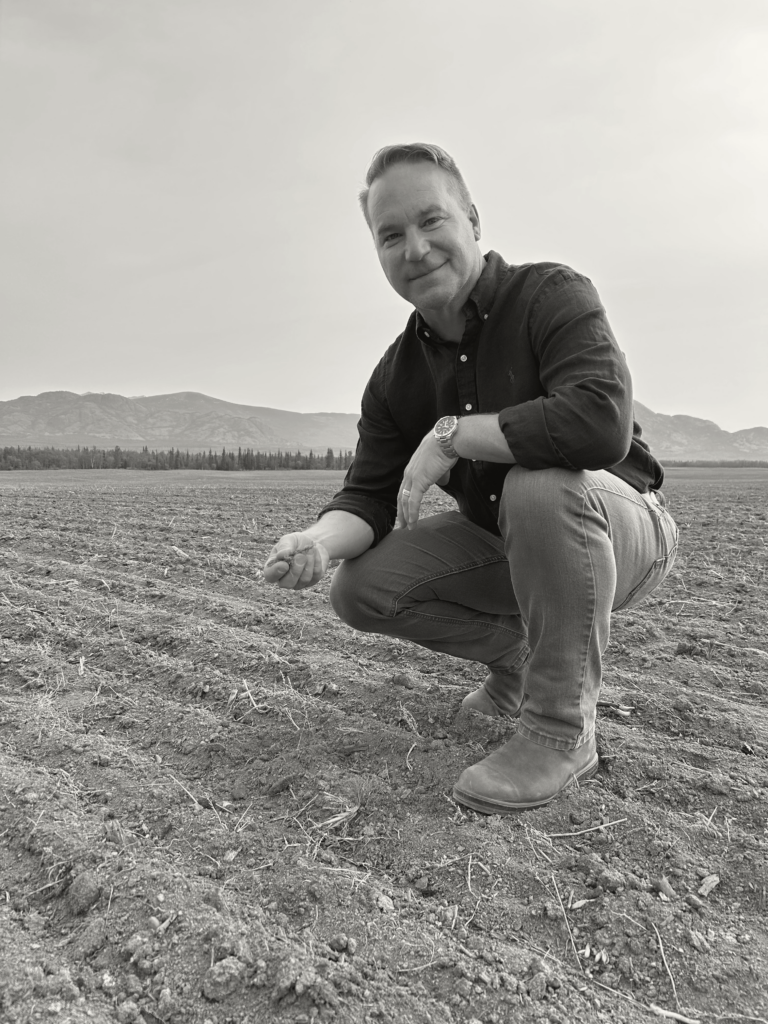
In the 33rd episode of The Extensionists, co-hosts Jay Whetter and Toban Dyck chat with Steve Larocque, the owner and president of Beyond Agronomy, to discuss controlled traffic farming and Nuffield Canada.
Listen here:
Transcript
Toban Dyck 00:03
This is the extensionist conversations with great thinkers in agriculture. I’m Toban Dyck, and I’m Jay Wen.
Toban Dyck 00:17
Hey, Jay, hey, Toban. Hey,
00:18
I was, I waited you out there. I was
Toban Dyck 00:21
waiting for you. Yeah, I know. I know. I wondered about that. I wasn’t gonna give you a lot of time till I jump
Jay Whetter 00:27
in right on. So you want to talk to me about running in the cold? I do.
Toban Dyck 00:31
I do. So this last weekend sounds awful, yeah, this last weekend. So it’s one of those things. You’re sitting in the couch and you’re like, Jamie, my wife and I just watched a YouTube video. We watched a lot of YouTube videos of people who do triathlons and ultra running and all that kind of stuff. So we watch this video, it always inspires us. So I’m like, like, you know, what kind of events are happening, you know, in the near future? So we’re like, December, November. I’m like, oh, there’s this thing called beat the cold triathlon at the end of January, January 31 at the forks in winter outside, and it’s running, biking and skating. Is swimming. Thank goodness, not swimming. So we’re like by sign up like you sign up in the warmth of your living room, and it’s like months away. So you feel good, right? So then January 31 comes, which is when this is going to air, but, you know, comes and it’s cold. It is cold. We drove in and there was like the winds. It got warm that day, but the day started at was minus 34 with wind chill that that day, and it was insanely windy. So when we the it was a 5k bike, 5k No, so, 5k run, 5k bike, 5k swim, skate, skate. So that was the bike. Sorry, the run was along the Assiniboine River, so, you know, somewhat out of the wind. But the skate and the bike were along the red and so and it was a south wind, and it was incredibly strong, cold south wind. And that was insane.
Jay Whetter 02:11
Well, was it windy enough that you could just, like, when you’re skating back, so you could just, like, let yourself get pushed
Toban Dyck 02:17
so people it was dangerous. Oh, really it was that the wind was that strong that when you’re skating back with wind, people were like, they were worried because they were going too fast, way too fast, just like a sail. And of course, it’s on the river trail, right, so there’s these deep cracks everyone really have to be cognizant of, like, where you like, where you’re skating. And I bit it. Oh, you did.
Jay Whetter 02:40
We got bruises to show for? I got a bruise on my butt. Yeah, yeah, ouch, yeah.
Toban Dyck 02:45
But that was love. Was a lot of fun. That was a good news. It was a kind of a beat the cold. You do feel like you kind of beat the cold when you
Jay Whetter 02:51
do stuff like that? Well, I didn’t do anything close to that, but I did go outside on a minus 38 day. Would you do? Well, I bundled up and I walked, probably, probably almost 5k but I’ll walk so Whoopty, Ding Dong, I mean, but I put on as many layers I’ve heard probably, probably five layers on my top and three or four layers on my legs. Yeah. And then I had this neck thing that my son uses for ice fishing. You can pull it right up over your nose, one of those, like long, stretchy things, breathe well, it doesn’t. It can fog up my glasses if I anyway, I was, I’m glad I did that and I went. But it was, I was bundled up enough that I really, actually didn’t notice it, and it was minus the day started off as minus 38 but it was minus 33 when I was walking. But it wasn’t windy, but, and that’s so key, it is so you had terrible wind, and it was not windy, and that wasn’t, I didn’t feel that cold
Toban Dyck 03:43
still, though, so we knew it was windy, right? So anyway, in the morning, when we’re packing up, we’re like, how do we dress for this, for this event? And I feel like, as Manitobans, like, as people who live here, like we we know it’s we know we have winter. We know it’s like, nine times out of 10 it gets insanely cold for a spell in winter. Why do we have such a hard time with it? Where I do feel like I do feel like some, there are some countries who that embrace winter and feel like it, are just more kind of comfortable with it than we are. Yeah, and why? Because we dress for We were fine.
Jay Whetter 04:19
Well, we probably have the cold. Like, we are in like, one of the coldest places on Earth, except for Antarctica and maybe the middle of Siberia, right? So we are quite
Toban Dyck 04:27
cold. We are, but I mean, the
Jay Whetter 04:29
like, we’re gonna talk to Steve Laroque shortly,
Toban Dyck 04:31
clothing Tech has come.
Jay Whetter 04:32
Yeah, it has, yeah, we can, we can dress for it, yeah, absolutely. It’s easier to dress for the cold than for extreme heat.
Toban Dyck 04:38
This is true. You are. You are eager to segue into the episode
Jay Whetter 04:43
I’m getting there. Yeah,
Jay Whetter 04:49
weather is a popular topic. But anyway, Steve Laroque, who we are going to interview today, he so we’re cold here in Winkler, and he is well above zero. In the middle of Alberta, on to Steve. Do you
Jay Whetter 05:10
like what you’re hearing and want to support the extensionists? If you are an agriculture company or association looking for a powerful way to get your message in front of Canadian farmers, then partner with us. Our listeners are farmers from coast to coast.
Toban Dyck 05:23
When you advertise with us, your brand isn’t just another commercial break, it becomes part of our story. Ads on the extensionists are personal and trusted. Our listeners value what they hear on the podcast.
Jay Whetter 05:35
Whether you’re looking for a 62nd ad somewhere throughout the podcast or even an exclusive episode sponsorship, we have options that will
Toban Dyck 05:43
work for you. So if you’re ready to get your message out there and connect with farmers across Canada, let’s talk visit the extensionists.com for more information.
Jay Whetter 06:02
I right, let’s get on with this. We’ve got Steve Laroque. And Steve is the owner and president of beyond Agronomy in three hills, Alberta. Hey Steve.
06:11
Hey Toban, Hey Jay. How are you
Toban Dyck 06:13
good? Welcome here. Good
06:15
to have you here. Great to be here. I’m
Jay Whetter 06:16
excited. So we’re gonna talk it. Yeah, we are too. We’re going to talk at some point about Nuffield scholarship and controlled traffic farming, which is both two things that are near and dear to your heart, but we’re going to, we’re going to go back in time and to your early days. So you’re in Alberta now, but you grew up in the Ottawa Valley area. What was, what was your childhood like? Were you on a farm? Or what was what were you doing when you were in those foundational years,
Steve Larocque 06:46
those right back in the 70s and 80s, those foundational years where parents were parents, and they didn’t know where their kids were. So, yeah, yeah. Growing up in the Ottawa Valley, it was, it was kind of Bush country, a lot of dairy around. I didn’t grow up on a farm, farms all around. So small town. Smallest town was maybe three miles away, about 300 people, and so that would be just south Ottawa. So a place called Greeley, I guess Greeley is where we would send our mail to. But played hockey and Metcalf. You know, through my my childhood, and went to school near a place called manateek, which was the opposite direction, but it was a local high school. They kind of built in a field to, you know, build it and they will come. So we had people from all over the place come to one high school near manateek. And I moved to Alberta. I thought I was going to go work the rigs. You know, as I had the winter off, I’ve been landscaping all my teenage years. So ran a landscaping, not a company, but I was kind of team lead driving skid steer and equipment. And it came towards just before Christmas, around around November, and some I had a buddy who was working with me. He was from Westlock, so just north of Edmonton. And he says, Why don’t you come up with me for the winter and just just check things out, maybe work the rigs and then yeah, and see where we go. So I said, Okay, I’m up for an adventure. And turns out I really didn’t aspire to work on the rigs once I got there. I mean more power to them. But it just was, this wasn’t my jam. And so I did stick around, and I got a job with the Alberta wheat pool of all places. And so that was in 96 because I could operate a skid steer. So they needed someone for their fertilizer bulk shed. So here I jump in, and we were doing about 13,000 tons a year out of that shed, and all through a bucket. So it was I could pick up a diamond, run a skid steer my sleep. But so from there, I started field scouting, just I was just keen. I always love the outdoors. I always love working with my hands. I mean, agriculture kind of gave me that, that same satisfaction that where you start with either a blank slate beside a roadside or beside a house where it’s just black soil and nothing there. And when you’re done, you’ve got sod, you’ve got trees, you’ve got a deck, you got interlocking brick, so there’s a start and a finish. And I was given the opportunity to go farm with some friends just north of Westlock. And I plant was an old box drill, like a 15 foot box drill. I helped calibrate it, which wasn’t that complicated. It was oats under seeded to alfalfa, and I watched it come up in rows. And I thought it was, it just, it just drew me. I’m like, I’m hooked. I got to go farming. And from there on in, I actually had the chance to swath it and combine it. I watched the grasshoppers Take it away, but then it grew back. So kind of got a feel for what some of the risks were in agriculture, and I was deeply satisfied, like, I don’t know how to describe it, but so from there, I went, worked at that Alberta wheat pool until, like late 99 where I went to Olds College. I decided to go back, or to go to college, and took the crop advisory. Diploma at Olds College, and then decided that wasn’t enough. And I might have met a girl and went to University of Lethbridge. She might have been going there. And I thought, your science degree too, and and I did. And so that started that process where I finished up in 2002 about 2002 and then went to Cargill from there, so I ran their agronomy program. Well, first an agronomist, and ended up, within a year or two, running their agronomy program for southern Alberta, you know, won a couple awards and decided to leave and go on my own. So in two,
Jay Whetter 10:37
what did you win? The awards? Yeah,
Toban Dyck 10:38
glossing over the awards here,
Steve Larocque 10:40
yeah, top, top agronomy manager. I more than exceeded budget, and we did really well. Minneapolis and, yeah, meet up with the, yeah, meet up with some great people there. And great time. You know, private jet did the whole bit. It was lots of fun. But I kind of always had the, I guess, the inkling that I’d have a business of my own at some point, and the agronomy services, because in Alberta, specifically, they just removed their extensionists, right? They just removed the extension people in provincial government decided that there’ll be no more government extension. There will be, you know, very little interaction between scientists and farmers. So that kind of left a void in the in the market for people to come in and provide agronomy advice. So we started to do that a through Cargill, and then I went on my own in 2006 and found it beyond agronomy. So I had 15 clients, which I have, I think all of them today. So it’s been over 20 years, amazing, yeah, since we started with with most of my customers, and they’ve grown and their families and next generation. So it’s been a ton of fun.
Jay Whetter 11:49
So Steve, what puts the beyond? What puts the beyond?
Steve Larocque 11:54
Economy? We first named it because I love to connect. I’m a connector by nature. So I, I always had the, I always had the desire to bring good people around, good people, you know, like, Okay, where do you need a hand? Who do I need to connect you with? Right? Because I’m not the accountant, I’m not the lawyer, I’m not, you know, I’m not the land deal guy, I’m not the real estate agent. So wherever it is that you need help, not the green marketing advice. I’m a grown I’m an agronomist, and that’s my skill set. So beyond was just that bring in other skill sets and surround people with those skill sets and form a team essentially wherever those needs are. So that was, that was the impetus behind beyond. So beyond became, yeah, as much as I was doing agronomy work, I through my Nuffield travels, which we’ll get into later, I really tapped into a lot of great people who did farm, you know, and who better to learn from, from the people who are actually doing it and and have learned the mistakes and started to learn about land deals and different land deal structures and rental agreements and different ways of applying, you know, nutrients and just new ways of looking at things. So it was a real eye opener for me to travel around and meet all these new people, and I wanted to connect them. So I started to bring those people back to conferences. And, you know, so we had the advanced agronomy conference for a while. I began writing a newsletter back when I think, I don’t know. I think newsletters were just or blogs are starting to be cool, back in 2008 or nine. So I wrote and sold an international newsletter, 46 issues a year
Jay Whetter 13:32
for about 11 agronomy,
Steve Larocque 13:34
beyond agronomy, yeah, beyond agronomy, the spark. So eventually named it the spark. So we cover about three topics a week, and and it was great because I was just being I was just, what would you call it, curating ideas. So taking ideas from the cotton industry and the way they ban nitrogen, and trying to apply that to how we do things here, and banding between, say, 12 inch rows. So I take a lot of those ideas and just curate him, write about him, put my thoughts down, and then publish it. So that’s 19, yeah.
Jay Whetter 14:09
Oh, okay, right, so, but did you start it before you did the Nuffield
Steve Larocque 14:14
right during like 2008 excuse me, 2008 is when I applied, or 2007 is when I applied for my scholarship. 2008 is when I started to write. And it wasn’t because of the Nuffield, it was because I wanted to connect and just inform my clients about what’s going on and what I’m thinking about and what’s new and exciting and what’s not that sort of thing.
Toban Dyck 14:37
So that’s you. You You ended it in for 2019 you said it. You ever think about going back to that, that newsletter model, or restarting that thing?
Steve Larocque 14:46
Oh, I, you know, I do all the time, but it is the time right, and there’s probably no more. Everyone has sub stacks, and there’s lots of Yeah, lots of opportunity to write again. And I think I will. Well, I just not in this moment. There’s, there’s some things I need to invest in, and one of those, what doesn’t allow the time to do that, because it takes a lot, as you know, even to do a podcast, I imagine, just sure put it all together. It takes a tremendous amount of time.
Toban Dyck 15:14
So yeah, and you were doing, you were doing it all yourself. It was this was just you.
Steve Larocque 15:19
I was with, with my wife, Vanessa. So Vanessa would edit my work whenever I handed it in to her. Bless her heart, because it would be, it could be five o’clock on a Monday. It could be 1am on a Monday, and she would finish it.
Toban Dyck 15:34
Yeah, my wife does the same. So for years, I was a columnist for, like, the National Post and the great news and Western producer, yeah, she has read every single one of my columns, absolutely.
Steve Larocque 15:48
Okay. Okay, yeah, we mirror. We mirror. Nice, yeah,
Jay Whetter 15:53
I like it, yeah. So the Nuffield Scholarship, the whole process and what it means to agriculture is something we want to we want to dig into a little bit. But Steve, how did you find out about it, or encounter what was your first introduction?
Toban Dyck 16:10
Stumble across it, or whatever? You know, that’s
Steve Larocque 16:13
a great story. So there’s, there’s a gentleman named Jeff Leeson. He works for corteva, now in a leadership position, but back then, in mid 2000s he was my chem rep at a Balzac just north that, just north of Calgary, and I was traveling to Brazil in 2006 late 2006 we’re going on a trip, just a vacation with some friends, my wife and I, and he gave me a book. Jeff gave me a book called riding the bus with chickens, and so I took it on so I took it on the plane. Random happens to be an author from Manitoba named les kleckie. And yeah, and he so he wrote that book. And I was just enamored by all these stories, like really random stories about where he would be visiting farms around the world. So he found himself in very precarious, precarious, pardon me, situations, and found himself like in feedlots that weren’t necessarily cattle, but other pets in other places the world. Wow. What is this? And he he he had mentioned Nuffield in there like he was a Nuffield Scholar. So I just looked up what’s a Nuffield Scholar? And they happened to be at Nuffield Canada. I had no idea what Nuffield Canada was. So it said that they would give, I think it was, at the time, $7,500 for you to travel the world, connect with their network and go study a topic that’s of interest to you. So I said, Well, why not? I’ll give it a I’ll give it a go. So I applied, and I won. So and my the same year was another farmer from on, from Manitoba, and that was Greg Braun at bronsdale Farms. He’s a dairy farm, but near, near Steinbeck, sorry, Greg, okay, somewhere near there. So, yeah, so I applied, and I won, and here was this opportunity to go travel the world, learn something new, and with a goal of bringing it back to to Canada.
Jay Whetter 18:11
And did you when you applied? Did you have an idea like what your what your scholarship was going to like, what? Or did you explore what your so we’re going to get the controlled traffic. Thing was that something you came into with that idea, or was it something you discovered along the way?
Steve Larocque 18:27
I my study topic originally was the art and science of precision agriculture. Because you can imagine, it’s 2007 this is kind of on the cusp of, you know, farmers edge is just getting into the space. We were all doing a little bit of variable rate, and it was real challenge. Real challenge. It was different, definitely hard to marry hardware and have things talk to one another. So I thought, well, I’d like to dig into this variable rate aspect. And I went to my CSE, which is a global gathering of all the scholars who are awarded that year. So you meet up with at that time was between 60 and 70 nutfield scholars from around the world, around the world, 80 to 90. Yeah, so you can imagine, so they they select for people between the ages of 25 to 4550 but you find a lot of people in their 30s and 40s. So you put a bunch of curious, open minded people who are ambitious in a room and, like, really good things happen. So it’s great conversations. It’s always inspiring. You meet such good people. So when I got in the room, some of them were doing controlled traffic farming. So some of the farms we visited were doing controlled traffic farming. So, and that’s a form of precision agriculture. In fact, it’s an intense form of precision agriculture. You have to marry everything up to go in straight rows, which sounds simple, but not always. So I quickly shifted, you know, asked permission, and quickly shifted my topic to control traffic farming. That was in 2008
Jay Whetter 19:55
Okay, and what was it about controlled traffic farming that was appealing
Steve Larocque 19:59
to you? Well. Think because I had visited at that time, I’d visited New Zealand, and I visited Australia, and I saw like each time I went to I’ve been to Australia, I don’t know, six times, seven times. And at that time, I’d been there twice, once when it was like on fire, and the next time when it was underwater. So you can imagine the extremes and what they were telling me, and what I was seeing in the field, was that it was building resilience in their system, because they could handle the droughts and they could handle the floods a lot better. So they could store moisture to access when it’s dry, and they could store that moisture and get it away from the root zone when it was too wet. So it really helped balance out the extremes and performed really well. So their water use efficiencies were through the roof. And, you know, the nutrient use efficiencies were really high. So they could produce a lot of grain for a little bit of rain. So that was impressive to me. So I thought, well, you know what? We kind of, we kind of do the same thing here. Maybe I won’t speak for all of Western Canada, but being so close to the mountains, right? We’re only 150k away from the Rockies. So we get a lot of turbulent weather, and we get, we get floods and droughts quite often. So there’s a lot of extreme weather events. It freezes every month, you know, we get six inches of rain and a hail storm and and then it’s dry for six months. So I really wanted to figure out if we could find a system that could, you know, build some resilience and help us through those floods and droughts or those dryness
Jay Whetter 21:27
is, yeah. So, how do you, how does the soil become more resilient under that controlled traffic? Is it just, is this a factor of of compaction being a bigger deal than anyone really realizes?
Steve Larocque 21:39
Yeah, it is, you know, after after decades of of equipment traffic, our soils are dense, you know, and some more than others. So you can call it compaction. Whenever you think about compaction, a lot of times you go to the extreme right, like this, this hard brick that’s just impenetrable, whereas a lot of times it’s just, we’re we can store a lot more water when you do stop driving over it randomly, because we traffic so much. And if you look at the size of the equipment that rolls across our fields in the last 15 years, it’s it’s huge. So the square, the pounds per square inch on our on our tires, even though they’re lower pressure and higher side walls, higher thickness of sidewalls. You know what? They are able to carry a load better than they used to. But you’re still a combine full is is overweight, like on the front axles, way overweight. So even with duals triples, you’re still well over you’re in the danger zone. So if you look at that kind of traffic over time, you know, and we’re typically traveling our fields when it’s wet, you know, in under no tillage or no till systems, it’s usually wet after the snow melts. We’re right in there. So it’s wet, it’s wet during seeding, it’s wet during spraying. And those are the two times where we have pretty heavy equipment across our fields. If you look at harvest, if it’s dry, hey, great. When it’s wet, you can leave some pretty permanent damage down there at depth when you get Yeah, and we’ve run into that even if, even in our tram lines, we’ve made some pretty serious ruts. So pretty thankful they were concentrated. So it builds resilience by just opening up the pore spaces and allowing air to breathe. It’s like adding condo space for biology to thrive, for oxygen to to exist, water to exist without things getting choked out.
Toban Dyck 23:27
Yeah, that makes sense. I definitely want to come, come back to it. But the Nuffield scholarship I got being an ag. You hear about it all the time. You meet people who are Nuffield scholars and you like you. That word is used a lot. Is it? So like, is it? Is it? Is it fairly academic? Is it? Is it, you know, you see, you have to, you have to travel quite a bit. Like, when you when you hear it, when I hear the word scholar. So I, when I went to undergrad, yeah, I studied philosophy and politics at the University of Winnipeg, the big scholarship was, like, the to be a Rhodes Scholar, right? So you’re, like, you’re, it’s, which is a big it’s a big deal, and they gotta have, like, a GPA of, like, perfect, essentially, and then you’re shortlisted, and you still might, might not make it. So when I hear Nuffield scholar, I’m always triggered to think that way about it. And so, like, there’s an academic portion, there’s a travel portion, there’s a extension portion, can you just talk a little bit about about all that?
Steve Larocque 24:27
Absolutely. I mean, you could consider us Rhodes Scholar, but it’s, you know, R, O, A, D, S, we do. I like that. Sorry, folks. Yeah, you know, you know what it’s it’s really experiential. So the whole process, it, it’s designed to help build leadership capacity in yourself, help to help to identify, you know, areas where you were weak, or areas where you need to improve. And. Designed to build capacity, to help you understand just how much more you’re capable of. I mean, surround yourself with five incredible individuals, right? Surround yourself with 70, put you all in a room, and that’s how you that’s who you hang out with. For two years, you start to level up and level up. So the whole process, yes, it’s a study topic. Yes, you are learning and the whole, I think the the whole, the biggest difference is, really, or the biggest benefit is that you’re learning from, from peers, right? So in agriculture, maybe everywhere, but I’ll speak to agriculture, we learn best peer to peer. That’s why I love, I love the name of your show, extensionist. I mean, that’s, that’s what’s missing today. We’ll get into that, but that’s what’s missing today. So here you’re learning from from farmers, like, Farmer to Farmer, farmer to agronomist, agronomist to farmer, you know, AG, entrepreneur, agribusiness professional, like you’re all in a room, and you’re learning from one another, because we all say, face, you know, very similar challenges. So there’s someone who’s done control, traffic farming somewhere else in the world. So I went to learn from them, and I brought that information home. There’s people who’ve done really good strategic plans and board governance structures for their own farms that have done kind of learn what they’re you know, learn what to do and learn what not to do. And they generously pass all that information on to us. So you are required to write a paper. You are required to to present your topic, which we just That’s why, just last week, or the week before, we were in Victoria for our annual event where the outgoing scholars, the 2024 scholars, were presenting. So you have two years to complete this experiential what would you say this experiential trip around the world where you connect with people and learn a specific topic that’s important to you and important to Canadian agriculture, because the whole point is to really build capacity in all of agriculture. Because I don’t think we do that very well. Like, where do farmers go to develop themselves right now? Yeah, like, yeah. There’s not many going to their neighbors, farm
Jay Whetter 27:07
or coffee shop, train, show,
Steve Larocque 27:10
and that has a fit, right? That has a fit, but there’s a big old world out there filled with a lot of great ideas and lot of great people that you could bring in for new perspectives, because that’s a whole point. I mean, now there’s nothing like travel to really introduce new perspectives and new ideas and and really challenge your own preconceived notions about, you know, what is, what is real and what is possible.
Jay Whetter 27:34
So, yeah, yeah, I’m trying to think of a time where I’ve ever heard a Nuffield presentation have I, I think, and I was wondering, like it almost makes me think of, you know, how do we, how do we get that information and that experience out to more people? And you can, you can tell me about some of the techniques you’re using, but I just made me think we almost need enough field kind of TED Talk for agriculture, where we get together, we just hear it all in one place, yeah, and then we could, we could ask questions and dig deeper on some of these topics.
Steve Larocque 28:09
100% we just, we just had story brokers. They, they filmed our our last, like two weeks ago, they filmed our outgoing scholars presentations. So we’ll be filming it professionally and with great audio, and we’ll be sending that out. So we’re working on a communications plan. I mean, really, it has been up left to the individual, left up to the scholar, to to disseminate the knowledge. That’s the whole point. But we know we can do there’s always opportunity to do better and and maybe we there is, you know, the likes of a TED talk, because,
Toban Dyck 28:45
yeah, yeah. I mean,
Jay Whetter 28:47
there’s always the critique that a farmer in, say, Africa or Australia or China, I mean, it’s, it’s too different to be useful, but, but those 80 to 90 people a year, we must be just generating some amazing information for farmers that if, if we could access all of that just as outsiders, non Nuffield scholars. I mean, so you’re talking about just the Canadian group that you recorded. Oh, right. Or was that the international one?
Steve Larocque 29:18
Yeah, so Nuffield International, I think it.com’s Okay, yeah, Nuffield international hosts all of the International reports, so everybody’s report so every every country. There’s 16 countries total, and everybody’s report is published on the Nuffield International website, where you can visit and there’s Nuffield as well for our own
Jay Whetter 29:42
these videos that you just did, Steve, but those were just the Canadians, or who was involved in that
Steve Larocque 29:46
that, yeah, this was, these were just the Canadians and I Nuffield. Nuffield UK. I mean, not everybody films them, sometimes with just 20 minutes, like the UK sends 25 people. Year. So it’s 25 it’s 25 presentations. You can imagine for a conference, giving everybody 20 minutes, giving everybody an hour, yeah, it would be too long. So they’re, they’re, they’re pretty quick, pretty quick summaries. And really, it’s about, you know where you went, what did you learn? What you what were your conclusions and what were your recommendations? Because that’s the whole point of this. I mean, what are the recommendations to say, Canadian agriculture. So if you’re going to do control traffic farming, what does it look like? Who did you learn from? What did you see? And what are your recommendations? That’s, yeah,
Toban Dyck 30:35
what kind of things have you seen come out of these, these, these years of like Nuffield scholars, like have have they, these reports got in the ear of government? Have they, I mean, been used to start companies all the above?
Steve Larocque 30:49
Absolutely, I wish I could show, I’ve got a, basically a little slide that I show of all the businesses that we have across Canada, for example, never mind International. But Well, absolutely, because a lot of times you have individuals who are hungry to learn something, and a lot of times it’s very applicable. They’re not just going to study a topic that’s, you know, generic and interesting to know. Great example would be the 2024 scholars right now. They’ve they’ve just completed their their report, they’ve just completed their presentation. One is already one was looking into native prairie seed production. So native sari prairie seed production, granny, sorry. Rennie grills. Rennie grills out of North Battleford. So his farm, his family, has a native seed production facility, and now he’s been to national or international seed banks. He’s now hosting a national seed, seed national Nair native prairie seed bank conference. He’s bringing in people from around the world to help learn how to propagate our own native prairie seeds. So he’s one that’s doing great work. Tatum Claypool, she’s made tea and she works for FCC. She’s now the lead, forgive me, Tatum, she’s now the lead of the FCC finance team, just to do, yeah, just to work with the indigenous farms and figuring out the the business structure. Because, again, they don’t, you know, the the the people on the land, not an individual. So it makes it very hard to lend, and it’s been really challenging. But she’s like, she’s leading the charge now, and she was able to to learn from other indigenous people from around the world and see what they’re doing and bring that home. Who else? So we’ve got Mark Brock. He’s out of Ontario, and he studied Farmer to Farmer collaborations, like, how do you work with each other neighboring farms? And he’s, he’s got a great kind of a local benchmarking group where they’ve done some amazing benchmarking together and formulated this, this amazing, yep, group where they can share information. You know,
Toban Dyck 32:59
these all sounds like amazing podcast. We need that list material.
Steve Larocque 33:06
I’ll just give you alumni I could go on literally, like there’s just so many that have done really good things, and, you know, generated a business idea from the farm. Right now we have Jolene noble. She’s from Manitoba, or Manitoba, forgive me. She’s from northern Alberta. Sorry about that. She and she’s studying stacking enterprises on farms. So there’s lots of conversation now around land expansion, right? Or expansion just by adding acres, like lands expensive, everything’s everything’s difficult to expand. So what can you do differently as a farm, you’ve got children, not all of them want to sit in a tractor seat or farm more. So how do you build enterprises on top of your farm or within your farm, to help that you know, to help keep them at home and keep the farm growing, but just differently? Oh, that’s really interesting. That’d be a massive topic. Yeah, that
Jay Whetter 34:00
one just started, yeah. That
Steve Larocque 34:03
just started. Yeah. Jolene, would be fun for you to follow along. I think you know Cherylin, Joey Nagel, sure. Yeah. She’s, she’s, she’s a 25 scholar, so she’s studying the impacts of renewable energy, so she’s on farmland, so she’s kind of looking at a couple angles to help direct policy. So when she finishes, I would trust that her information will help guide green energy policy on farms. So the do’s and don’ts and yeah, trying to make sure that
Toban Dyck 34:35
Craig Lester and like Matt McIntosh
34:38
guys, yeah, absolutely. There’s a
Jay Whetter 34:41
lot of nutfield scholars who would make excellent podcast guests.
Steve Larocque 34:44
Yeah, yeah. Just, I mean, watch, watch Craig’s business grow. Watch, right? So he’s just, he just finished. He just finished two years ago, didn’t he 25 last year? So it’s exciting to watch his business grow. So he’s just on fire right now. As you. Are, yes, for sure, full of inspiration,
Toban Dyck 35:03
yeah, oh, yeah. That’s really cool.
Jay Whetter 35:07
This peer to peer thing, which you’ve mentioned a couple times. I mean, it’s part of your own communications philosophy, but it also is that was that who did that one? That was that Mark Brock. But what is when it comes to extension, and how to get an idea across to farmers, and you can use controlled traffic farming as an example, because it’s not something that everyone’s going to be jumping into. Maybe there’s some personal frustrations there, in how mean, maybe around you and Alberta, there’s some some higher levels of adoption. But you know, for all of its merits, adoption is is lower, but, but how? Yeah, so how do you, how do you take a new idea like that and communicate it in a way that resonates,
Steve Larocque 36:00
yeah, and it, we’ve been, it’s been a, it’s been a really big topic of conversation lately. And Matt, you know what Matt’s I think some of the conclusions that Matt had, Matt McIntosh, was extension, and the important importance of extension. I mean, we’ve through government cuts. I mean, we’ve just pulled all the people that do the connecting, right? I mean, farmers will talk to one another at the coffee shop you know, or wherever you know, at an ag conference once in a while. But you really need someone with some, let’s say, some domain or some domain knowledge, or to at least someone to connect those those individuals, be they agronomist to agronomist or farmers to farmers. You really need an extension person. I don’t know if there’s any other way around it. I mean, you can, you can provide all the newsletters you want, all the articles you want, all the podcasts, everything. It’s all great information, but it rarely gets into action unless they see it being done. And the only way to do that is to actually show up to a farm. Have a reason to show up to the farm or wherever, and see it with your own eyes. You know, just kick the tires and look at the drill setup, look at the row spacing, look at the openers and say, You know what? I can make this work. Otherwise, it’s just conceptual, and that’s hard to put into practice. That’s why you know whether it’s controlled traffic farming, or even no till adoption, so reduced tillage, if you remember them, you know, out of Alberta, they, they did tremendous work, and they were actually a public, private partnership we had in Canada, had funded them, as well as the Alberta government and they and other sources, but the gas,
Jay Whetter 37:38
the gas company, or the power company, or what Is it? Yeah.
Steve Larocque 37:41
Oh, and Canada was a gas company, natural big Natural Gas Company, forgive me, yeah, a real, a really large natural gas company. You know, late, late 90s, early 2000s and they were, what would you say? They were, like, the critical piece. They were the missing link to no till adoption, because they held the events, you know, they hosted. They had great people, Peter Gamache, Roger Andy, Chuck there was, there was a number of really good extensionists who brought farmers together. They would have a conference, they would have field days, and all of a sudden, you could learn from people. You could go to the field. See the seed rows coming up, see the residue issues that were a challenge, you know, see what sort of fertilizer regimes fit best when you were transitioning to no till. And it was the extensionists that that brought it to fruition, right? They were the ones. So with without them, we’re just taught. We’re just talking, and it’s great. I think we need to get the information out there. But if you want action, you need extension people.
Jay Whetter 38:44
So you are an extension person, you’re an agronomist. But, I mean, a lot of ways, I guess you could say agronomists are extension people, yeah. I mean, they need a lot of those same skills, yeah. So what? What is your, what is your favorite way, or most effective way to talk to farmers. What do you what’s what works? You know, what we’re
Steve Larocque 39:05
I think what’s, what’s worked best for me is the fact that I that I do farm. I’m not a farmer. And I’ll clarify, I’ll clarify that I respect to all farmers. I do farm, but and I have my own equipment, so really, that allows me the opportunity to go do the thing, whether that’s, you know, bolt on a new protein sensor on my combine to measure protein across the landscape and try to figure out how I manage nitrogen differently based on the maps, which I haven’t figured out how to do yet. But when you start applying all these different ideas and like and showcasing. Like, Hey, come on out. Have we’ll have a field day, or come on up to the farm and have a look. I’ve had lots of people come out to the farm. We grab a shovel, we look at my soil, and we say, Wow, okay, that’s, that’s, that’s really amazing. It’s beautiful soil. And then we look at maybe neighboring fields that that are under controlled traffic. Just to give a. Comparison. So you really need. The best way, I’ve found is just to do it, you know, apply it, understand what I learned, or understand, you know, the mechanisms by behind why it’s working, why I think it’s working, and then bring people in. That’s it. Especially what bring in academics as well, because that’s another thing we missed,
Toban Dyck 40:23
yeah, like, from the universities or the A like the research centers or wherever.
Jay Whetter 40:27
Yeah, I’ve brought up 4h a number of times they’ll learn to do by doing. But I want to go back to your you said you weren’t a farmer, but you are farming. So why? Why do you say you’re not a farmer? Why the
Toban Dyck 40:38
distinction? Yeah,
Steve Larocque 40:41
because, I mean, I don’t farm, I don’t farm much like it right now. I’m down to like a half section, which is enough with 30 foot drill. It actually takes quite a long time. And by the time you get everything fixed and calibrated and ready to go, I mean, it’s, I’m almost done, so it’s a bit frustrating. But do I get to do all
Jay Whetter 40:56
it sounds like farming?
Steve Larocque 40:58
That sounds like farming, exactly. That’s true, but, but it’s but it’s not my primary source of income, right? It’s a good income, and it allows me to do some great things, a lot of fun things, but the risk isn’t there, like, like a, like a true farm, who, who, you know, who will make or break depending on the decisions that they make. I do them, and I can buffer that with my call it, my off farm job, my my agronomy business. So I’m, yeah, I just I I’m always quick because I get I have a lot of respect for my my customers, like my clients, are dear friends. I’ve been working with it for a long time. I see what they do day in, day out, and I don’t do that day in, day out, and that’s maybe why I always qualify, like I do farm and I enjoy it, but it’s Yeah, respect to farmers, they they’re under, they can be under tremendous pressure, under a lot of risk. They the day to day can be complicated a lot, or not complicated, but complex anyways, yeah,
Toban Dyck 42:02
my interview, so how, how often do you you say you bring people in to your farm, and that is an effective way to extend information, which I completely agree with. I think that is, yeah, that in person, kind of tactile approach is just very, very effective. How often do you do that? Is the first part of my question. The second part would be, do you have trouble getting people out?
Steve Larocque 42:25
You know what? And I would say, the last I have not the last few years. It would be more international people coming through that just who are who are interested, not as many local, a few local. Fact, a few people from Manitoba have called. It’s just odd, like my I published my report, like 15 years ago or more, and I’m still getting calls, and even from people, even from people in Manitoba, in the heavy clay, wet sweat, which is fantastic. It’s good to see my report still being read. Sometimes you feel like, okay, I’ve been around a while doing this and and it’s great if you want to. It’s if you don’t want to, when it is, it hard to get people out? It is getting harder, for sure, you really need to give them a good reason, like you have to be doing something unique. I don’t know if variety trials, you might get some people out, or different herbicide, you know, different products that doesn’t tend to get people out. But when you start talking about iron, like taking your, your eight wheeled, four wheel drive, and putting it on four wheels, and welding rims together, and, you know, creating offset hitches and and really doing some silly things, people are interested, you know, like, what do you I want to see what you’re doing, because it’s pretty
Toban Dyck 43:37
Absolutely So,
Steve Larocque 43:39
yeah, I think, I think you have To have something unique like to really draw people in. I don’t people are busy, and you really have to give them a reason to want to come.
Toban Dyck 43:48
Should I be should I be doing control traffic farming? On my on my farm.
Steve Larocque 43:56
Does control traffic farming intrigue you?
Toban Dyck 44:01
You know, there’s very little that doesn’t intrigue me. So, so yes,
Steve Larocque 44:06
do you, yeah? Do you feel like you have a compaction issue? Or, do you see wheel tracks? Do you see issues with your soil draining?
Toban Dyck 44:16
Maybe not, yeah. I mean, that is, I mean, you know, more and more tile drainage is becoming, you know, quite popular in our area for those reasons. So is it a matter of, is that a, is that a band aid to solution, to something that should be more kind of like control, you know, should we be considering more other, other options, as opposed to just Yeah, and that’s I,
Steve Larocque 44:41
Yep, yeah, yeah, yeah. And often, sometimes I find myself leaning people towards there. You know, I’m, I’m not gonna hit you anybody over the head to do controlled traffic, I mean, because it’s a rigid system, right? There’s a lot to learn there. There’s some nuances in there that make it you. More challenging than random traffic, because you can just show up to a field and harvest the way you want, or spray whichever you want. When you have rigid tram lines going in one direction, you’re kind of limited. So I get that at the same time. If it’s what gets you out of bed, if it’s if you like to tweak, if you like to, you know, learn new things and try to always progress. It’s whether you’re doing regen, whether you’re doing controlled traffic, whether you’re doing variable rate. I mean organic, whatever you want to do, as long as it gets you out of bed and learning. I think that’s a great thing, because they’re all they can all be good things, and they can all be really bad for you too. You know what I mean? Like you can write control traffic farming, you can do really poor job of organic farming, same with regen, but they can also be really good. So I think this is
Toban Dyck 45:47
kind of like that. I like that idea of finding that thing that inspires you, and then good things will come from that, because you Yeah, you
Steve Larocque 45:53
naturally want to figure it out, Yep,
Toban Dyck 45:54
yeah. Otherwise like that, yeah.
Jay Whetter 45:58
I this is not. This is just a fun little conversation I had with a with an engineer minded person the other day. But he was, he’s a drones expert, and we’re, we’re talking about, you know, Application for drones and farming. And he was talking about tethered drones, so having it wired to the top of a tractor for to give you better sight lines in all conditions. And then he also talked about sprayer drones tethered off the end of the boom, and so they would be wired for power and for product, but they could give you, they would extend the width of your spraying area, and also could kind of, kind of zoom around and do spot spraying and but they’re but they’re connected. I don’t say, Well, this is amazing. I don’t know whether that applies to controlled traffic. That just reminded me of that. Oh, when
Toban Dyck 46:49
you become a Nuffield scholar, then you can take that on.
Jay Whetter 46:53
What would I do? Enough field scholar on. That’s
Steve Larocque 46:56
drones, fixed equipment. Okay, yeah, yeah, yeah.
Toban Dyck 47:01
I hadn’t heard that before either drop that one on us. Yeah.
Jay Whetter 47:07
I gotta wait, I guess, Steve, but I just want to know when Toban asked you, and I just wanted to see how you guys rolled with this, because I really loved it and especially your approach. So Toban asked, should, should I do controlled traffic on my farm? He asked you, yeah, and I loved your your approach. It wasn’t Yes. It was like, Well, I got to get to know your farm and your needs. Do you have drainage issues? I think, from an extension perspective, I just thought that was a that was a perfect case study and how to how to do extension with a with a goal to connect first and see what the need is, listen before you prescribe. I just, I really liked it, and it wasn’t a long conversation, but I just thought that was a perfect case study, and how to do it so nicely, nicely done.
Steve Larocque 47:58
Well, thank you. It’s, it’s taken some years, and maybe I maybe early days, I don’t quite remember, but maybe early days, I might have been a little more opinionated. It’s not really my nature. But, yeah, you know what? People are pretty matter of fact, with other people’s business, as in, you should do this and then all of a sudden it’s a disaster. Well, that’s not great for the other person. The other person, you know, making the recommendation, can walk away and no skin off their back, but somebody else could be put at harm in harm’s way. That’s the last thing I’d want to do. I think that there’s always room to understand where people want to go, where they want to get to, and then start peeling back, well, how do we get there? That’s kind of the natural process for me. Anyway, exactly.
Jay Whetter 48:39
I love that, which is why that in person is so critical, and it almost has to if you’re going to do it the best possible way. It’s that one on one, take the time, find out what the needs and motivations are and see how you might help. I want to go back to your you’re the chair of Nuffield, Canada. If I said that right, correct the board. What? What would you want to do next with Nuffield? You’re just back at it. You got renewed your position, yeah. What? What’s the next step to make it easy or more effective?
Steve Larocque 49:16
Yeah. So the first two years were spent. We’re 75 years old, so it’s a 75 year old charity. It’s incredible, and it’s got a really a very rich history. So, but with that, over time, things can get complicated, or you need to, you know, kind of rebuild some areas of the foundation where, you know, what, if we really want to take this to another level. We need to work on, let’s say, policy. And that was, that was a big part of it. So the way we made decisions, we spent a tremendous amount of work, you can imagine, with the introduction of AI and people, and we have a, you know, a 40 page report. So we have to figure out what the AI policy is, you know, what, what our reports should look like, because, over time, are they fit for purpose? Like, do people want to read 100 page report? Do people want to read a 5000 word report? So there were a lot, there were a lot of there were a lot of decisions that we had to make that we didn’t have clear policy on, and we do now. So we did a ton of heavy lifting in the last two years, and it’s been great. We will never finish the strategic plan, because it’s a living document, but we went through the process of building out our strategic plan, so now it’s about implementing it. So we’ve got some key pillars, you know, one of them being communication. So communications to the public, communications to our alumni, to potential scholars, and to stakeholders. So in the next two years, I want to bring a lot more awareness to Nuffield Canada and the opportunity that it brings to Canadian agriculture, like I really if I could get, like we award four to six a year, which isn’t a lot. I mean, maybe we might get to 10 at some point, 15, I don’t know. But because funding is difficult, because depends on the topic. You have to marry, you know, you have to find people who want to invest in us. Because traditionally, we were always finding an investor that matched the topic. So you could have a really good scholar with a really great topic, but no funding for them, which is really sad. So we’ve kind of changed our our Stakeholder Relations or our financing structure, if you want to call it that. But on top of that, it really is about communicating and getting the word out to how amazing this opportunity is for farms. If you want to get something done, ask the busy person. That’s cliche, right? Well, everybody thinks they don’t have time to do an upfield scholarship, but if you’re between the ages of 25 and even we take you, we take up to 65 year old, if you are still passionate and gung ho and ready to give her, I mean, will the doors are open. So I think I would love to find a way to get more farmers in the door, because that’s where we have the greatest impact, those who are agri ag entrepreneurs or agribusiness people or farmers, if we can get them in the door to apply and show them what’s possible, man, you build things from the ground up, and all of a sudden, across Canada, we’d have a whole bunch of people doing really great things and actually doing because that’s, it’s great to think and it’s great to, you know, to discuss. But when you can find the individuals, because we select them based on, you know, curiosity and open mindedness and generosity, you know, volunteering, that sort of thing. We find people who are both thinkers and doers. Because when you find those like yourselves, things get done, right? So that’s what that’s we want to find. Find those individuals, get them to apply and send them off.
Toban Dyck 52:40
So, I like it. That’s great. Well, we’d love we’ll help how we can in terms of the Communications.
Jay Whetter 52:48
Thank you. Yeah, so Steve, when we asked you if you would be on this podcast, was there something that you wrote down that you really wanted to say that you haven’t had a chance to say yet?
Steve Larocque 53:00
Yes, it, it actually was about extension since I have an audience, I’m global now with the extensionists you find,
Toban Dyck 53:11
of course, of course,
Steve Larocque 53:13
I want to let everybody know how important extensionists are we it’s like, whether it’s comes to like, I’ll speak to AG specifically. So whether it comes to like, AG, tech adoption, you know, systems, adoption, farming, practices, policies, like even applying for funding. We need the extension people in the room, like, there’s, they’re they’re gone, they’ve been, they’ve been gone for a long time, like maybe there’s some provinces that maybe do it. Well, I don’t know. You know, I don’t know of any other provinces that do extension. Well, there might be some that I’m not aware of, but they’re the missing piece of adoption to whatever you want adopted. Doesn’t matter whether it’s implementing policy or practices or ideas, innovations, all that hinges on extension. So that’s what I wanted to leave. Yeah, I want everybody to know like that. Yes, let’s get let’s get them. We’re going to use
Jay Whetter 54:10
that in our next promo. Absolutely.
54:13
Let’s get the extension is back on the back on the payroll. Let’s go. Well, thanks a lot. Steve, great conversation.
Toban Dyck 54:22
Thanks so much for joining us.
Jay Whetter 54:29
Hey there, listeners. If you’re enjoying the conversations here on the extension list, you will probably love to get our newsletter.
Toban Dyck 54:35
Yeah, it’s the best way to stay connected with us, with Jay and myself. Yours truly. I’m excited about the newsletter, to be honest with you, because I think, well, so many of our guests have sorry.
54:47
Why are you excited about say, say that
Toban Dyck 54:49
differently, Jay, so many of our guests are. They say so many things of interest, right? And I feel like the newsletter will be a great will be a great way to to. You share that with our
Jay Whetter 55:01
listeners, like quick take homes, yeah, summaries, yeah, absolutely, one liner,
Toban Dyck 55:05
absolutely, absolutely, I think about each each guest, we could probably write a whole bunch of articles each of our guests, right? So to give our our newsletter subscribers, like summaries of, you know, the key takeaways of these things, plus plus information on upcoming guests. All they got to do, all listeners have to do is go to the extensions, calm and follow the prompts to sign up for the newsletter. I think it’ll be, I think it’ll be great.
Jay Whetter 55:33
That was great. It was great. What were my takeaways? I mean, just say I
Toban Dyck 55:38
didn’t even ask a question.
Jay Whetter 55:41
Yes, I could just do this closing on my own. No, but I did. I mentioned it to both you guys, and I really liked how when you asked him, that, should I have controlled traffic farming on my farm, and then Steve just went right into sort of asking those probing questions, which I think are really essential to to extension. So I think if, if people listen to that two or three minutes, I mean, it’s a great way to have a conversation about farming practices and and what, what the to get at, what the need is, before you start prescribing any sort of fix? Yeah. I think what was
Toban Dyck 56:23
interesting about that too, which you know, should the recording shows, is that I wasn’t actually anticipating that response, because I, like, I fumbled through answering that question, because I was not expecting him to answer my question the way he did. Why weren’t you expecting? I was I was expecting either kind of a jokey absolutely everybody should be doing it, or, you know, something else, but then, but not, not to return it with a question to me that just was completely
Jay Whetter 56:53
not prepared, wow, because you’ve never had that
Toban Dyck 56:54
experience before, right? So nobody when you, when you were going on about it, just going on and on and about it. I was thinking, Yeah, you’re right, because I obviously, intuitively, was not expecting that kind of response from that, from that question. So you’re right. You were right to point it out I liked I liked
Jay Whetter 57:10
that a lot. Well, I think the fact that you weren’t expecting that maybe underlines a problem in how we talk about farming products and solutions. Yeah, there’s never, it’s just like, Oh yeah, yeah, that you should buy this. Of course, it’s
Toban Dyck 57:24
the new thing, but you got to do it, yeah. But also, like, interesting that, like, so a few people know about field like, these, these, these reports that come out, you know, yeah and yeah.
Jay Whetter 57:41
So is that our problem? Is that nutfields problem? Because Steve said one of his next goals is to work on communications of of the results and and how to get that out into the hands of more farmers.
Toban Dyck 57:55
I think it’s a like. I think it’s a mean. I certainly as a owner of a company who does extension like, I, I see it as like, not our problem or his problem, but he, he has a he’s busy, so it’s he doesn’t likely like, the capacity might not be there for him to think about all the options, right? So it’s an opportunity for Brett forest group to maybe help with with that, right? And, like, add that capacity, give some ideas, help him, kind of, help Nuffield get at those, gets those reports seen. But I like the idea of, like, of a TED talk, kind of like, like, like a YouTube channel, right? Or, yeah, I
Jay Whetter 58:37
think that, like, I just feel like that would be more effective. Honestly, I wonder how many 40 page reports ever get read by anyone. I was flipping through this is, and it was total chance, because I had a stack of stuff by my desk, but I had that report that we got from that extension conference in Guelph in October, and I was flipping through this very thick program, and the whole back half of it is like a whole report that the host wrote about extension, and I wonder how many people read it. I still haven’t read it. I know it. I know it exists.
Toban Dyck 59:09
I always think about, I always think about the economist like that as a magazine, right? Yeah, so Jamie and I have gone through spells where we subscribe, yeah, we feel very smart, right? So we get this thing once a week, right? And it’s dance, yeah, I don’t know if it’s still once a week, but you just like, accumulate and accumulate and accumulate. So you have all these things that you intend to read but you just never do. And, yeah, I don’t know. We’re almost at a time for our outro. So this is like, but this is a big topic, yeah,
Jay Whetter 59:41
like, what the effort you put into something? What’s going to be the most bang for that? Those hours? And I feel like a 40, yeah, I think you need the 40 page report, because that that compiles your thoughts, but that you that cannot be your communication tool, because your thoughts are going to. Die within that report. And the three people who read it, yeah.
Toban Dyck 1:00:04
And so somewhere between that the 40 page report and, like, the, you know, three bullet point key takeaways, right, somewhere between there is that is maybe the sweet spot, or, or all of those, or I was gonna see, yeah, I was gonna say, or it’s all of those things, because, yeah, I’m Yeah, no, that’s, that’s, that’s a big one.
Jay Whetter 1:00:27
Well, I guess that sets up for future podcasts. It does, like
Toban Dyck 1:00:31
we have our guest list for season three. So that’s fantastic, yeah, but that was a great that was a great conversation. I really enjoyed it.
Jay Whetter 1:00:41
This has been the extensionists Podcast.
Toban Dyck 1:00:44
I’m Jay wetter and I’m Toban Dyck, till next time,
Jay Whetter 1:00:51
this has been a burr forest group production.
Toban Dyck 1:00:53
We also want to thank the people working behind the scenes to make this podcast
Jay Whetter 1:00:56
happen. Abby wall is our producer and editor.
Toban Dyck 1:01:00
Ashley Robinson is
Jay Whetter 1:01:01
our coordinator, and Michelle Holden is our designer. You.